Crawl Space Mold in Lake Norman Homes: Causes, Signs and Fixes
By Ultra Mold & Water Pros 6 min read
Quick answer
Crawl space mold is common around Lake Norman because most boom-era homes sit on vented crawl spaces, and from May through October those spaces hold relative humidity above 80%, well past the roughly 70% level where mold starts on wood. Slow-draining red clay, short downspouts and torn vapor barriers add ground moisture. Signs include a musty smell, cupped floors and sticky summer air. The fix is to remove any water, dry the wood, clean the mold, replace wet insulation and vapor barrier, then control humidity with a dehumidifier, sealed vents or encapsulation.
Why vented crawl spaces around Lake Norman stay damp
Most of the houses built during the Lake Norman boom, from the 1990s through the 2010s, were framed over vented crawl spaces: a short block foundation with screened vents in the walls and a sheet of plastic on the dirt. The idea was that outside air would carry moisture away. In this climate it often does the opposite.
Summer air near the lake is warm and full of water. When it flows through the vents into a crawl space that is several degrees cooler, its relative humidity climbs, and on the coolest surfaces (ductwork, the underside of the subfloor, the joists near the ground) water condenses. Vented crawl spaces near the lake commonly hold relative humidity above 80% from May through October.
| Measurement | Level | What it means |
|---|---|---|
| Relative humidity in the crawl space | Above about 70% | Mold growth risk on wood rises |
| Relative humidity, May to October near the lake | Often above 80% | Conditions favor mold for months at a time |
| Wood moisture content (joists, subfloor) | Above roughly 19 to 20% | Supports mold and, over time, decay |
That is why crawl space mold is not a sign of a badly kept house. Homes in River Run, The Peninsula in Cornelius or the Brawley School Road peninsula in Mooresville can develop it simply because of how they were built and where they sit.
Red clay, grading and downspouts
Humidity is only half the story. The Piedmont red clay under most Lake Norman yards, the Cecil soil series, drains slowly. After a summer thunderstorm or the remnants of a tropical system, it holds water against the foundation for days, and that water finds its way under the house.
- Short downspouts that dump roof water right beside the foundation.
- Flat or reverse grading, where the yard slopes toward the house after years of settling and mulch.
- Torn or missing vapor barrier, letting ground moisture evaporate straight into the crawl space.
- Plumbing leaks from supply lines, drains or a water heater above, which can run unseen for months.
- HVAC condensate lines and sweating ducts dripping onto insulation.
Sloped lots: in at the top, pooled at the bottom
Many lake lots fall toward the water, so one wall of the crawl space sits into the hill. Rain soaking through the clay reaches that wall first, which is often where a damp band on the block, a wet sill plate and the first growth on joists appear; what gets through runs to the low corner. There, carrying water around the uphill side matters more than anything done inside.
Rain, plumbing or condensation: reading the pattern
- Rain or groundwater: water appears after storms and fades over a few dry days.
- Plumbing: a wet spot that stays in any weather, usually below a bathroom, the kitchen sink, the laundry or the water heater.
- Condensation: droplets on ducts and pipes and damp insulation in summer, with no puddle and no link to rain.
The source matters to an insurer too: a pipe that breaks under the house is often a sudden loss, while storm runoff is surface water, as our guide to homeowners insurance and water damage in North Carolina explains.
Signs of crawl space mold you notice upstairs and below
Air moves up from a crawl space into the living area, so many people find the problem from inside the house first.
Upstairs
- A musty or earthy smell, strongest in closets and first-floor rooms in summer.
- Hardwood that cups (edges higher than the centers) or gaps that close up in summer.
- Air that feels sticky even with the AC running.
- Condensation on first-floor windows or a damp feel to rugs and closets.
A pin meter tells whether cupping comes from below: a high reading on the subfloor under the cupped boards, taken from the crawl space and compared with the subfloor under a dry room, points to the crawl space rather than a spill.
Under the house
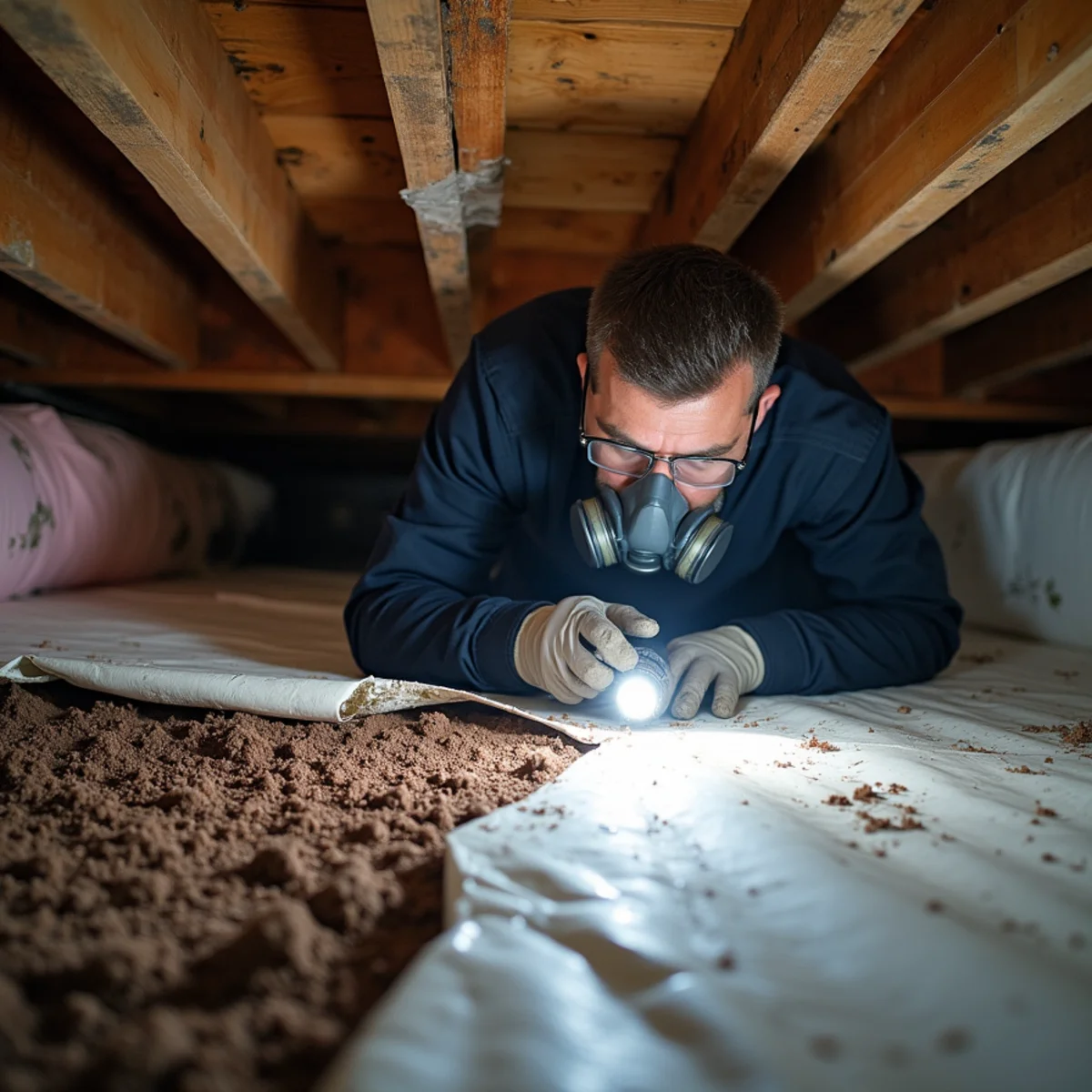
- White, gray, green or black fuzzy or blotchy growth on joists and the underside of the subfloor.
- Fiberglass insulation batts sagging or lying on the ground.
- Water droplets on ducts and pipes, or puddles on the vapor barrier.
- Dark staining or soft wood around plumbing penetrations.
Checking your own crawl space safely
A quick look from the access door tells you a lot. Use a bright flashlight, wear old clothes, gloves and an N95, and watch for wiring, nails and animals. Look for standing water, fallen insulation and visible growth. A cheap digital hygrometer left inside for a day will tell you the humidity.
Do not scrape, brush or spray heavy growth yourself; disturbing it spreads spores into the air that moves upstairs. Bleach is not a fix either. The EPA's brief guide to mold and moisture advises against relying on bleach for mold cleanup, and it does nothing about the moisture that grew the mold. If you need to know which species is present or want a clearance check after the work, hire an independent mold assessor rather than the company doing the cleanup.
Fixes: water removal, drying and mold cleanup
Cleaning mold without fixing the moisture just resets the clock. A sound plan works in this order:
- Find and stop the water source: a plumbing leak, a downspout, a grading problem or condensation.
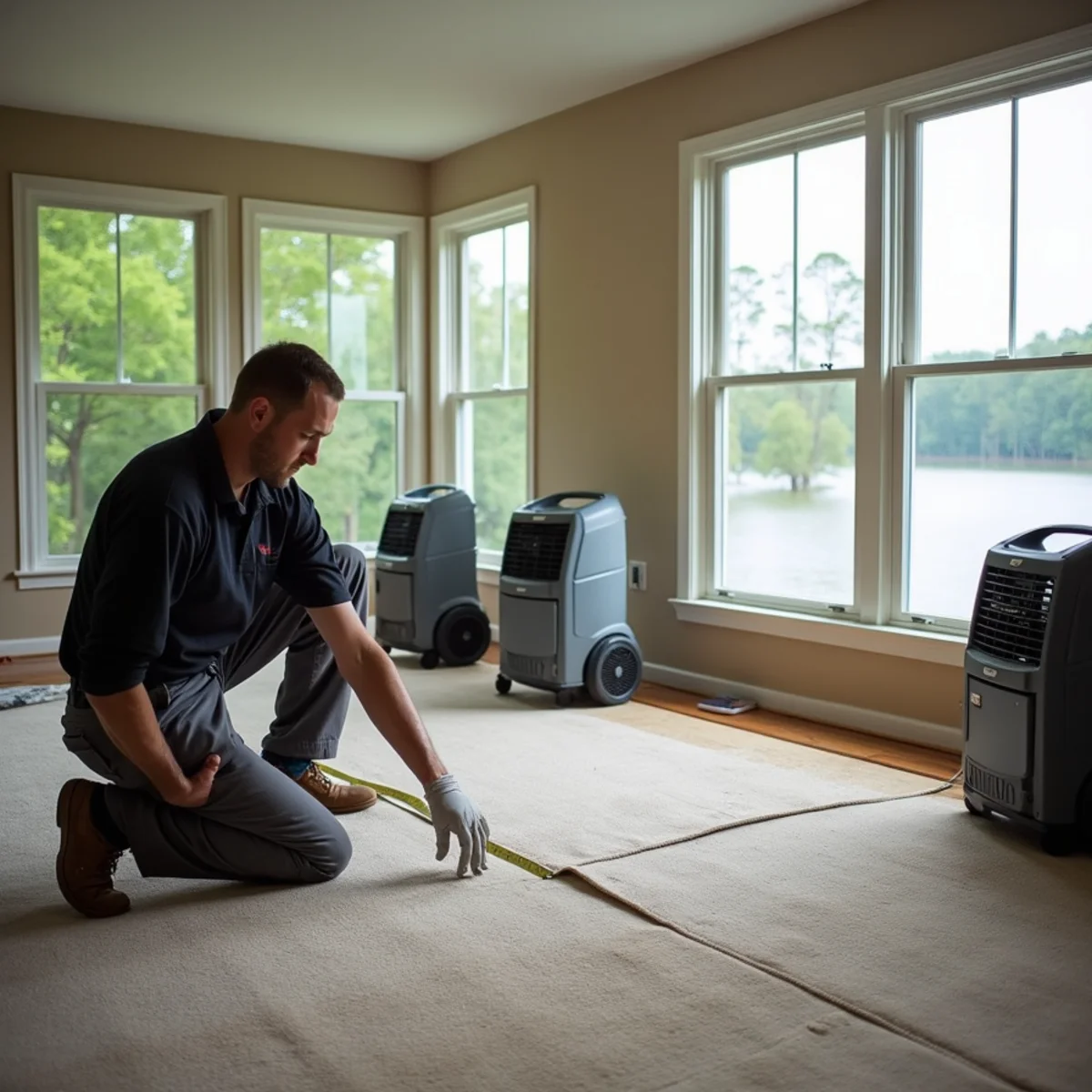
- Remove standing water with pumps and water extraction equipment, then pull out wet insulation and torn vapor barrier.
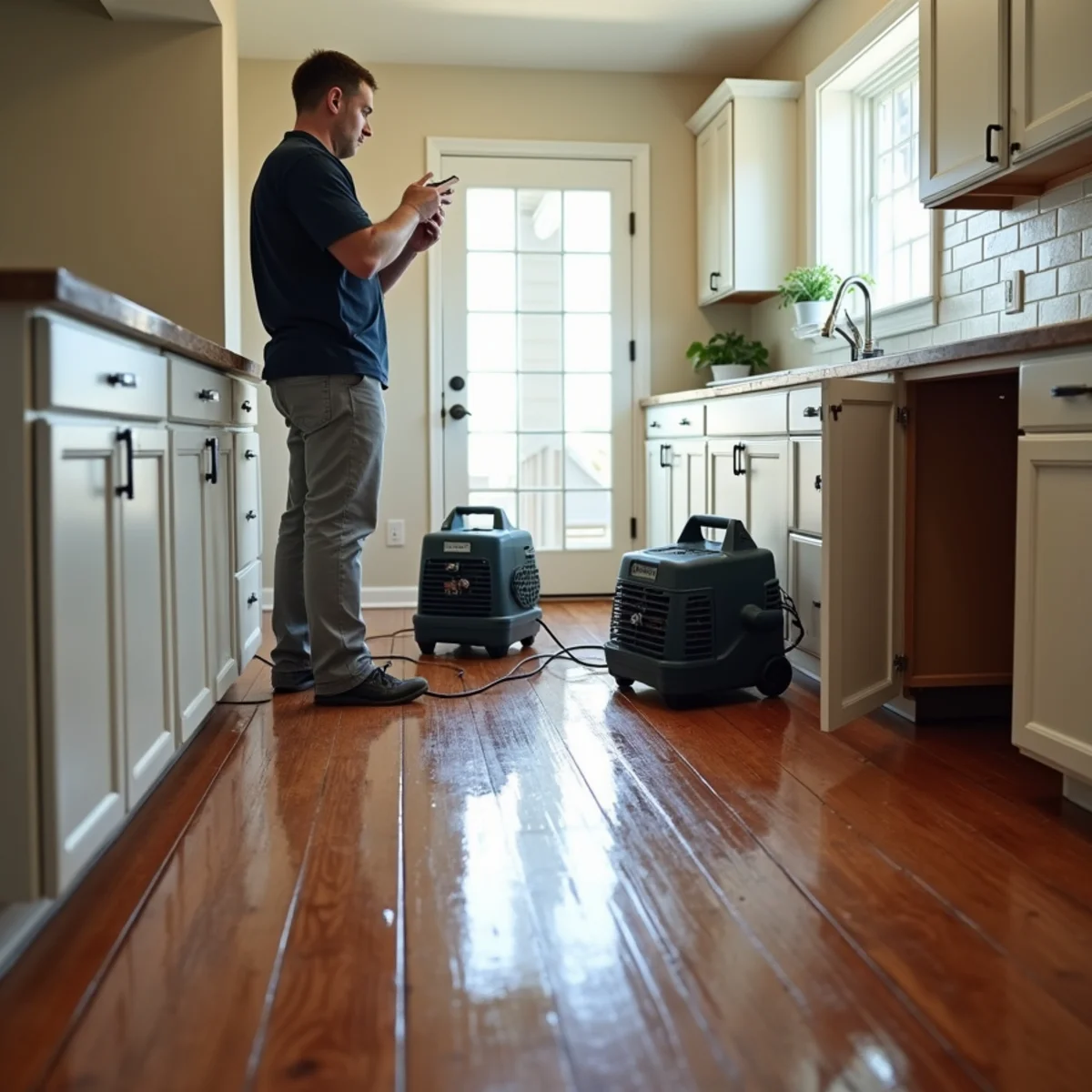
- Dry the structure with dehumidifiers and air movers until joists and subfloor read below the target moisture content.
- Clean the mold from wood surfaces with HEPA vacuuming and approved cleaning agents, following ANSI/IICRC S520 practices.
- Replace insulation and vapor barrier with new material properly lapped and secured.
- Set up long-term humidity control so the wood stays dry next summer.
Questions to ask before you approve a crawl space scope
- Which readings were taken: crawl space humidity plus wood moisture at several joists and subfloor spots?
- What is the water source, and who fixes it: the crew, a plumber, or a gutter or grading contractor?
- Is the mold on the surface only, or is any wood soft enough to need structural repair?
- What insulation and vapor barrier go back in, and how are the seams and edges finished?
- What readings mark the job as done, and will you get the final numbers in writing?
Steps two through five are the core of our crawl space mold removal and water cleanup service. If mold has also reached walls, closets or an HVAC closet upstairs, that becomes a separate mold remediation scope with containment and HEPA filtration. Call (831) 303-1192 to have a crew look under the house and give you a scope and price in writing before work starts.
Keeping it dry: dehumidifier, sealed vents or encapsulation
Once the crawl space is clean and dry, there are three common ways to keep it that way. They range from simple to a full conversion.
- Vapor barrier plus a crawl space dehumidifier. A heavy new barrier over the dirt and a dehumidifier sized for the space, draining to the outside or a pump. A practical step for many homes.
- Sealed vents. Closing the vents in summer only helps if something removes moisture inside, such as a dehumidifier or conditioned air. Closing vents over wet ground with nothing running can make things worse.
- Full encapsulation. Walls and floor lined with thick plastic, vents and openings sealed, and humidity controlled mechanically. It is often done by specialized installers, and some building code and HVAC details apply. We can explain the options, but the crews we send focus on the water removal, drying, cleaning and insulation and vapor barrier replacement that come first.
Whatever you choose, check the hygrometer every few weeks from May through October. Lake homes in Cornelius, Davidson and Mooresville see the same seasonal pattern, so the best time to catch a problem is early summer, before a full season of damp air.
Related questions
Is some moisture in a crawl space normal in North Carolina?
Some moisture is normal, especially in a vented crawl space in summer. Problems start when humidity stays above about 70% or wood moisture content rises above roughly 19 to 20%, because that is where mold and decay take hold.
Should I close my crawl space vents in summer?
Only if something inside is removing moisture, such as a crawl space dehumidifier or conditioned air, and the vapor barrier is intact. Closing vents over a wet floor with no dehumidification can trap moisture and make conditions worse.
Can crawl space mold affect the air inside my house?
Air from a crawl space moves up into the living area, which is why musty smells show up in first-floor rooms. Mold can trigger allergy and asthma symptoms in sensitive people, so anyone with health concerns should talk to their doctor.
Do I need full encapsulation to fix crawl space mold?
Not always. Many crawl spaces stay dry with the water source fixed, the mold cleaned, new insulation and vapor barrier, and a dehumidifier. Encapsulation is an option for persistent humidity and is usually done by a specialized installer.
Can I clean a small patch of crawl space mold myself?
The EPA's mold cleanup guidance says most people can handle an area under about 10 square feet, roughly 3 feet by 3 feet. Under a house that is rarely the whole job: the moisture that grew it is still there, the space is tight, and scrubbing sends spores toward the rooms above. Fix the source first, wear gloves and an N95, and get help for anything larger.