Mold in a Davidson house almost always traces back to water that stayed too long: a slow drip under a vanity, a roof leak over the attic insulation, a sweating air handler, or crawl space air that sits above 80% relative humidity all summer. Removing the growth is half the job. The other half is stopping that moisture, or the mold returns on the new drywall.
Ultra Mold & Water Pros connects Davidson, NC homeowners and landlords with independent remediation technicians who seal off the area, remove what cannot be cleaned and clean what can. Call (831) 303-1192 any time, describe what you see, and get the scope and price in writing before work starts.
Reviewed by the Ultra Mold & Water Pros team · Published · Updated · Process references: ANSI/IICRC S500 and S520 practices, EPA moisture and mold guidance, NC general contractor rules
The short answer
Mold remediation in Davidson, NC means sealing off the affected area with plastic containment and negative air, removing moldy porous materials such as drywall and insulation, HEPA vacuuming and cleaning framing and other hard surfaces, then fixing the moisture source. EPA suggests professional help for growth larger than about 10 square feet.
Signs you have a mold problem and not just a stain
Many dark marks are old water stains or candle soot. Mold grows, smells, and returns after you wipe it. Signs of active growth:
- A musty smell that is stronger in one room or closet, or when the air conditioning kicks on.
- Spots that spread or come back on drywall, caulk, ceiling paint or the backs of baseboards.
- Bubbling paint or soft drywall near a bathroom, a water heater or an exterior wall.
- Recent water that soaked drywall, carpet pad or insulation for more than a day or two.
Many calls start with the words black mold. Color does not tell you the species, and dark growth is removed the same way as any other. What matters is the size of the area, what it grows on, and whether the water feeding it has stopped.
Where mold shows up in Davidson homes: crawl spaces, attics, bathrooms, HVAC closets
Homes from the 1990s to 2010s in River Run, Bradford, Summers Walk and similar neighborhoods mostly sit on vented crawl spaces, with air handlers in attics or hall closets. Older houses near Davidson College have aging plumbing under heavy shade, and lakefront homes west of I-77 add lake air and lower levels set into a slope.
- Crawl spaces: the most common source here. See crawl space mold removal and water cleanup.
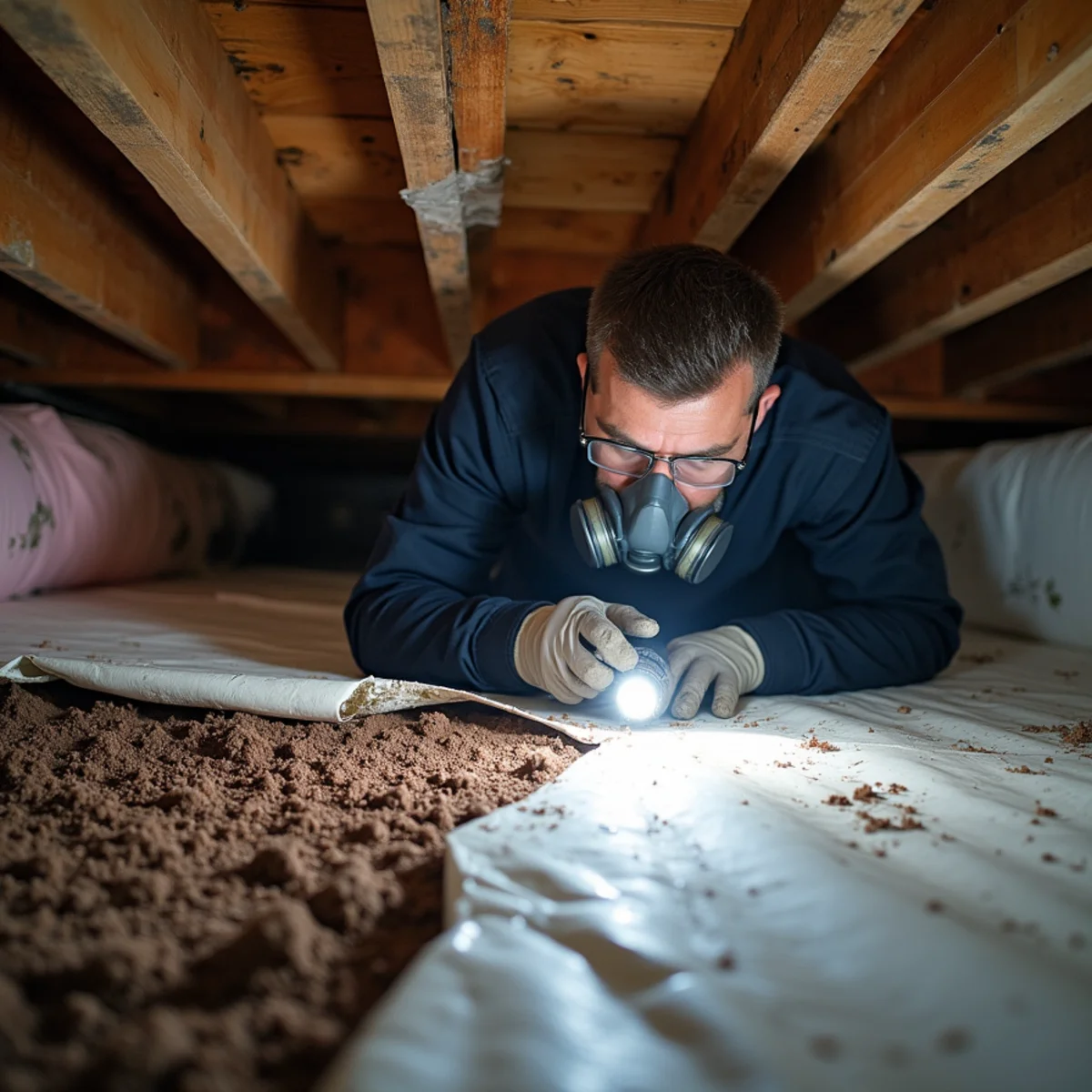
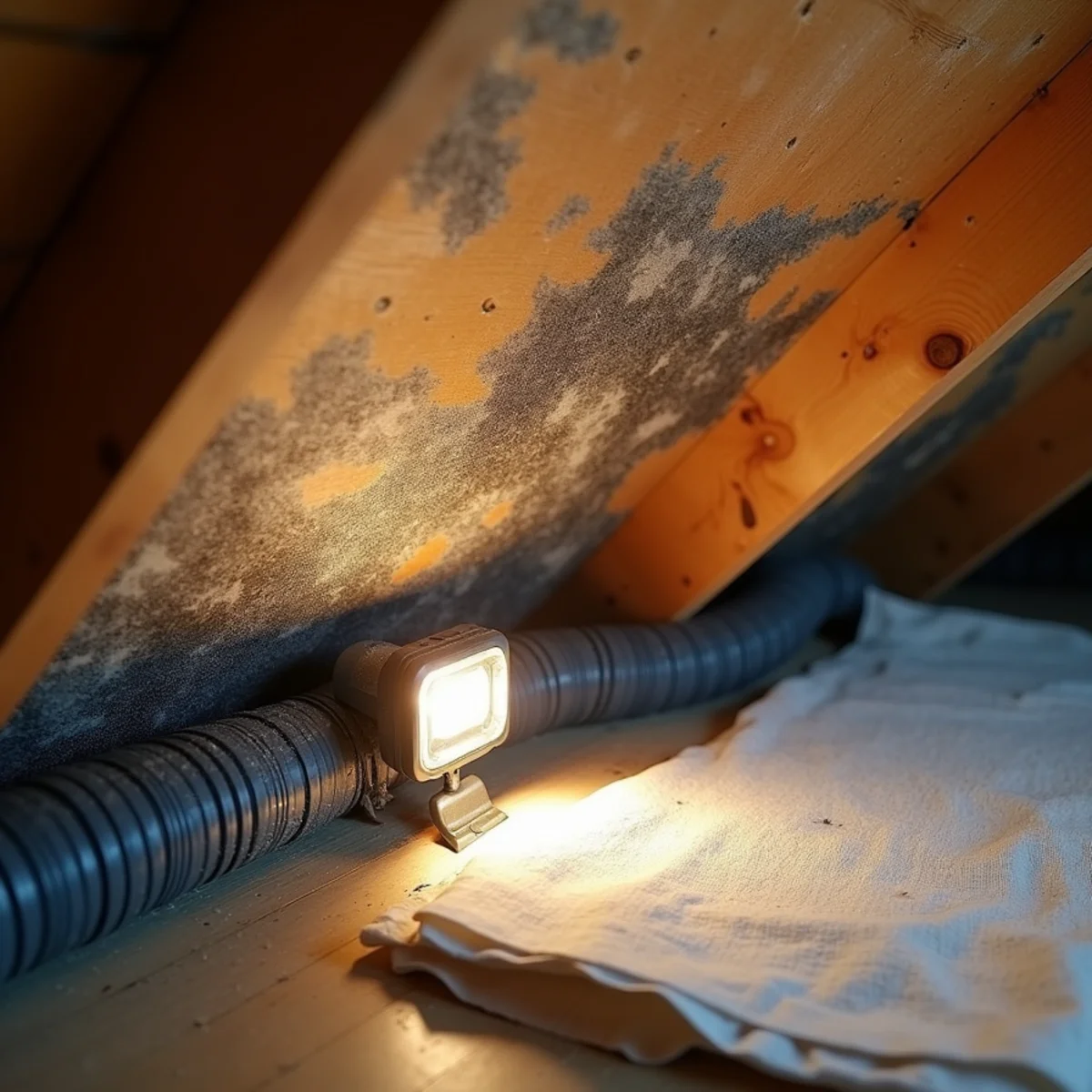
- Attics: bathroom fans venting into the attic, blocked soffit vents and flashing leaks leave growth on the underside of the roof sheathing.
- Bathrooms: a weak exhaust fan, failed tub caulk, or a slow drain leak behind the vanity.
- HVAC closets: a clogged condensate line overflows the drain pan, and the closet floor stays damp unnoticed.
- Behind appliances: aging ice maker, dishwasher and washer hoses. If a leak is still active, start with burst pipe and appliance leak cleanup.
HVAC closets and air handlers
An air handler pulls a lot of water out of summer air. That water drips off the coil into a drain pan and leaves through a condensate line, and when algae or debris clog the line, the pan overflows onto the closet floor or, with an attic unit, the ceiling below. Ducts that are poorly insulated or leaky sweat in the same humid air, and the drips run into drywall around the supply registers.
- Look for rust or standing water in the pan, a stained closet floor, swollen baseboard, or a ceiling spot under an attic unit.
- Ask for a float switch on the pan, so the system shuts off before it overflows.
- Split the work. Mold on the coil, in the blower or inside ductwork goes to an HVAC contractor. The remediation crew handles the closet drywall, subfloor and framing around it.
Lower levels, built-ins and hardwood: growth you cannot see
Sloped lake lots west of I-77 often have a walk-out lower level, with framed walls against cool concrete on the uphill side, where runoff gathers and humid summers keep it damp. Mold grows on the back of that drywall, in carpet pad on the slab, behind built-in cabinet runs and under site-finished hardwood while the surface looks clean. Clues are a musty lower-level room, stained baseboard, a swollen toe kick or cupped boards. Moisture readings come first, then a toe kick or baseboard comes off where they run high.
Why Lake Norman humidity keeps mold growing from May to October
Mold needs moisture, food and mild temperatures, and a Davidson summer supplies all three. Growth risk on wood climbs once the air stays above about 70% relative humidity, and wood supports mold and decay once its moisture content passes roughly 19 to 20%.
Vented crawl spaces near Lake Norman hold relative humidity above 80% from May through October, because humid outdoor air comes in through the vents and condenses on cooler ducts and subfloor. The same muggy air works into attics and closets on exterior walls. EPA recommends keeping indoor humidity below 60%, ideally 30 to 50%, and a cheap hygrometer tells you where you stand.
How remediation works: containment, HEPA filtration, removal, cleaning
Remediation is mostly about controlling where spores and debris go while the growth comes out.
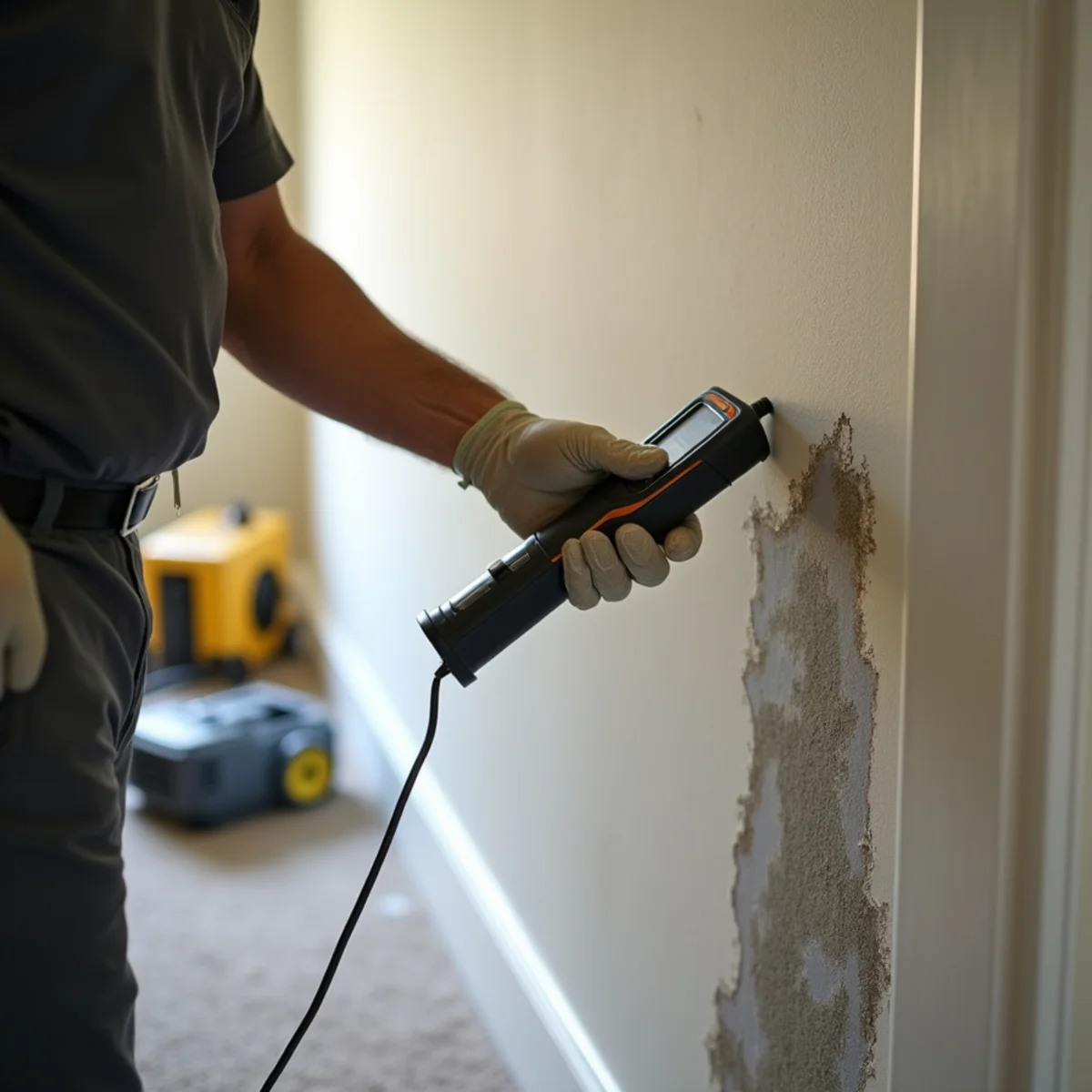
- Inspect and document. Growth is traced, surrounding materials are checked with a moisture meter, and everything is photographed.
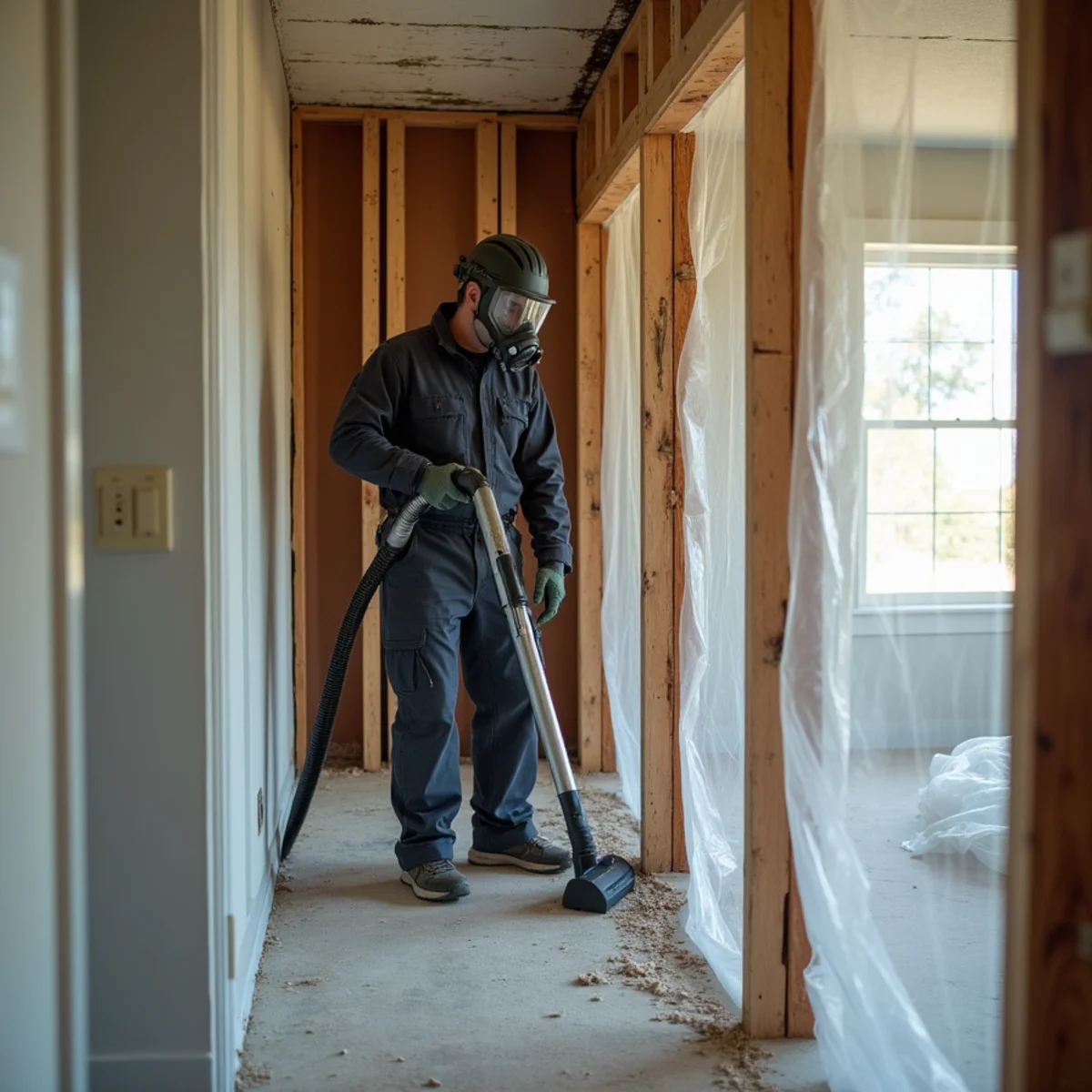
- Contain. Poly sheeting walls off the area, with a zipper door for entry. Vents inside are sealed and the HVAC serving the space is shut off.
- Run negative air. A HEPA air scrubber exhausts filtered air out of the containment, so spores knocked loose stay inside.
- Remove porous materials. Moldy drywall, insulation and carpet pad are cut out and bagged inside the containment.
- Clean the structure. Framing is HEPA vacuumed and damp wiped. Growth stained into wood is sanded, wire brushed or media blasted.
- Coat only after cleaning. An antimicrobial or encapsulating coating goes on clean, dry wood. Painting over mold is not remediation.
- Dry and verify. Framing is dried, and the area is checked visually and with a moisture meter before the plastic comes down.
| Material | Usual outcome |
|---|---|
| Drywall, insulation, carpet pad, ceiling tile | Removed and replaced |
| Studs, joists, roof sheathing | Cleaned in place if sound |
| Tile, glass, metal, sealed counters | Cleaned in place |
| Mattresses, upholstery, books | Case by case, often discarded |
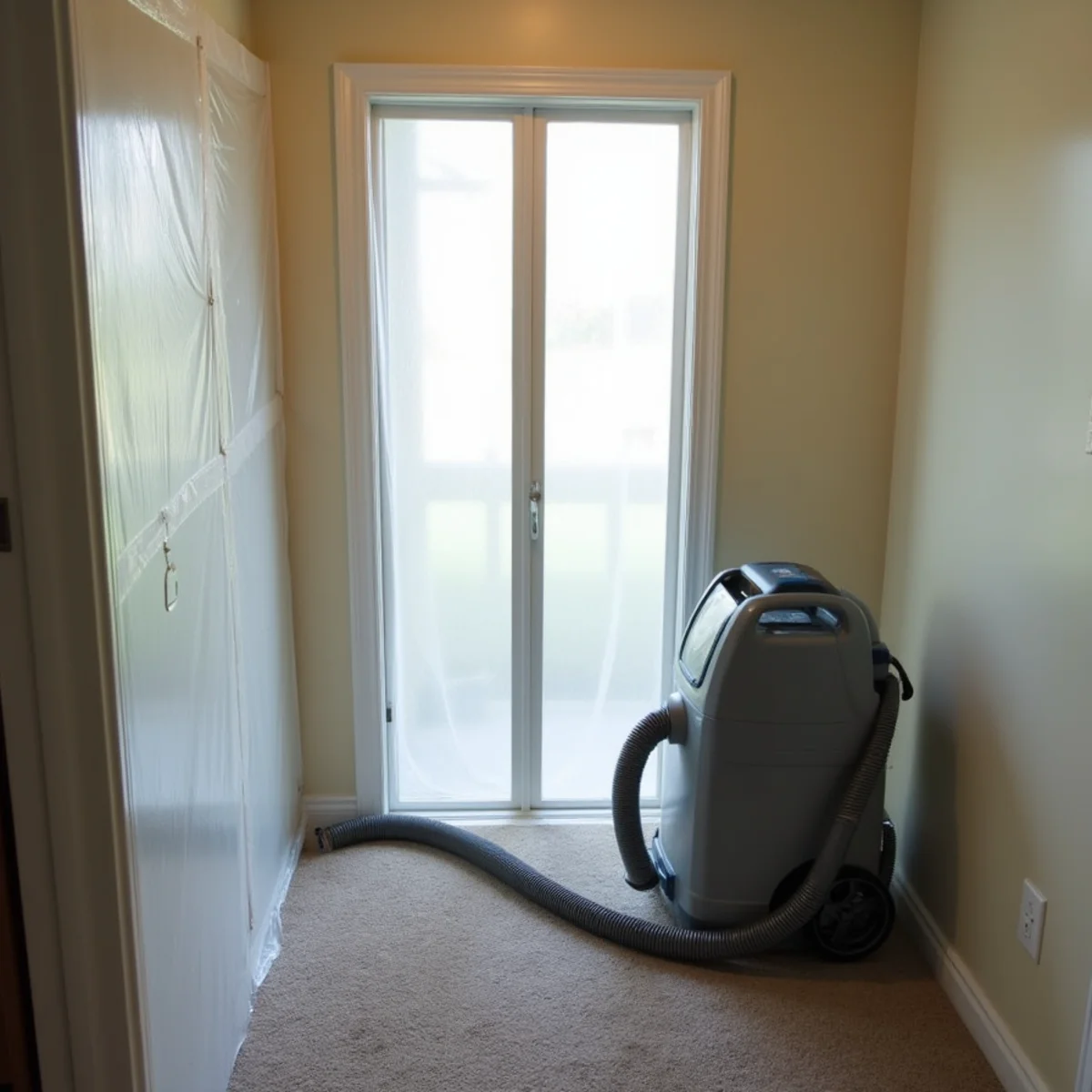
Work plans should follow ANSI/IICRC S520, the industry standard for mold remediation. Ask how the containment will be built and where the air scrubber will exhaust.
What the written mold scope should list
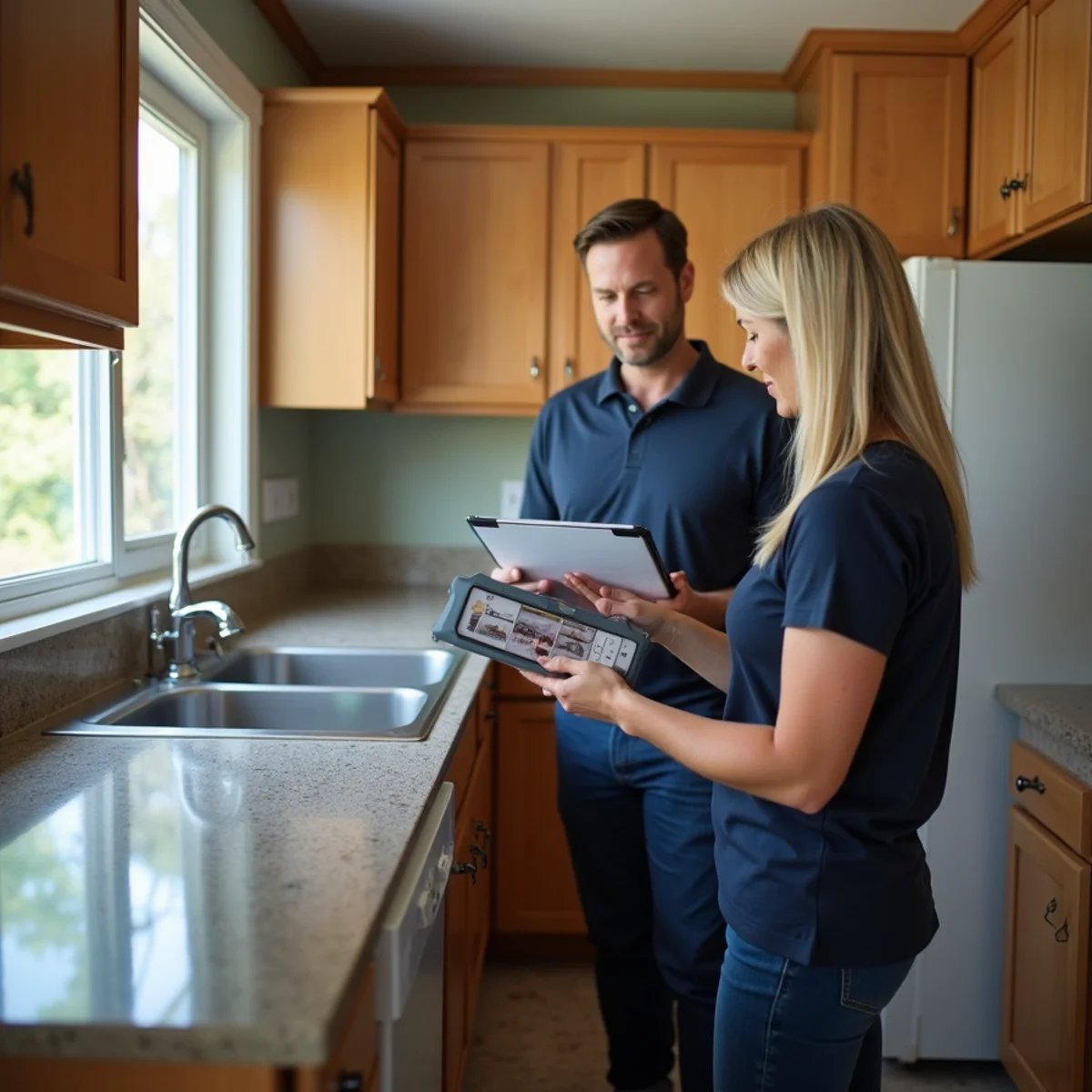
Check the job against its scope, with EPA's guide to mold cleanup in your home beside it. A useful scope names:
- Each affected area by room, with approximate square footage.
- The containment and where the air scrubbers exhaust.
- What comes out and what stays: removed drywall, insulation and pad, and the framing, hardwood or built-in cabinetry cleaned and kept, with the readings behind that call.
- The moisture source and which trade fixes it.
- How finished is judged: no visible growth, dry readings, clearance testing only if you order it.
- Exclusions such as HVAC cleaning, rebuild and testing.
Fixing the moisture source so the mold does not return
If the water problem stays, the mold comes back. Common fixes:
- Plumbing leaks: repaired, then the wall cavity is dried before it is closed.
- Roof and flashing leaks: fixed by a roofer before new attic insulation goes in.
- Bathroom fans: ducted all the way outside.
- Condensate drains: cleared, with a float switch that shuts the unit off if the pan fills.
- Crawl space humidity: a torn vapor barrier replaced, standing water removed, and a dehumidifier added where readings stay high.
- Grading and gutters: soil sloped away, downspouts carried past the red clay at the footing.
The remediation crew handles drying, removal, cleaning, and insulation and vapor barrier replacement. Plumbing and electrical repairs need NC-licensed plumbers and electricians, so the written scope should say which trade fixes what, and in which order. New drywall should not go up until the cavity reads dry.
Mold testing: when an independent assessment is worth paying for
Testing is not needed to remove mold you can see. Mold testing and inspection are best done by an independent assessor with no stake in the removal, and the crews we send may not perform testing. An assessment is often worth the fee when:
- You smell mold but cannot find it, and suspect walls or ductwork.
- You are buying or selling, or a landlord and tenant disagree.
- You want clearance testing before the containment comes down.
Mold after a leak: the 24 to 48 hour window
EPA advises drying wet building materials and furnishings within 24 to 48 hours to prevent mold growth. After that, growth can start on wet drywall, carpet pad and wood, sooner in a warm house in July. A leak that is extracted and dried quickly often needs no mold work at all.
- Stop the water at the fixture valve or the main shut-off.
- Pull up wet rugs, lift furniture off wet carpet, and photograph everything.
- Run the air conditioning and a dehumidifier if the power is safe, and keep windows shut in humid weather.
- Call for water extraction and structural drying if more than a small area is wet, or if water reached walls, ceilings or the crawl space.
A leak found late, behind a washer or under a vanity, usually means opening the wall to check. Our guide on how fast mold grows after a water leak explains the timeline. Call (831) 303-1192 and a person answers, day or night.
Mold prevention after water damage
After a leak, prevention is the drying. EPA's guide to mold and moisture sets the 24 to 48 hour target, which wet drywall and pad rarely meet on their own in a Davidson summer. What keeps growth from starting:
- Readings in the materials, not just the air. Wall bottoms, subfloor and cabinet bases should match dry areas before equipment leaves.
- Opening what traps water: toe kicks, baseboards and wet pad.
- The crawl space under the wet room, where water often ends up unseen.
- Contaminated water handled differently. Sewage, floodwater from outside, or clean water that sat for days counts as Category 3, and porous materials it touched are usually removed, not dried. See sewage cleanup.
- Indoor humidity kept below 60% for the weeks that follow.
What affects the cost of mold remediation
Pricing follows a look at the area, with scope and price in writing before work starts. What moves the number:
- Square footage of growth and the number of areas involved.
- Access: a tight crawl space or low attic takes longer.
- How much drywall, insulation or carpet comes out.
- Containment size and air scrubber count.
- Cleaning method: damp wiping, sanding or media blasting.
- HVAC work, rebuild, and any independent testing billed separately.
Many North Carolina policies exclude or cap mold unless it results from a covered sudden loss. Read your own policy and ask your agent or adjuster; see whether homeowners insurance covers water damage in North Carolina. Crews also work in Cornelius, Huntersville and our other service areas around Davidson.
Why Davidson calls Ultra Mold & Water for mold remediation
Answered 24/7
A live person answers (831) 303-1192 for mold and leak calls, nights and weekends included, and sends the nearest available crew.
Scope and price in writing first
The affected area, the containment, what comes out and what gets cleaned are listed before work starts.
Photos and moisture readings on record
Growth, moisture readings and each stage of the work are documented for your records or your insurer.
Meeting your adjuster on site
When mold follows a sudden leak you are claiming, the crew can walk the area with your adjuster.
Every restoration technician we send is licensed where North Carolina requires it, and insured.
Mold Remediation: common questions from Davidson homeowners
Is mold remediation covered by homeowners insurance in North Carolina?
It depends on the cause and your policy. Many policies exclude or cap mold, though mold from a covered sudden loss, such as a burst supply line, may be handled differently. Mold from long-term leaks or humidity is usually not covered. Read your own policy and ask your agent or adjuster.
Do I need to leave the house during mold removal?
Usually not for a small, contained job, since negative air keeps spores inside the work area. Mold can trigger allergy and asthma symptoms in sensitive people, so anyone with a respiratory condition, infants, older adults and people with weakened immune systems should talk to their doctor and stay out of work areas.
Does North Carolina license mold remediation companies?
No. North Carolina has no state license for mold remediation; plumbing and electrical repairs need NC-licensed trades. Every restoration technician we send is licensed where North Carolina requires it, and insured. Ask whether the work plan follows ANSI/IICRC S520.
Can I just spray bleach on it?
EPA advises against relying on bleach for mold cleanup. It can lighten the surface stain while growth stays inside porous drywall and wood, which is usually removed instead. On small hard surfaces, detergent and water plus thorough drying works. Never mix bleach with ammonia or other cleaners.
Will mold come back after remediation?
Not if the moisture stays fixed. Mold spores are normal in indoor and outdoor air, so remediation removes growth and returns the area to normal conditions rather than making a house spore-free. Regrowth almost always means the leak, condensation or humidity was never solved. Keep indoor humidity below 60%, watch the repaired area for a few months, and call (831) 303-1192 if the smell returns.
How long does mold remediation take?
A single area, such as a bathroom wall or an HVAC closet, often takes a few days once it is dry: setting containment and removing materials, then cleaning, drying and the final check. Attics, crawl spaces and multi-room jobs take longer, and clearance testing you order adds time while results come back. Rebuild work such as drywall and paint follows separately, and the written scope lays out the sequence.
Why would mold show up weeks after a leak was cleaned up?
Usually because only the surfaces were dried. Water runs under hardwood, into the bottom of a wall, behind cabinets or into the crawl space, and stays there while the room looks finished. Ask for readings around the leak and in the rooms next to it.
Can the crew document mold damage for an insurance claim?
Yes, as a record, not a coverage decision. Crews photograph the growth and the source, log readings, and note when the water was found, which matters when mold follows a sudden leak. Your insurer decides coverage under your policy, and the North Carolina Department of Insurance publishes consumer guidance on homeowners claims.
Mold Remediation beyond Davidson
The same crews cover the Lake Norman towns around Davidson, 5 to 35 minutes out by I-77, NC-115 and NC-73. See how mold remediation plays out in the housing stock of each town, or view all water damage service areas.
Also serving Kannapolis and Concord.