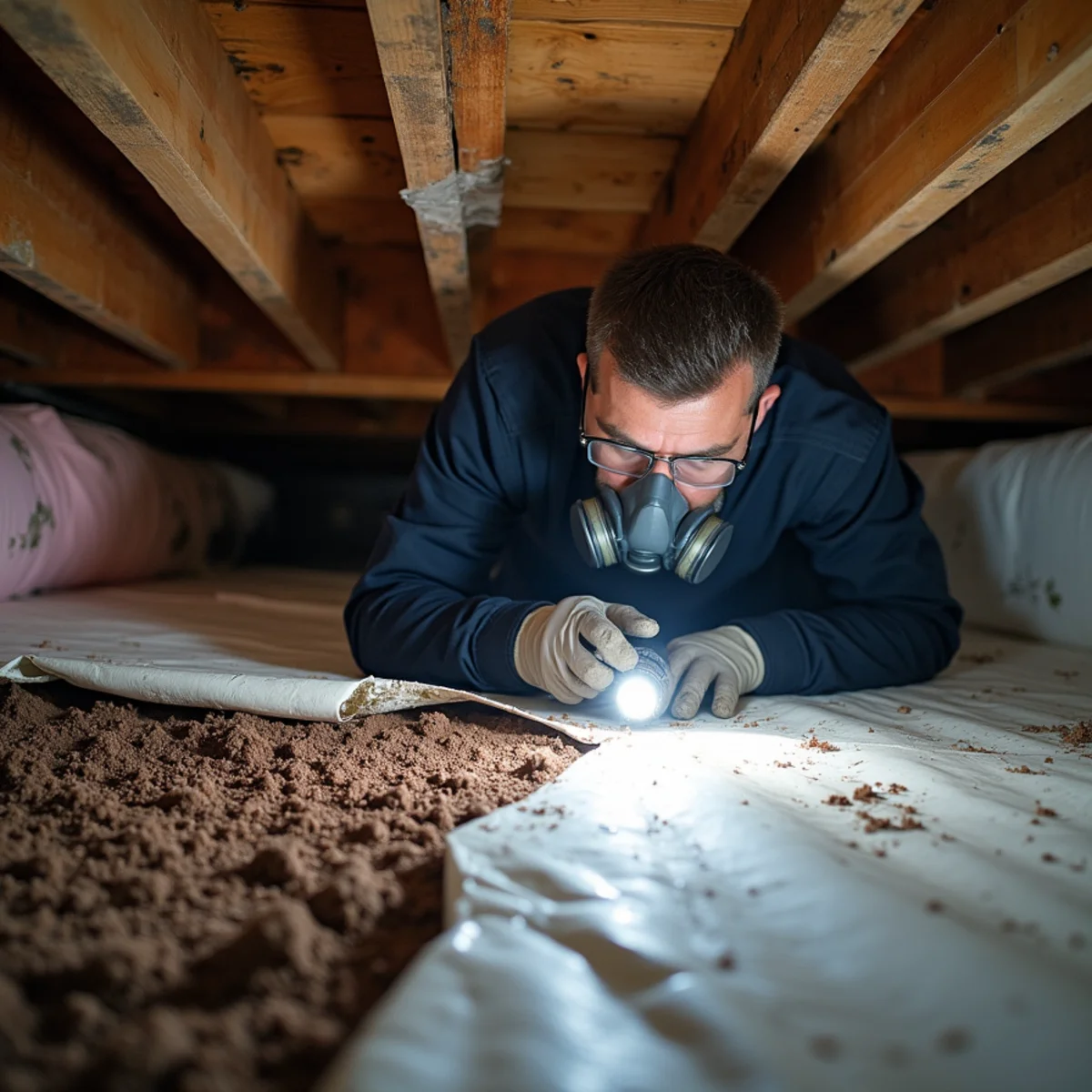
Most homes around Davidson sit on a vented crawl space, and that is where much of this area's water and mold trouble begins. Summer air off Lake Norman, red clay that holds rain against the foundation, and leaks nobody sees from upstairs keep joists and subfloor damp for months. The first clue is usually a musty hallway or a hardwood floor starting to cup.
Ultra Mold & Water Pros connects Davidson, NC homeowners with independent crews who pump out standing water, dry the framing, clean mold off joists and replace wet insulation and torn vapor barrier. Call (831) 303-1192 to describe what you are seeing, and get the scope and price in writing before work starts.
Reviewed by the Ultra Mold & Water Pros team · Published · Updated · Process references: ANSI/IICRC S500 and S520 practices, EPA moisture and mold guidance, NC general contractor rules
The short answer
Crawl space mold removal in Davidson, NC starts with removing standing water and finding its source, then drying the framing with dehumidifiers until wood readings are back in a safe range. Moldy joists and subfloor are HEPA vacuumed and cleaned, wet insulation and torn vapor barrier come out, and new barrier goes down to keep the space drier.
Crawl space trouble you notice upstairs: musty smell, cupped floors, sticky air
Warm air in a house rises and leaks out through the upper floor and attic, and replacement air is pulled up from below through gaps around pipes, wires and ducts. This stack effect means crawl space air ends up in your living room. Signs to watch for:
- A musty smell on the first floor, strongest in closets or when the HVAC starts.
- Cupped hardwood: board edges higher than their centers, because the undersides are absorbing moisture from below.
- Sticky, clammy air in summer even with the air conditioning running.
- Soft spots in the floor near bathrooms, the kitchen or an exterior door.
- A higher water bill with no visible leak, which can point to a supply line under the house.
A leak upstairs means a look below
When a dishwasher, toilet or supply line leaks on the first floor, the water rarely stops at the subfloor. It runs along the joists, soaks the batts and drips onto the barrier, often under the next room. Before the job is called finished, ask:
- Did someone go under the house, or was the estimate written from the kitchen?
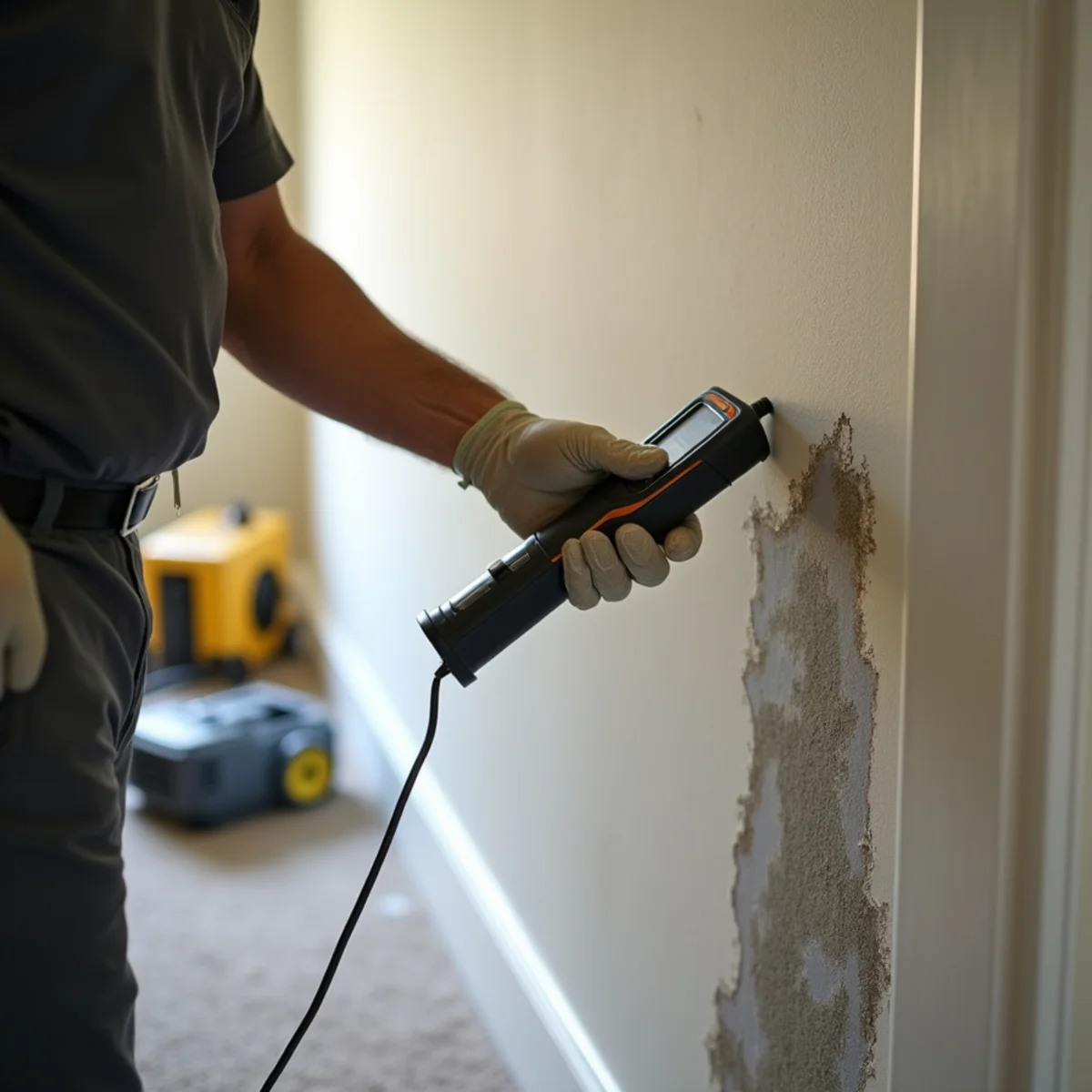
- How is moisture under the hardwood measured? From below, a pin meter in the subfloor and the underside of the boards between joists finds what a surface reading misses.
- Were readings taken beneath the neighboring rooms, not only under the spill?
- Are the dehumidifiers moved or added as readings and outdoor humidity change, with daily logs to show it?
- What stays and what goes? Sound joists are usually dried and cleaned in place, while soaked insulation and torn barrier come out.
Standing water under the house: pumping it out and finding the source
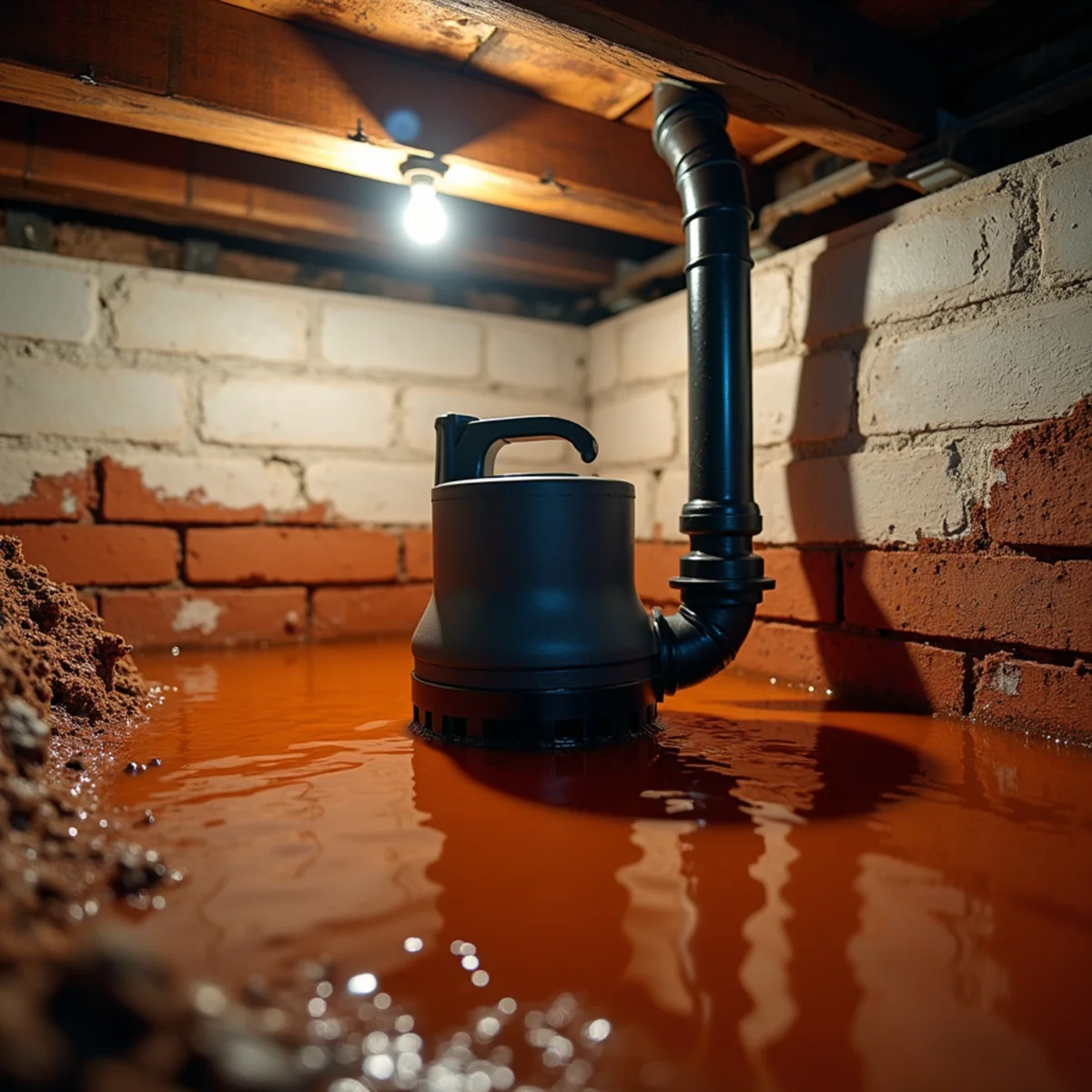
Standing water raises the humidity of the whole space and soaks insulation from below. Crews usually work in this order:
- Check safety: wiring, HVAC equipment, and any sign of waste. Sewage follows sewage cleanup procedures.
- Pump it out with a submersible pump, then wet vacuum the puddles left on the soil and old barrier.
- Find the source: a broken supply or drain line, a water heater, a condensate line draining onto the ground, or rain coming under the footing.
- Pull wet material so the framing can dry.
- Dry with dehumidifiers and air movers, with readings logged daily.
When the water keeps coming back
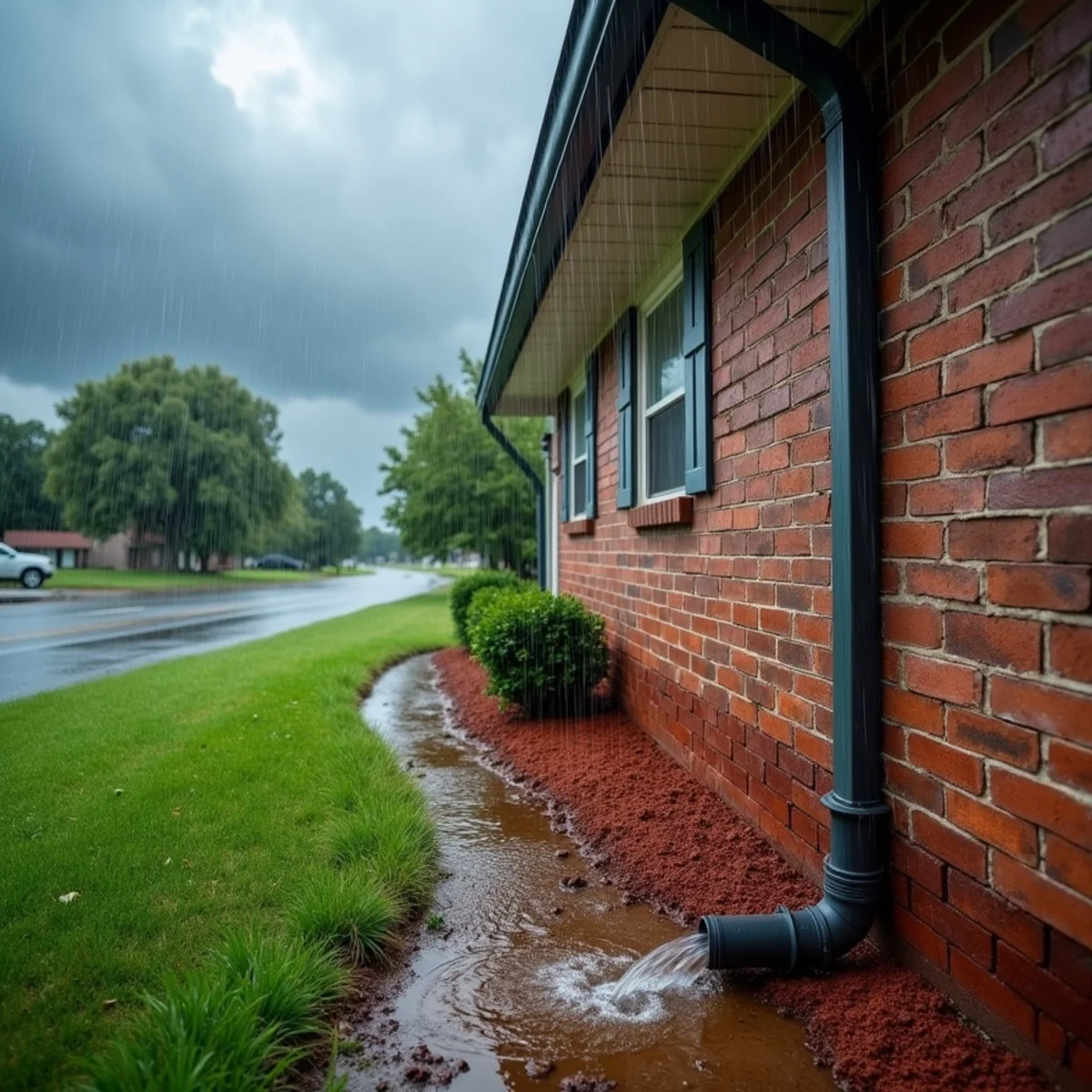
Water after every heavy rain points to drainage, not plumbing. A sump pit and pump at the low point, discharging well away from the house, is a common fix, along with grading and gutter changes outside. Interior drains and sump systems are often installed by a waterproofing contractor, and plumbing leaks go to an NC-licensed plumber; the crew dries the space once the repair is made. For the drying side, see water extraction and structural drying.
Rainwater or a broken pipe: why insurers ask
The source matters to your policy as much as to the repair. A supply or drain line that breaks under the house is usually handled as a sudden discharge under a standard homeowners policy. Storm runoff that flows in under the footing is surface water, which homeowners policies treat as flood, and flood coverage comes from a separate policy through the National Flood Insurance Program or a private carrier.
Photos of the water line on the piers, the source and the first readings help your adjuster decide which applies. Read your own policy and ask your agent; the North Carolina Department of Insurance explains homeowners coverage.
Why vented crawl spaces around Lake Norman stay wet all summer
Vents were meant to let outside air carry moisture away. Around Lake Norman in summer, they do the opposite: vented crawl spaces near the lake hold relative humidity above 80% from May through October. Muggy July air settles under the house, cools against the soil and the air conditioning ducts, and drops its moisture on the coldest surfaces.
- Sweating ducts drip onto insulation and barrier all season.
- Joists and subfloor absorb moisture from the air. Mold risk on wood rises above about 70% relative humidity, and decay and mold take hold once wood moisture content passes roughly 19 to 20%.
- Bare clay or a torn barrier lets water vapor rise from the soil every day.
That is why mold here often spreads lightly across most of the joists instead of one patch. More on causes in crawl space mold in Lake Norman homes.
Reading a crawl space hygrometer and wood moisture readings
A digital hygrometer with a wireless sensor, left under the house and read from upstairs, shows humidity and temperature over weeks instead of one afternoon. A pin moisture meter pushed into a joist gives the wood's moisture content as a percentage. Together they tell you whether the space is drying or just looks dry. How to read them:
- Humidity that stays above about 70% for days at a time raises mold risk on wood. Above 80% for weeks is common in vented crawl spaces near the lake in summer.
- Wood at roughly 19 to 20% or higher can support decay and mold. Check joists near the vents, the rim joist, and subfloor under bathrooms and the kitchen.
- Compare like with like. Take readings at the same time of day, and check them against framing in a dry part of the house, since meters vary with wood species and settings.
- Watch the trend. Humidity that climbs every time the air conditioning runs often points to sweating ducts or leaky return air pulling from the crawl space.
Red clay soil, grading and downspouts
The Piedmont red clay under Davidson, mapped as the Cecil soil series, drains slowly. Rain sits against the foundation and finds its way under the footing.
- Grading: settled backfill and mulch piled against the wall reverse the slope that should carry water away.
- Downspouts: short or disconnected ones dump a roof's worth of water at the foundation.
- Gutters: leaves from the mature oaks around older homes near Davidson College clog them, and they overflow right over the vents.
- Sloped lots: lakefront lots west of I-77 can send uphill runoff under the house.
Once it is under the house, water keeps running downhill. It pools at the low side of the crawl space, often where the foundation steps down beside a walk-out lower level or garage, and that corner stays wet longest. Readings, barrier seams and any sump pit get the most attention there.
Regrading is usually landscaping work, but the crew notes what they see so the next storm does not undo the drying. Our storm season guide for Lake Norman homes has a checklist.
Mold on joists and subfloor: cleaning and treatment
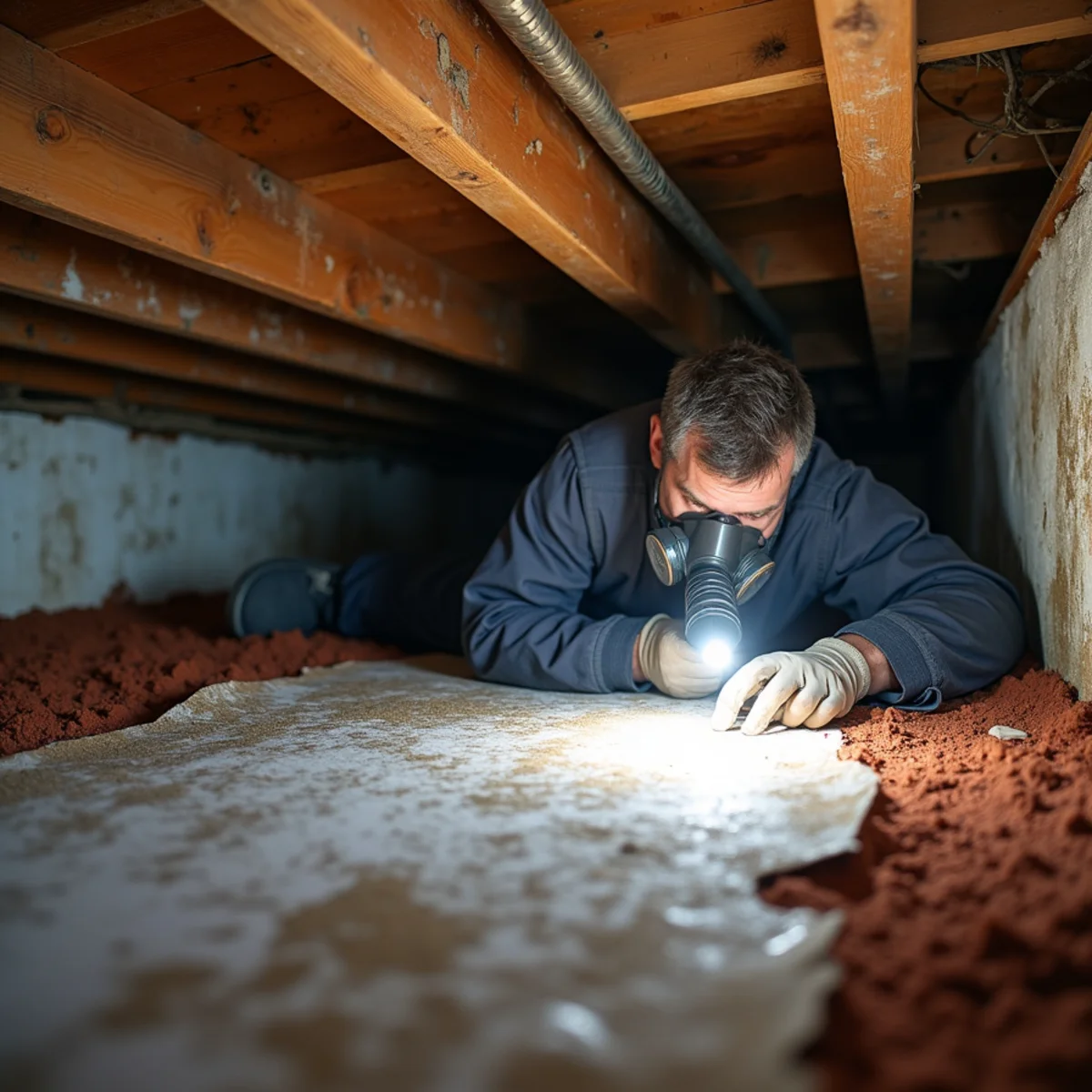
Crawl space mold shows as white, gray or black spotting on joist edges and subfloor, worst near sweating ducts. White crust on block walls is often efflorescence, a mineral salt, not mold. Cleanup order:
- Dry first. Cleaning wet wood is wasted effort.
- Contain and filter. The access door and floor registers are sealed, and a HEPA air scrubber runs so spores do not drift upstairs.
- HEPA vacuum the framing and subfloor.
- Clean the wood by damp wiping, or by sanding, wire brushing or media blasting where growth is stained into the grain.
- Coat only after cleaning. Antimicrobial or encapsulating coatings go on clean, dry wood, never over mold.
- Verify with a visual check, logged readings and photos. Clearance testing by an independent assessor is your option.
Framing counts as dry when it matches unaffected wood in the same house, often in the low teens, well under the 19 to 20% range. The same steps for walls and attics are on our mold remediation page.
Wet insulation and torn vapor barriers: removal and replacement
Wet fiberglass batts get heavy, sag and fall, and their paper facing holds dampness against the subfloor. They do not dry well in place, so they are bagged and removed, and new insulation goes in only after the framing is clean and dry.
The vapor barrier on the ground is the other half. Many original barriers in Davidson-area homes are thin plastic that has torn, shifted, or been pushed aside by plumbers and cable installers. Replacement usually includes:
- Removing the old torn or mud-covered sheeting.
- Clearing sharp rocks and debris so the new liner does not puncture.
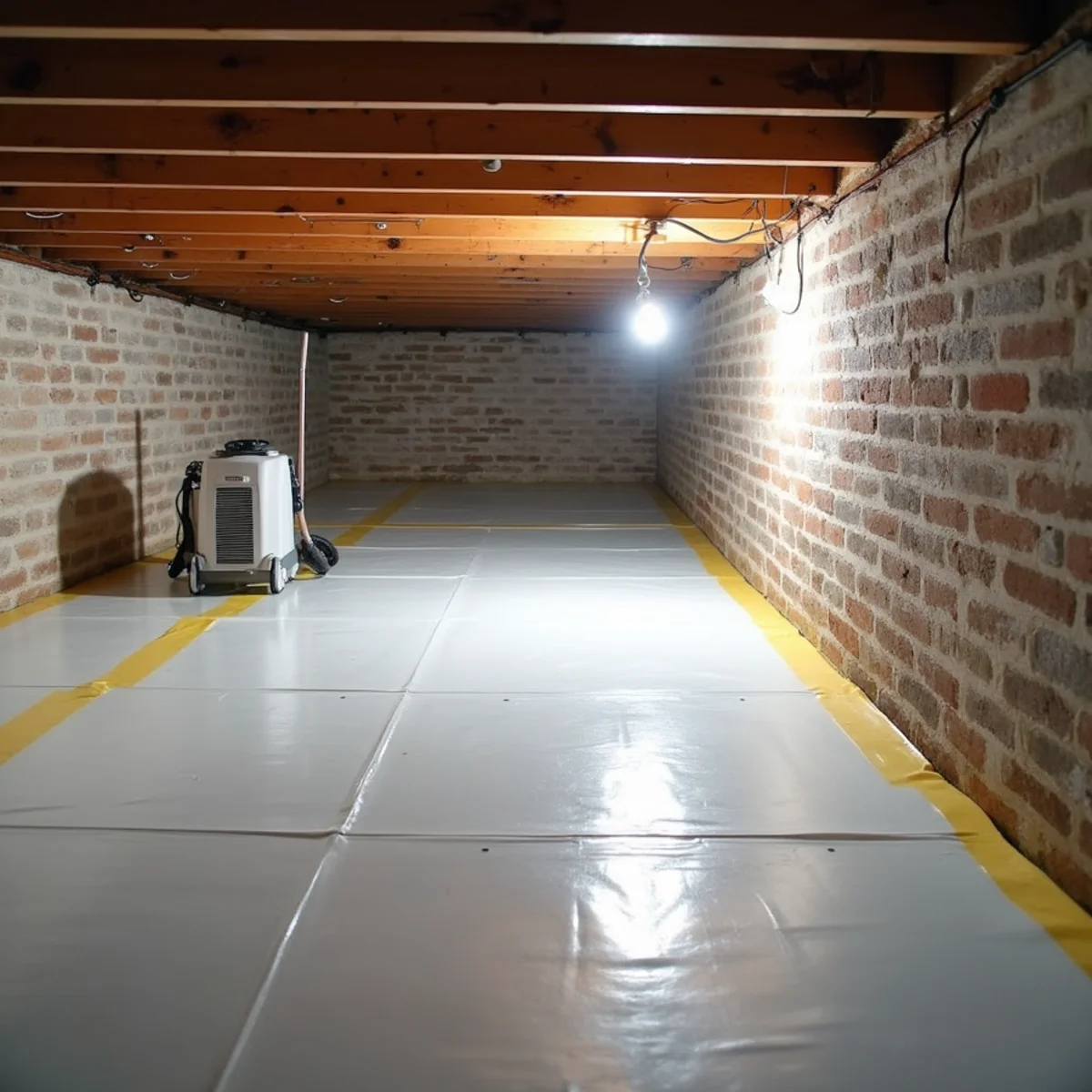
- Laying polyethylene of at least 6 mil, with seams overlapped and taped and the edges run up the piers and foundation walls.
- Fastening and sealing the edges so ground moisture stays under the liner.
Many encapsulation systems use thicker reinforced liners of 10 to 20 mil, which hold up better to foot traffic and service visits.
Keeping it dry: dehumidifier, sealed vents or full encapsulation
Once the space is clean and dry, something has to keep it that way through the next summer.
| Option | What it involves | Who usually does it |
|---|---|---|
| Barrier plus dehumidifier | New ground barrier and a crawl space dehumidifier | Restoration crew or HVAC contractor |
| Sealed vents | Vents sealed, barrier upgraded, dehumidifier sized to the space | Crawl space or HVAC contractor |
| Full encapsulation | Vents sealed, heavy liner up the walls, insulation, dehumidifier or conditioned air | Specialized encapsulation installer |
North Carolina's residential building code allows closed crawl spaces built to its requirements. That is a designed system, not just shutting vent covers, and closing vents without drying the air can trap moisture.
Encapsulation is often a separate job by a specialized installer. The crew handles the water removal, drying, cleaning, mold treatment, and insulation and vapor barrier replacement that come first.
What affects the cost
Pricing follows a look under the house, with scope and price in writing before work starts. What moves the number:
- Crawl space height, access and square footage.
- How much framing has mold, and the cleaning method.
- Standing water, and whether it is clean, gray or sewage.
- Insulation and vapor barrier to replace.
- Drying time, and repairs by other trades.
Long-term humidity and seepage are usually excluded from insurance, and mold coverage is often limited; read your own policy and ask your agent. Call (831) 303-1192 to set up a visit. Crews also work in Cornelius, Mooresville and our other service areas near Davidson.
Why Davidson calls Ultra Mold & Water for crawl space water & mold
A live answer, day or night
Call (831) 303-1192 about water under the house at any hour, talk to a person, and get the nearest available crew.
Scope and price in writing
Pumping, drying, mold cleaning, insulation and vapor barrier each get a line before work starts.
Daily drying logs
Moisture readings for joists, subfloor and air are recorded each day until the space is dry.
Documentation for your insurer
Photos and moisture readings are kept on file, and the crew can meet the adjuster on site.
Every restoration technician we send is licensed where North Carolina requires it, and insured.
Crawl Space Water & Mold: common questions from Davidson homeowners
Is some moisture in a crawl space normal in North Carolina?
Some, yes. Soil gives off water vapor daily, and a vented crawl space reads damper than the house above it. Standing water, fallen insulation, visible mold, wood readings above roughly 19 to 20%, or humidity above about 70% for weeks are not normal.
Can crawl space mold affect the air inside my house?
Yes. The stack effect pulls crawl space air upstairs, which is why a musty smell often starts below the floor. Mold can trigger allergy and asthma symptoms in sensitive people; anyone with a respiratory condition, infants, older adults and people with weakened immune systems should talk to their doctor.
Should I close my crawl space vents in summer?
Not on their own. Closing vents without a sealed barrier and a dehumidifier or conditioned air can trap moisture. North Carolina's building code allows closed crawl spaces built as a complete system, so have a qualified installer look first.
How long does it take to dry out a crawl space?
Once standing water is out and the source is fixed, many crawl spaces reach dry readings in several days to about a week. Deep water, saturated clay or peak summer humidity can stretch that. Readings are logged daily, so you can see progress.
Do your crews install crawl space encapsulation?
The crews we send focus on water removal, drying, mold cleaning, and insulation and vapor barrier replacement. Full encapsulation is often done by a specialized installer. If the readings point that way, you will hear it plainly, and the cleanup can be done first so any new system goes over clean, dry framing.
Will cupped hardwood floors flatten once the crawl space is dry?
Often, if the cupping came from moisture below and the boards were not wet for too long. Many floors flatten gradually over several weeks to a few months after the crawl space dries. Boards that stay cupped, crack or lift may need refinishing or replacement by a flooring contractor. Wait until moisture readings in the floor match dry areas of the house before any sanding.
Can I pump out my own crawl space?
A small amount of clean water, with the source fixed and nothing electrical in or near it, can be wet vacuumed. Stay out if water touches wiring or the HVAC unit, smells of sewage, or came in with storm runoff. Pumping is the easy part; drying the joists and subfloor takes dehumidifiers and days of readings.
Why does a crawl space need different drying than a room upstairs?
Because the air down there keeps picking up moisture. Bare soil releases vapor, open vents let in humid summer air, and low clearance limits where equipment fits. Drying usually means covering the vents and access for the length of the job, running a dehumidifier sized to the space, and pulling wet insulation so air reaches the framing, with logged readings to confirm it is working.
Crawl Space Water & Mold beyond Davidson
The same crews cover the Lake Norman towns around Davidson, 5 to 35 minutes out by I-77, NC-115 and NC-73. See how crawl space water & mold plays out in the housing stock of each town, or view all water damage service areas.
- Crawl Space Water & Mold in Cornelius
- Crawl Space Water & Mold in Mooresville
- Crawl Space Water & Mold in Huntersville
Also serving Kannapolis and Concord.