If sewage is coming up into your Davidson home right now, call (831) 303-1192 and keep everyone, pets included, out of the affected rooms. Sewage is the dirtiest water a house can take on, and cleaning it up safely takes protective gear, firm rules about what gets thrown out, and drying that reaches into floors and walls.
Ultra Mold & Water Pros connects Davidson, NC homeowners and landlords with independent restoration technicians who handle sewer backups, toilet overflows and septic backups at any hour. A live person answers 24/7, the nearest available crew is sent, and you get the scope and price in writing before work starts.
Reviewed by the Ultra Mold & Water Pros team · Published · Updated · Process references: ANSI/IICRC S500 and S520 practices, EPA moisture and mold guidance, NC general contractor rules
The short answer
Sewage cleanup in Davidson starts with keeping people out and stopping water use in the house. A crew in protective gear removes the sewage, cuts out wet carpet, pad and lower drywall, cleans and disinfects every hard surface it touched, dries the structure with dehumidifiers and air movers, and checks moisture readings before rebuilding.
Why sewage is different: Category 3 water and what it means
Restorers sort water losses into three categories under ANSI/IICRC S500, the industry standard for water damage work. A burst supply line is Category 1, clean water. A washing machine discharge is Category 2. Sewage is Category 3, also called black water: it carries bacteria, viruses and other contaminants from the moment it leaves the drain.
That label changes the whole job. Clean-water carpet can often be dried in place; with sewage, soaked porous materials come out, hard surfaces are disinfected before drying, and the crew works in protective gear throughout.
Category can also worsen with time: clean water that sits for days can degrade toward Category 3, one more reason any leak deserves fast water extraction and structural drying.
Water you cannot trace is treated as contaminated
Not every backup announces itself. Water pooled around a lower-level floor drain after a hard rain could be groundwater, storm runoff or sewage pushed back up the line, and from the doorway they look alike. Until someone finds the source, the safe assumption is Category 3.
- A sewage or rotten-egg smell, gray or brown water, or paper and solids around the drain point to the sewer line.
- Toilets that gurgle or tubs that drain slowly while other fixtures run usually mean the building drain or lateral is blocked.
- Water that came in from outside, across soil or a crawl space floor, is handled as contaminated too, however clear it looks.
Common causes: main line clogs, tree roots, heavy rain, septic backups
Sewage shows up at the lowest drain in the house first: a lower-level shower, a floor drain or a first-floor toilet. Where it comes from decides who fixes the pipe.
- Main line clogs. Grease, wipes labeled flushable and paper towels build up in the building drain until nothing gets past, and every fixture you run backs up at the lowest opening.
- Tree roots in older lines. In older houses around Davidson College and Main Street, laterals often run under mature oaks. Roots find the joints in aging clay or cast iron pipe and catch everything that flows past.
- Heavy rain. In a hard thunderstorm or tropical remnants, rain and groundwater seep into sewer lines through cracks and loose joints. The extra flow can overload lines and push water back toward the lowest drains.
- Septic backups. Homes on septic back up when the tank is overdue for pumping, the drain field is saturated after days of rain, or the pipe to the tank is blocked.
- Toilet overflows. An overflowing toilet is still sewage, and it soaks into subfloor and the ceiling below quickly.
What to do right now, and what not to touch
Do this
- Keep children, pets and anyone with a weakened immune system away from the affected area.
- If water is near outlets, cords or appliances, switch off power at the panel only if you can reach it from a dry floor. If not, leave it for the crew.
- Take photos and video of the water, the drain it came from, and every damaged item before anything moves.
- Call a plumber about the blockage and call (831) 303-1192 for the cleanup. They are separate jobs.
Leave these alone
- Do not walk through the water without boots and gloves, and wash your hands after any contact.
- Do not run a household vacuum or shop vac on sewage: it spreads contamination through the exhaust and into the machine.
- Do not turn on the heating and cooling system if the water reached ducts, registers or an air handler in the crawl space.
- Do not bag up or throw out damaged items before you photograph them and talk to your insurer.
Our post on sewage backup safety and whether to stay in the house covers the first hours in more detail.
Federal guidance points the same way. The EPA's guide to mold and moisture in your home says that when water damage was caused by sewage or other contaminated water, you should call in professionals experienced in cleaning buildings after it. A mop and household disinfectant are not built for that job.
Cleanup steps: removal, disinfecting, drying, final check
A sewage job follows a fixed order. Drying a floor that has not been cleaned just dries the contamination into it.
- Inspect and contain. The crew maps the wet area with moisture meters, documents it, and sets up plastic sheeting and negative air to protect the rest of the house.
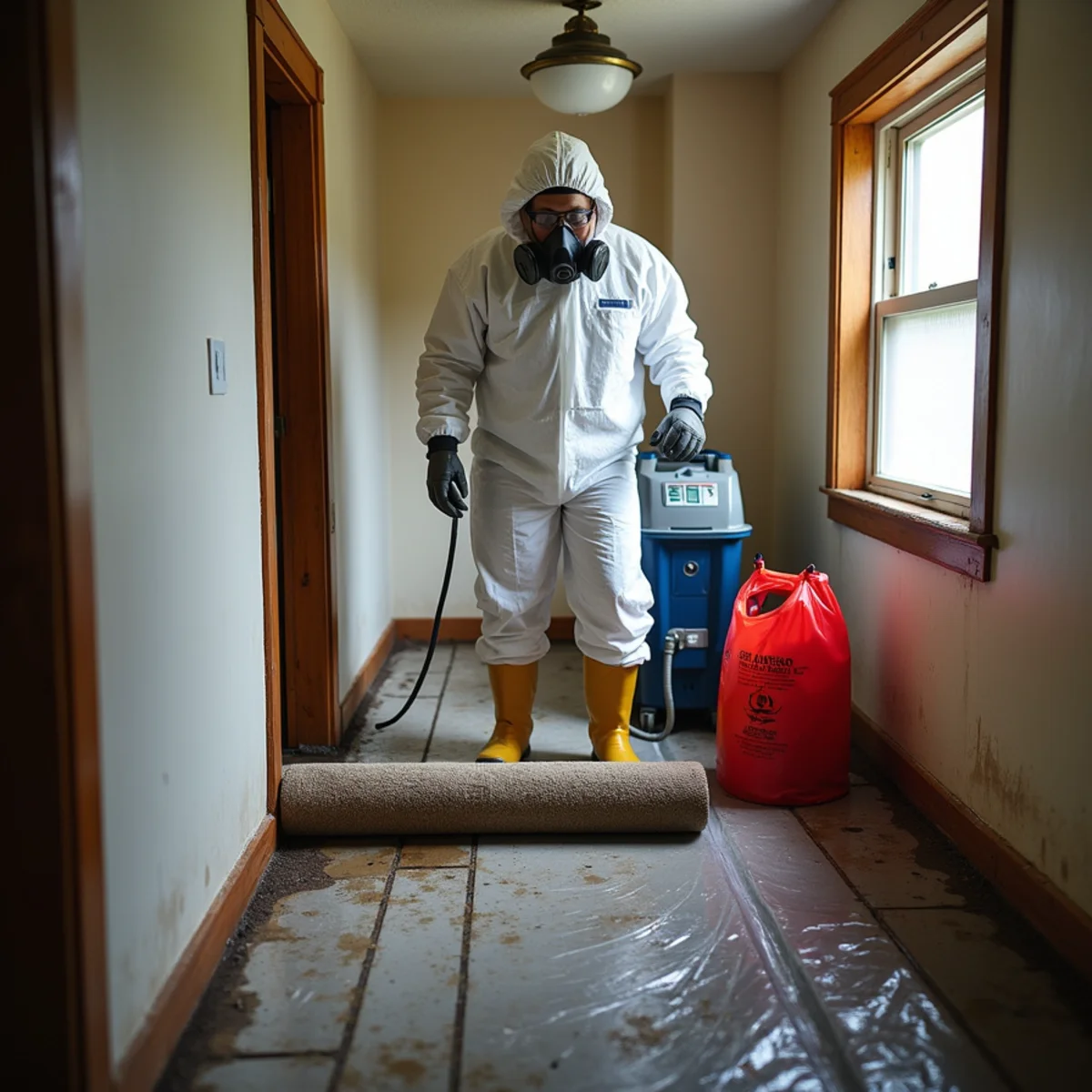
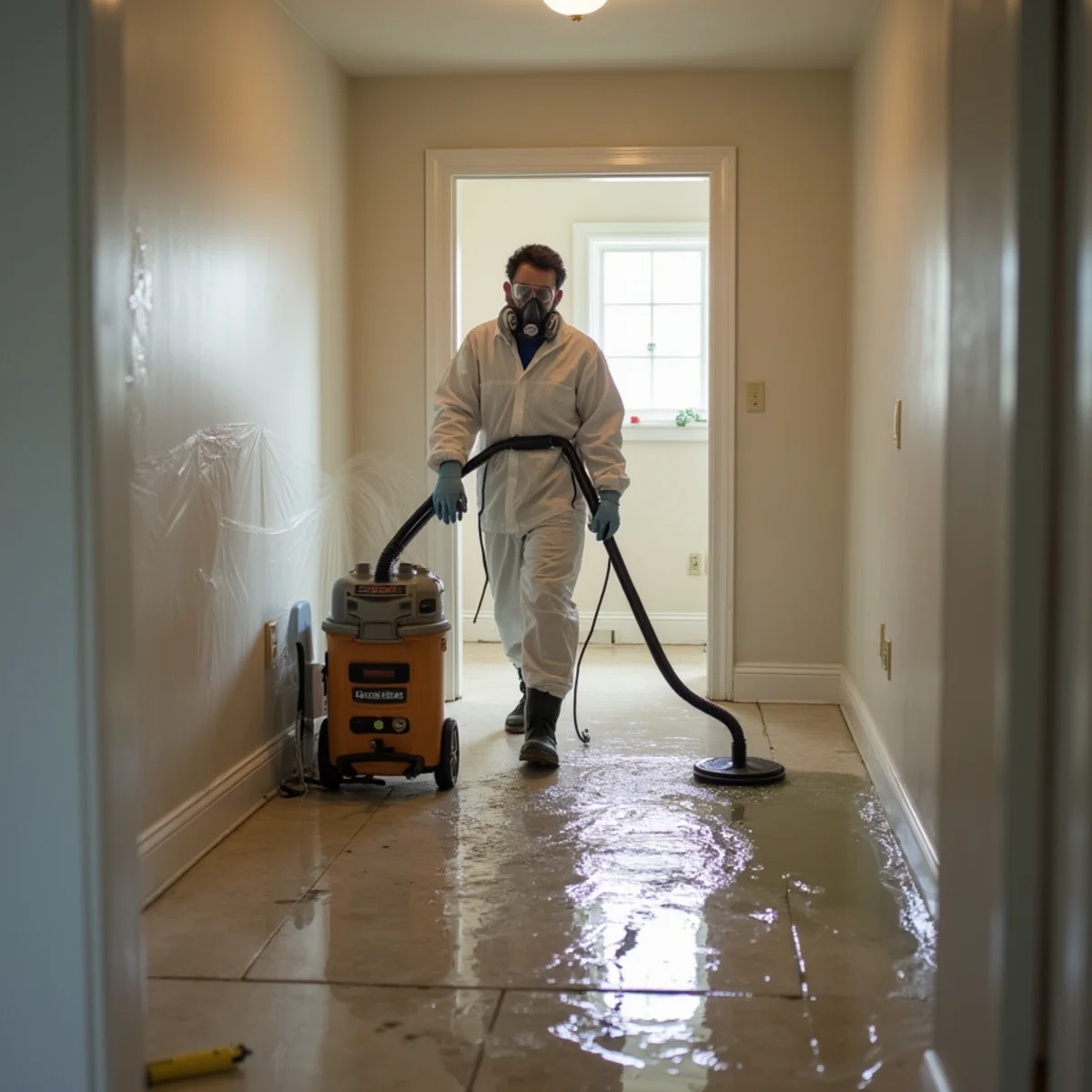
- Remove the sewage. Standing water and solids are pumped out and disposed of properly by technicians in gloves, boots, eye protection, respirators and disposable coveralls.
- Tear out porous materials. Carpet, pad and drywall that wicked up sewage are cut out and bagged, with a flood cut above the wet line.
- Clean and disinfect. Studs, subfloor, concrete and tile are scrubbed, rinsed and treated with an EPA-registered disinfectant.
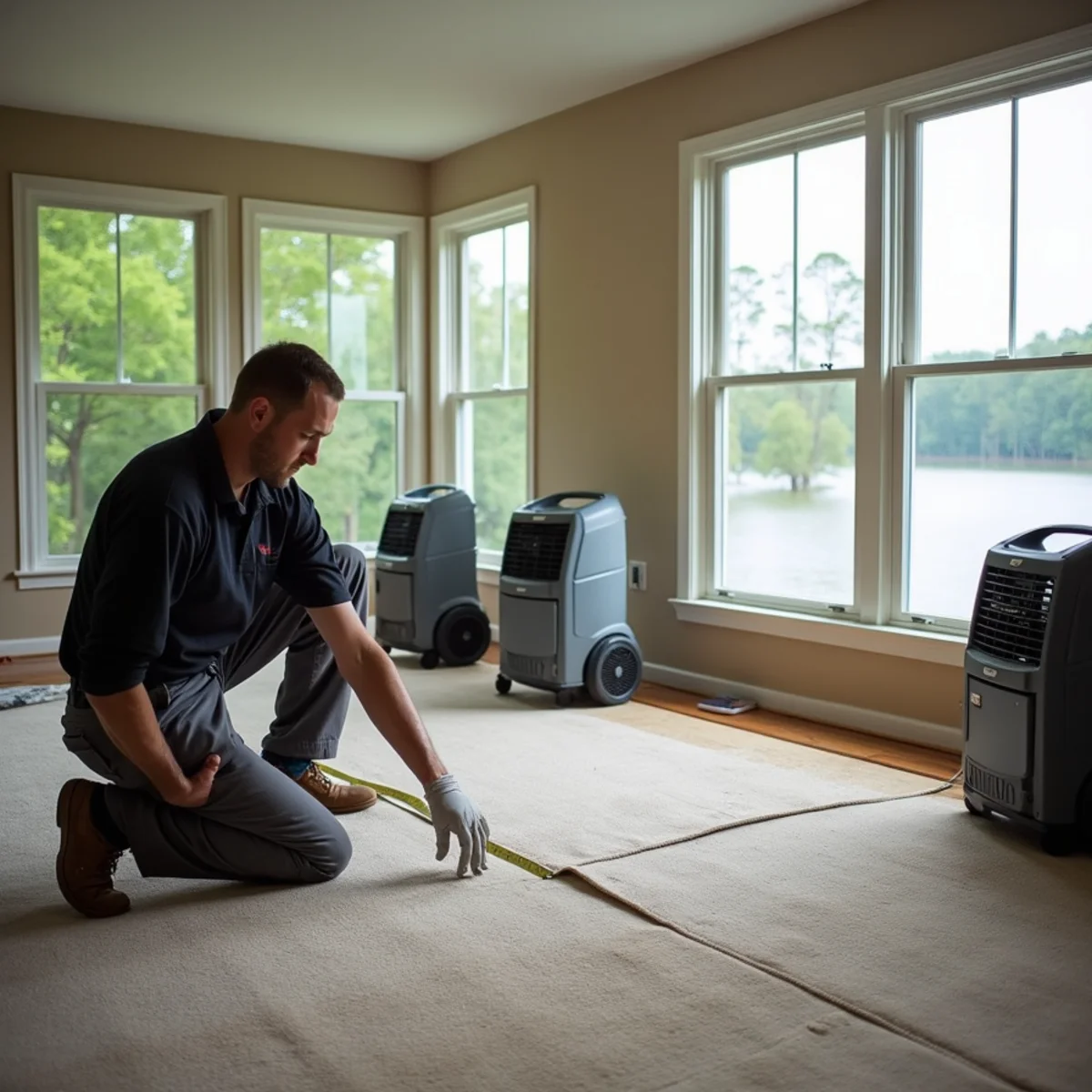
- Dry the structure. Dehumidifiers and air movers run until framing and subfloor reach dry readings, with daily moisture logs.
- Final check. Moisture readings confirm the area is dry, the work is photographed, and only then does rebuild start.
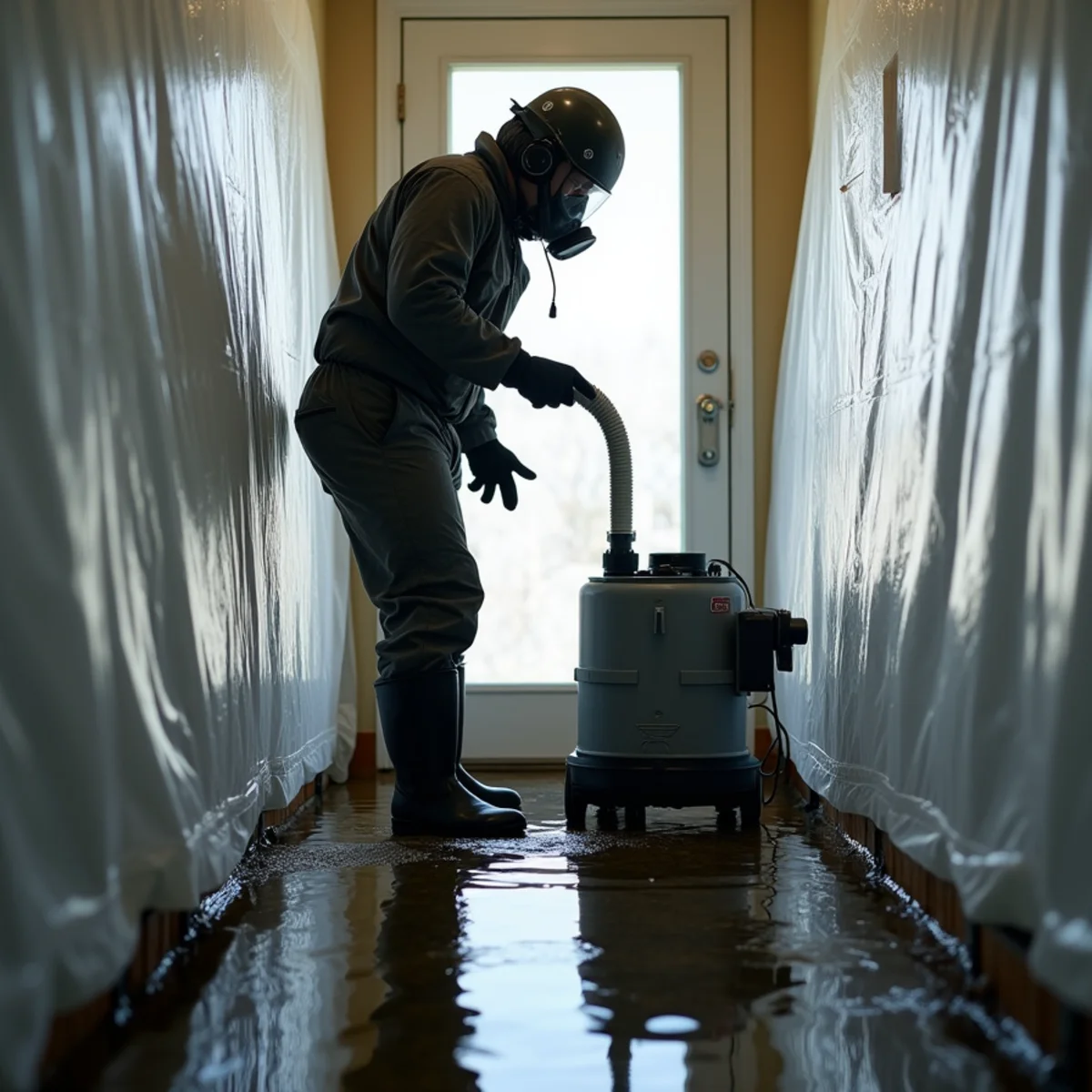
If sewage reached the crawl space, the insulation and vapor barrier come out too. Our crawl space water cleanup page covers that part.
What has to be thrown out: carpet, pad, drywall, soft contents
The rule is simple: if a material is porous and sewage soaked into it, it usually cannot be reliably disinfected, so it goes. Hard, sealed surfaces can be cleaned and kept.
| Material | Usual outcome | Why |
|---|---|---|
| Carpet and pad | Discarded | Sewage soaks through the fibers and the pad holds it against the subfloor. |
| Drywall and wall insulation | Cut out above the wet line | Paper facing and gypsum wick contamination upward. |
| Studs, joists, plywood subfloor | Kept, cleaned, disinfected, dried | Solid framing can be treated and dried unless it is rotted. |
| Tile, sealed concrete, stone | Kept and disinfected | Sealed surfaces do not absorb the water. |
| Mattresses, upholstered furniture, soft toys | Usually discarded | Foam and stuffing cannot be cleaned through. |
| Metal, glass, hard plastic | Cleaned and kept | Nonporous surfaces take disinfectant well. |
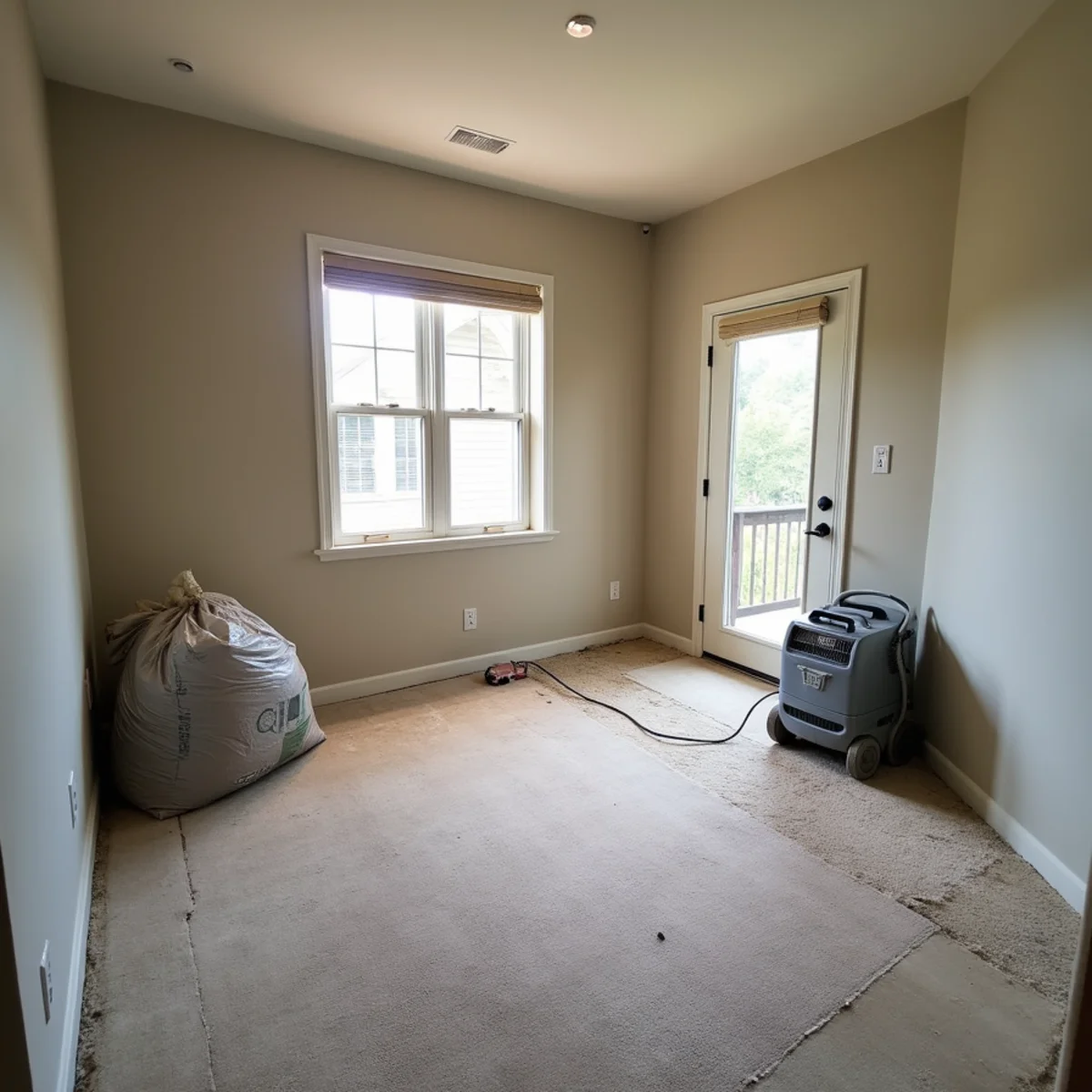
Everything is photographed and listed before it leaves, so the claim record survives the item.
Your line or Charlotte Water's main: who is responsible for the pipe
Davidson's public sewer is run by Charlotte Water. As a general rule, the homeowner owns and maintains the private sewer lateral, the pipe running from the house out to the public main, often to a cleanout near the property line or street. The utility is responsible for the public main.
Where your part ends depends on how the line was built and on the utility's rules, so check with Charlotte Water before paying for repairs near the street. Some clues:
- If only your house is backing up and the neighbors are fine, the blockage is most likely in your lateral or the building drain.
- If several houses on the street are affected at once, the public main may be involved, and the utility should hear about it right away.
- A plumber's sewer camera shows where the blockage is, and that video helps the claim.
On septic, the tank, pipes and drain field all belong to the owner and a septic contractor handles the system. The cleanup crew handles the house either way.
Insurance and the sewer-backup endorsement
Standard North Carolina homeowners policies usually exclude sewer or drain backup. Coverage normally comes from a water backup endorsement, an add-on that often has its own limit. Read your own policy and ask your agent or adjuster what applies.
Three questions for your agent about that endorsement: what its limit is, whether it also covers a sump pump that fails or cannot keep up, and how the deductible applies to it. The North Carolina Department of Insurance publishes consumer guidance on homeowners policies and the coverages they often leave out.
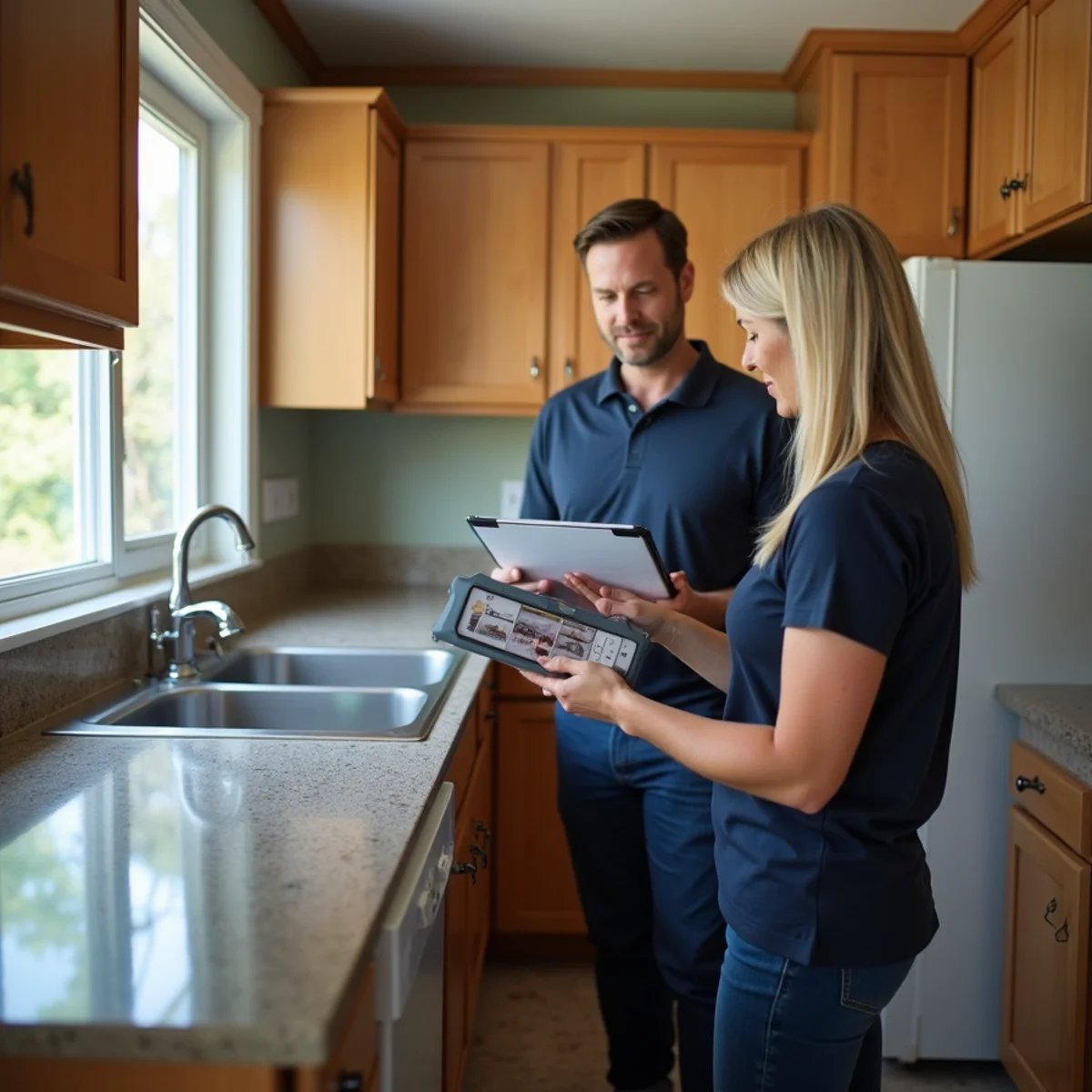
The crew gives your adjuster a clean record: photos, moisture readings, daily drying logs, an itemized scope and a discarded-contents list, and can meet the adjuster on site. Our guide to homeowners insurance and water damage in North Carolina explains common exclusions, and what drives restoration cost around Lake Norman covers pricing.
What to keep for a backup claim
The crew's records cover the cleanup. A few pieces only you can collect, and adjusters tend to ask for them on backup claims:
- The plumber's invoice, stating where the blockage was and what caused it: roots, grease, a collapsed section or a septic problem.
- The sewer camera video, if the plumber ran one.
- The date and time you first saw sewage, and when everyone stopped using the plumbing.
- The reference number from your call to Charlotte Water, if the utility came out to check the main.
- Receipts for a hotel, meals out, laundry and anything you bought to protect the house while you waited.
Every restoration technician we send is licensed where North Carolina requires it, and insured. Crews also handle sewage cleanup in older mill houses in Kannapolis and across our service areas around Lake Norman. Call (831) 303-1192 at any hour.
Why Davidson calls Ultra Mold & Water for sewage cleanup
A live answer at any hour
Sewage does not wait for business hours. Call (831) 303-1192 day or night and a person answers and sends the nearest available crew.
Scope and price in writing first
You see what will be removed, cleaned and dried, and what it costs, before the crew starts tearing anything out.
A record for the claim
Photos of the source and the damage, moisture readings, daily drying logs and a discarded-contents list are kept for your insurer.
Meeting the adjuster on site
A crew member can walk the adjuster through the job so the cleanup and the photos tell the same story.
Every restoration technician we send is licensed where North Carolina requires it, and insured.
Sewage Cleanup: common questions from Davidson homeowners
Is it safe to stay in the house after a sewage backup?
Often you can stay in rooms the sewage did not reach if you can close them off and are not using the plumbing. Infants, older adults, pregnant people and anyone with a weakened immune system should talk to their doctor and may be better off elsewhere. A backup that reached the HVAC system or the only bathroom usually means leaving for a few days.
Can carpet be saved after a sewer backup?
Usually not. Carpet and pad that soaked up sewage are normally discarded, because contamination goes through the backing into the pad. A small area rug can sometimes be sent out for specialized cleaning.
Does homeowners insurance cover sewer backup?
Not under most standard policies alone. Sewer and drain backup is usually excluded unless you added a water backup endorsement. Read your policy or call your agent, and report the loss promptly either way.
Who fixes the clog that caused the backup?
A licensed plumber clears or repairs the line. The restoration crew cleans up the house. If the blockage turns out to be in the public main, Charlotte Water handles that part, so call them if neighbors are backing up too. Homes on septic need a septic contractor to pump the tank or check the drain field.
How long does sewage cleanup take?
Removal, tear-out and disinfecting usually take a day or two. Drying runs until framing and subfloor read dry, often several days. Rebuild follows the final moisture check.
Can I clean up a sewer backup myself with bleach and a wet vac?
Beyond wiping up a little water on tile, it is a poor trade. Bleach does not reach sewage that has soaked into carpet pad, drywall or subfloor, and a wet vac blows contaminated mist out of its exhaust and leaves the machine contaminated. The soaked materials still have to be cut out and bagged, which is where most of the exposure happens. Stop using the plumbing, keep people out, photograph the damage and leave the rest to a crew in protective gear.
Who should call when sewage backs up in a rental or a business?
Whoever is there first should call (831) 303-1192 and get a crew moving, but the owner or property manager approves the written scope and price, so have their number ready. Tenants should stop using water, stay out of the area and tell the landlord in writing the same day. A restaurant or food shop should also check with Mecklenburg County's environmental health office before reopening food areas the sewage reached.
Sewage Cleanup beyond Davidson
The same crews cover the Lake Norman towns around Davidson, 5 to 35 minutes out by I-77, NC-115 and NC-73. See how sewage cleanup plays out in the housing stock of each town, or view all water damage service areas.
Also serving Kannapolis and Concord.