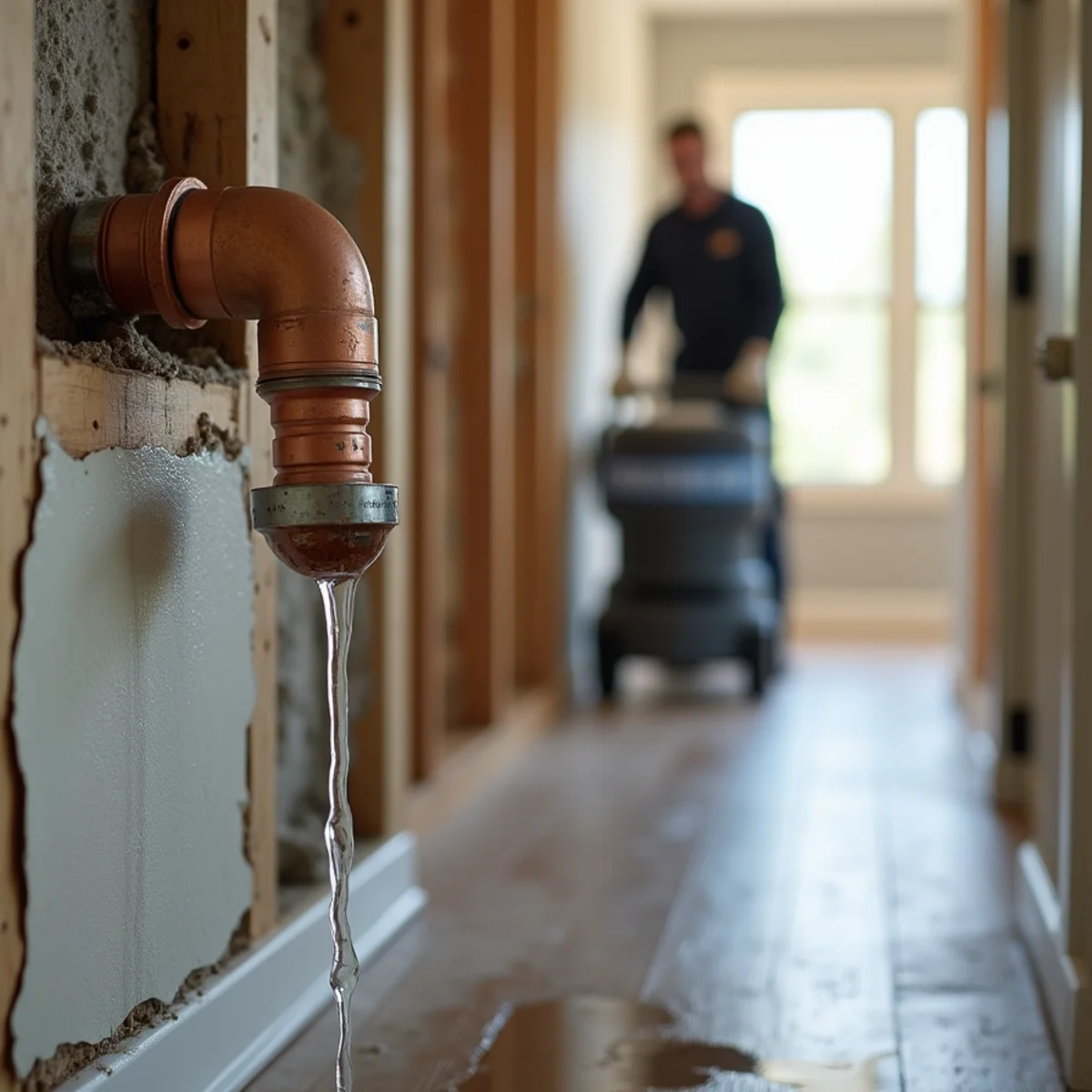
If a pipe has burst or a supply line has let go in your Davidson, NC home, close the main water valve and call (831) 303-1192, where a person answers 24/7 and sends the nearest available crew. A pressurized line keeps running until someone stops it, pushing water into walls, ceilings and the crawl space below.
Ultra Mold & Water Pros connects homeowners with independent restoration technicians who extract the water and dry the house while the plumber fixes the pipe. You get the scope and price in writing before work starts, and every wet wall and floor is photographed and logged for your insurer.
Reviewed by the Ultra Mold & Water Pros team · Published · Updated · Process references: ANSI/IICRC S500 and S520 practices, EPA moisture and mold guidance, NC general contractor rules
The short answer
After a burst pipe, close the main valve, switch off power to wet rooms from a dry spot, then call a licensed plumber for the repair and a restoration crew for the water. Extraction comes first, then air movers, dehumidifiers and daily moisture readings. EPA guidance is to dry wet materials within 24 to 48 hours to prevent mold.
First steps: main shut-off, electricity, and who to call in what order
A burst supply line can release gallons a minute, so stopping it comes before anything else.
- Close the main. In most Davidson homes the house valve sits where the water line enters: in the crawl space near the front foundation wall, in the garage, or by the water heater. Turn it clockwise until it stops. A valve at the fixture works if you know that is the source.
- Cut power to wet areas only if you can reach the breaker panel from a dry floor. If the panel or the floor around it is wet, stay back and call an electrician.
- Shut down a leaking water heater: breaker off for electric, gas valve off for gas, and close the cold inlet valve.
- Open a faucet on the lowest floor to drain pressure from the lines.
- Call in this order: a licensed plumber for the repair, a restoration crew for the water, then your insurer to report the loss. The first two calls often happen together.
- Photograph everything before cleanup, and keep the broken part.
Write it down before cleanup starts
- The time you found the water, when you closed the valve, and which pipe or fixture let go.
- Photos of the break before the plumber cuts it out, then each wet room and soaked belonging.
- A list of the wet rooms and the items you moved.
- Receipts: the plumber's emergency call, fans, a hotel if the house is unlivable.
None of this comes before the valve or the breaker. Safety first, then the record.
What the dispatcher will ask
- Is the water off, and at which valve?
- Which floor is the break on, and is water coming through a ceiling?
- How long did it run before anyone noticed?
- Is water near outlets, a light fixture, the panel or the water heater?
- Does the house sit over a crawl space or have a finished lower level?
Leaks we clean up after: pipes, supply lines, water heaters, washers, ice makers
In River Run, Bradford, Summers Walk and the other 1990s to 2010s subdivisions, much of the original plumbing hardware is 15 to 30 years old. These are the failures behind most calls:
| Source | What usually fails | Usual category |
|---|---|---|
| Supply pipes | Pinholes, splits, freeze bursts in crawl spaces and outside walls | Category 1 |
| Toilet and faucet supply lines | Aging braided or plastic lines and their plastic nuts | Category 1 |
| Water heaters | Tank rusts through, or the relief valve discharges with no drain pan | Category 1 |
| Washing machines | Rubber fill hose bursts; drain hose slips from the standpipe | 1 for fill hose, 2 for drain water |
| Ice maker lines | Thin line behind the refrigerator cracks or gets crushed | Category 1 |
| Toilet overflows | A clog plus a fill valve that keeps running | 2, or 3 if feces are present |
Tank water heaters commonly last around 8 to 12 years and rubber washer hoses far less, so a house on its originals is overdue. Older homes near Davidson College and Main Street (NC-115) add aging supply and drain piping. A toilet overflow with waste in it is Category 3 and goes through our sewage cleanup process.
Where appliance water hides
- Dishwasher: water runs into the sink base and toe kick, then under the flooring beside it.
- Ice maker line: a slow drip behind the refrigerator can wet the subfloor for weeks before boards cup.
- Upstairs washer: a burst fill hose runs at full pressure until the valve closes, soaking the ceiling below.
- Water heater in a closet or garage: water slips under nearby walls, so the far side gets metered too.
Upstairs leaks: ceilings, wall cavities and the floor below
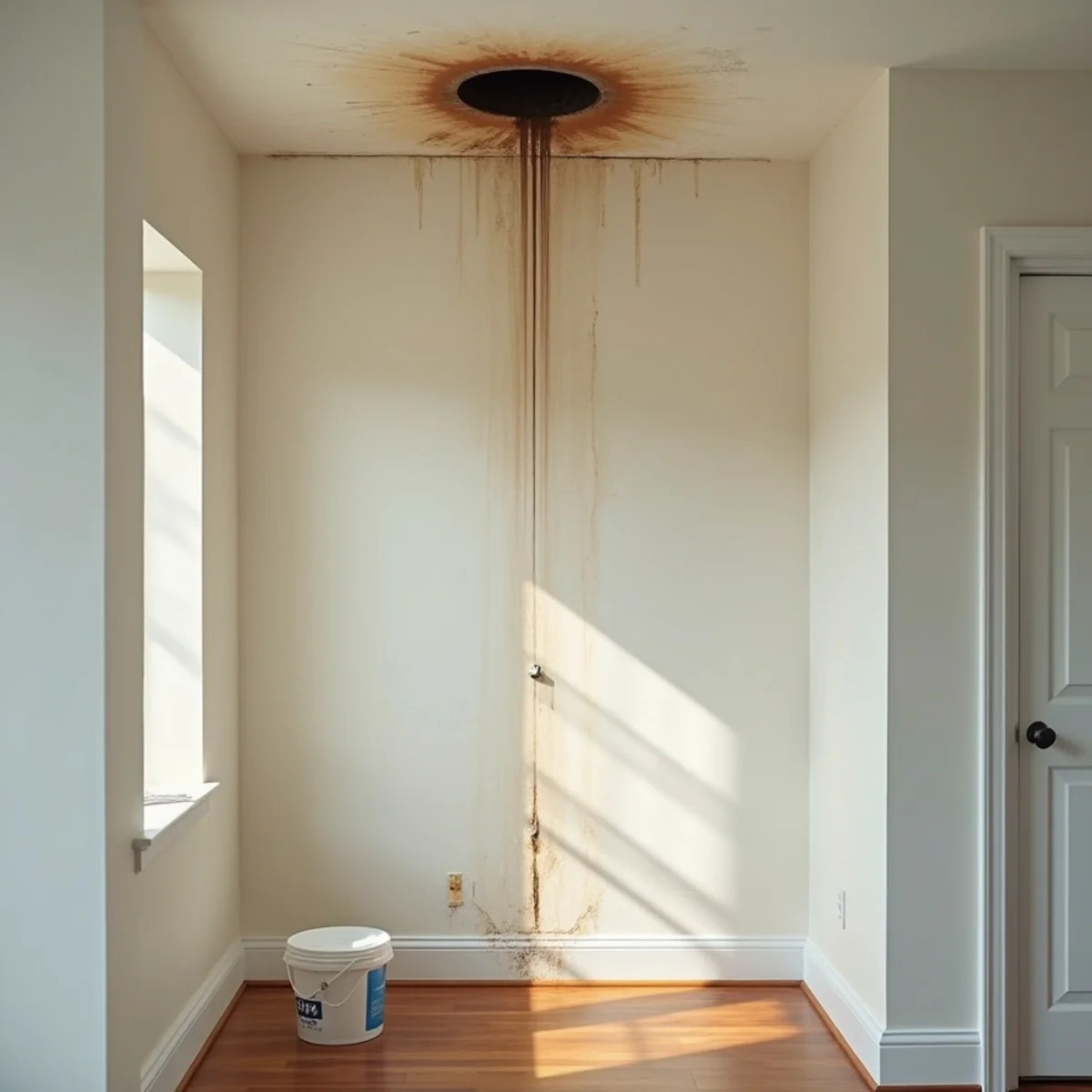
Most Davidson subdivision homes are two stories with the laundry and baths upstairs. Water from a second-floor leak runs along joists and drops wherever it finds a gap, such as a light fixture or drywall seam, sometimes several feet from the source.
- A ceiling soaked enough to sag comes down; a stain on a firm ceiling can often dry in place.
- Joist bays between floors are opened at the low point or vented through small holes so air can move.
- Walls below are metered top to bottom, since water runs down inside the cavity.
- The room below, often a kitchen or living room with hardwood, gets full extraction and drying.
Signs water is still up there after the repair
- A ceiling stain that keeps growing or gets a darker edge after the water is off.
- Drips from a light fixture or smoke detector hours later.
- Paint bubbling or drywall tape lifting on the ceiling below.
- Baseboards or the bottom of door casings swelling downstairs.
Each means water is trapped above the drywall or in a wall cavity, and it needs readings, not more waiting.
Frozen pipes in Davidson: what the December 2022 freeze showed
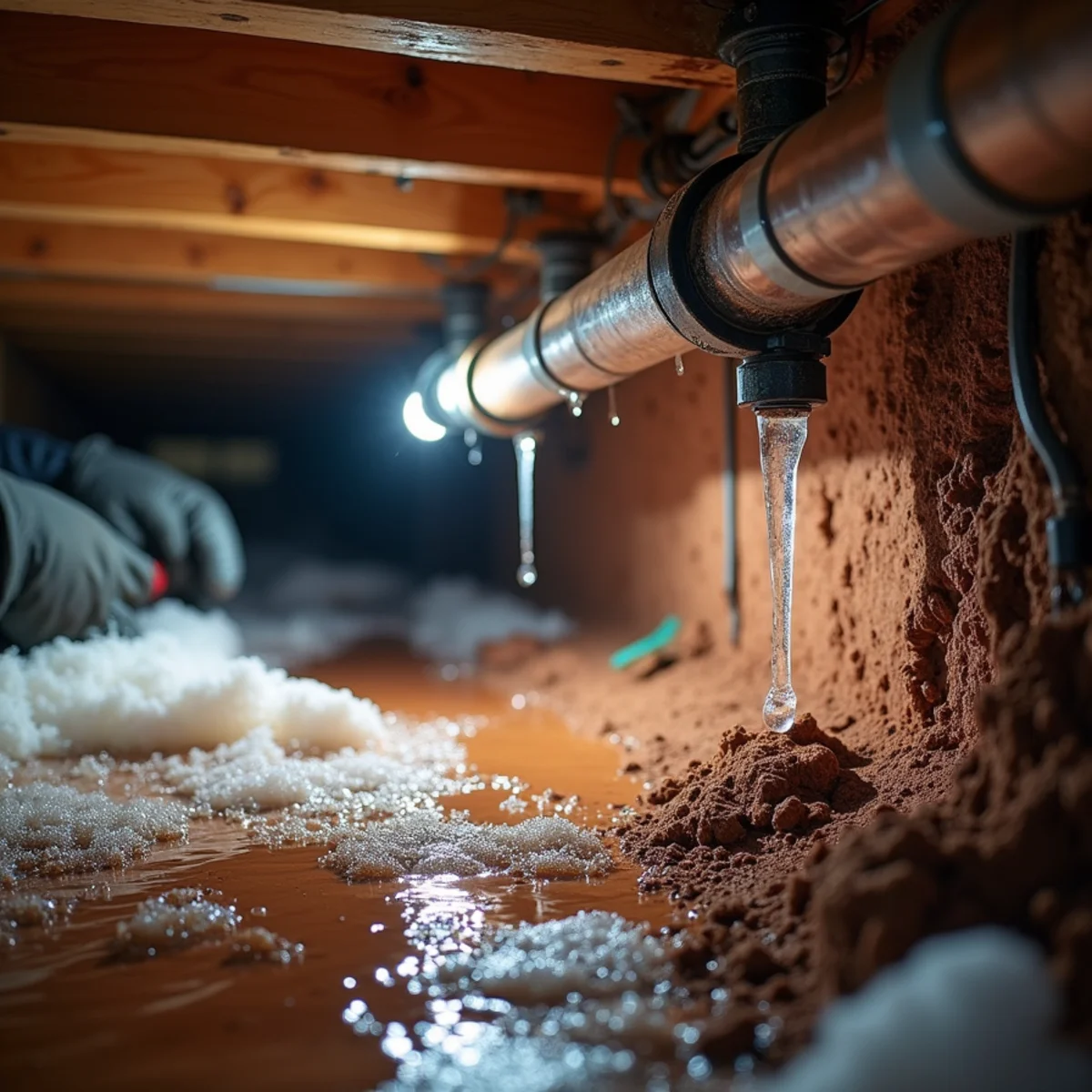
Hard freezes are rare here, which is why they do so much damage. In the cold snap around Christmas 2022, pipes burst across the Charlotte area in homes that had never frozen, and many leaks only showed once the pipes thawed.
- Supply lines in vented crawl spaces, worst near open vents and the access door.
- Pipes in exterior walls, especially under kitchen sinks on outside walls.
- Lines through unheated garages, attics and bonus rooms over garages.
- Hose bibs with a hose still connected.
A crawl space freeze usually floods the crawl space first, soaking insulation and pooling on the vapor barrier; our crawl space water cleanup page covers that drying. To prepare for the next one, read frozen pipes in the Charlotte area.
Extraction and drying, step by step
- Map the water with pin and pinless meters and a thermal camera. The camera shows cool spots, which can also be drafts; the meter confirms what is wet.
- Extract with pumps and wands. More out now means less to dry later.
- Open what will not dry. Saturated ceiling drywall, swollen lower walls and wet insulation come out with flood cuts. Sound walls get baseboards pulled and weep holes drilled behind them.
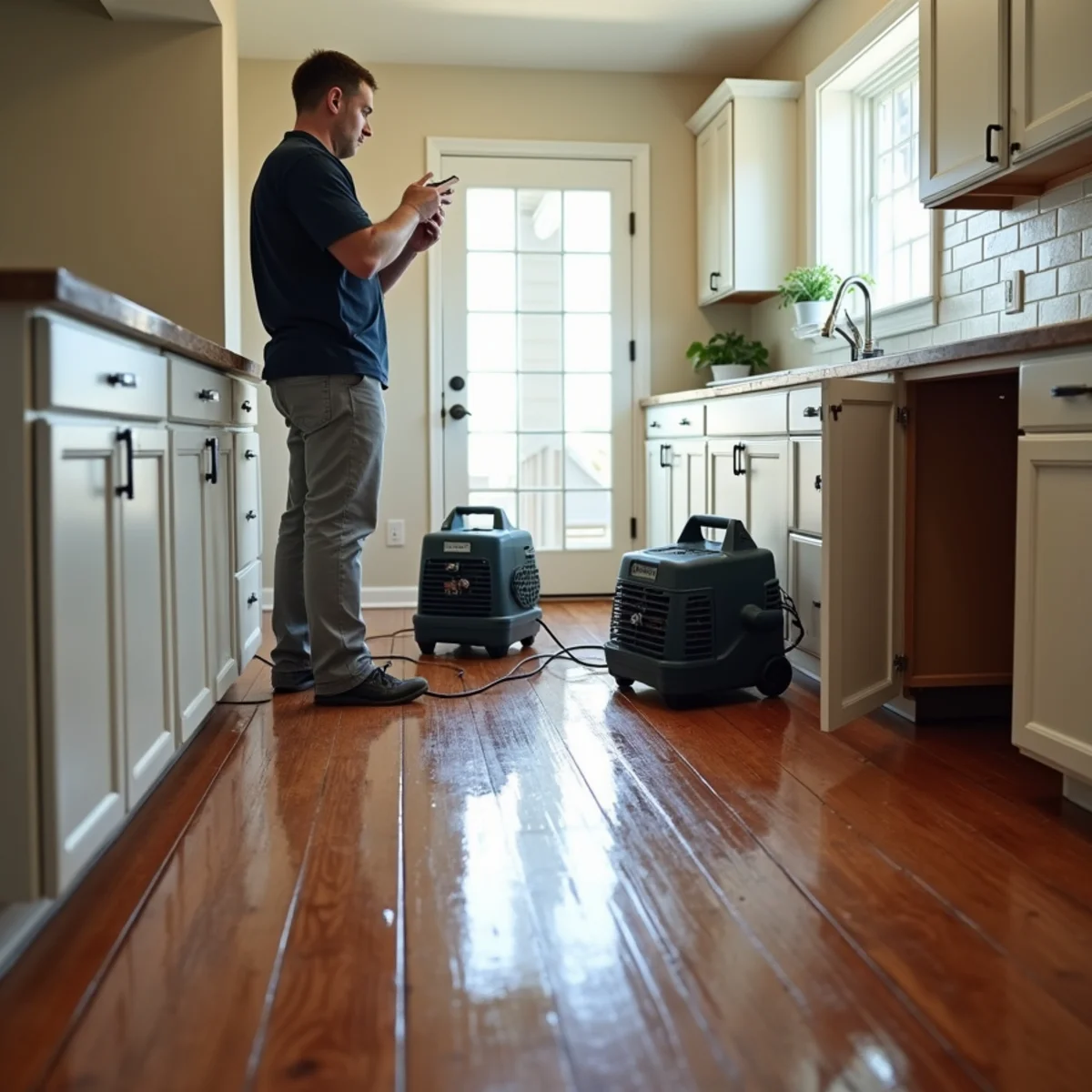
- Set equipment. Air movers and LGR dehumidifiers inside plastic containment, with panel drying mats on hardwood.
- Read daily. The same marked spots are checked every day and equipment is moved as areas dry.
- Confirm dry against readings from unaffected material in the same house, then hand off to repairs.
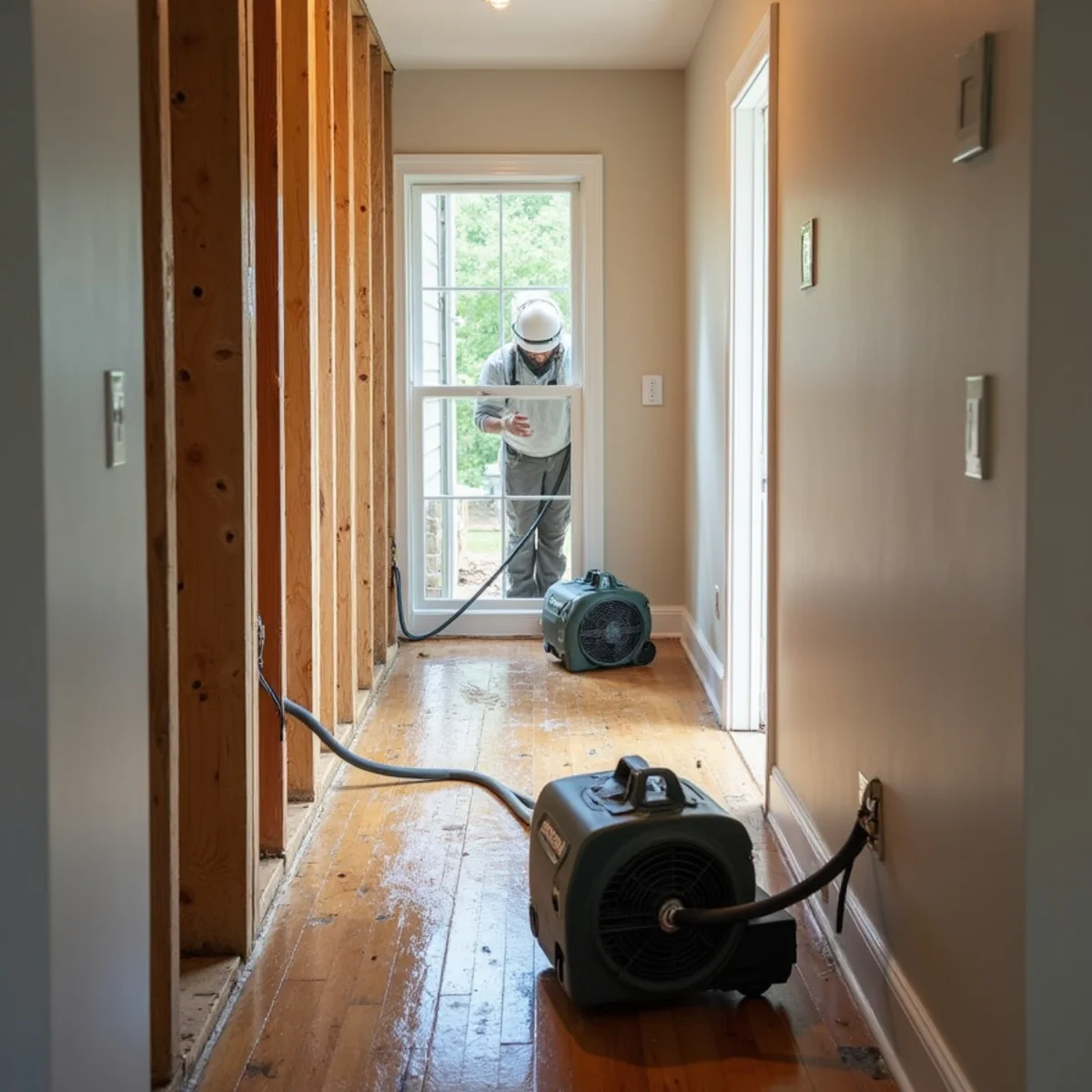
Our water extraction and structural drying page goes deeper on drying classes, hardwood and what stays versus what goes.
Pipe repair vs water cleanup: who does which
- Plumber: finds and repairs the break, replaces the line, valve or water heater, and tests under pressure. Plumbing work in North Carolina needs a licensed plumber.
- Restoration crew: extracts water, removes what cannot be saved, opens walls or ceilings where the plumber needs access, dries and documents.
- Electrician: checks wet outlets, fixtures and wiring before power goes back on.
- Rebuild contractor: replaces drywall, flooring and trim after drying. Larger rebuilds fall under North Carolina's general contractor licensing law.
Every restoration technician we send is licensed where North Carolina requires it, and insured. With the water off, extraction can start before the plumber arrives.
Sudden burst or slow leak: why the difference matters to your insurer
North Carolina homeowners policies are generally built around sudden and accidental discharge. Damage from a split pipe or a supply line that bursts at once is commonly covered, though many policies do not pay to repair the failed pipe or tank itself.
A drip that ran for weeks inside a wall is different: long-term leaks, seepage and wear and tear are common exclusions, and old rot tells the adjuster the water was there a while. Policies also expect prompt drying.
- Keep the failed part: the cracked line, burst hose or rusted fitting.
- Ask for day-one photos and moisture readings showing where the water went.
- Ask the plumber to write the cause on the invoice, such as a freeze split or a failed fitting.
- Report the loss promptly, note when you found it, and put coverage questions to the insurer in writing.
- Read your own policy and ask your agent or adjuster what applies.
Crews can meet your adjuster on site. Our guide to homeowners insurance for water damage in North Carolina covers the usual exclusions, and the North Carolina Department of Insurance publishes consumer guidance on homeowners policies.
What affects the cost
Burst pipe cleanup is priced after the crew sees the readings, with the scope and price in writing before work starts. What changes the number:
- How long the water ran, and from which floor. An upstairs burst wets two levels.
- How much ceiling and wall has to come out.
- Flooring: hardwood dries slower than carpet, and laminate usually comes out.
- Whether water reached the crawl space insulation.
- Water category, if a drain or toilet was involved.
- Drying days and equipment count, plus rebuild, quoted separately.
Crews cover Davidson and nearby towns, including burst pipe and leak cleanup in Huntersville, where the same two-story subdivision homes have the same aging parts. See all service areas near Davidson, or call (831) 303-1192.
Why Davidson calls Ultra Mold & Water for burst pipe & leak cleanup
Answered at any hour
(831) 303-1192 is answered 24/7, and the nearest available crew is sent while you deal with the valve.
Works alongside your plumber
Crews open only what the plumber and the drying need, and extraction starts as soon as the water is off.
Upstairs leaks traced to the end
Ceilings, wall cavities and the floor below are checked with meters, not judged by the visible stain.
Paperwork for the claim
A written scope and price before work, photos, daily drying logs and moisture readings, and a crew that can meet your adjuster on site.
Every restoration technician we send is licensed where North Carolina requires it, and insured.
Burst Pipe & Leak Cleanup: common questions from Davidson homeowners
Will the crew fix the pipe as well as dry the house?
No. The pipe repair goes to a North Carolina licensed plumber, and the restoration technicians extract the water and dry the house. The two often work side by side: the crew opens the wall or ceiling where the plumber needs access, and drying starts once the water is off.
My ceiling is sagging with water. Is it safe to be under it?
No. Keep people and pets out of the room, switch off the light and fan circuit at the breaker, and move what you can from underneath. Soaked drywall can drop without warning with water sitting on top of it. The crew drains it in a controlled way and removes what cannot be dried.
Does homeowners insurance cover a burst pipe in North Carolina?
Many policies cover sudden water damage from a burst pipe, but often not the repair of the pipe itself, and not slow leaks, wear and tear or outside flooding. It depends on your policy, so read it and ask your agent or adjuster. Photos, moisture readings and the failed part help either way.
How soon does drying need to start?
As soon as the water is off. EPA guidance is to dry wet building materials within 24 to 48 hours to prevent mold growth, and Lake Norman summer humidity narrows that margin. If drywall or flooring stayed wet longer, mold remediation may need to be part of the plan.
Water is coming out of a ceiling light or a wall outlet. What should I do?
Leave the switch alone and keep everyone out of that room. If you can reach the panel standing on a dry floor, turn off that circuit or the main breaker; if the panel or the path to it is wet, do not try. Close the water main, and have an electrician check the wiring before power goes back on.
Should I wait for the plumber before calling a restoration crew?
No. Once the water is off, call both. The plumber fixes the break, and the crew can start moisture mapping and extraction on the same visit, because water inside a ceiling or wall keeps moving while you wait. The sooner readings start, the more drywall and flooring can be dried in place instead of replaced.
What if the pipe burst while we were away?
Close the main, then document before anything moves: the dates you left and returned, photos of each wet room and the break in place. Water that sat for days spreads further and can degrade toward Category 2, so more of the house gets read. Tell your insurer promptly; your policy decides how a burst found on return is treated.
Burst Pipe & Leak Cleanup beyond Davidson
The same crews cover the Lake Norman towns around Davidson, 5 to 35 minutes out by I-77, NC-115 and NC-73. See how burst pipe & leak cleanup plays out in the housing stock of each town, or view all water damage service areas.
- Burst Pipe & Leak Cleanup in Cornelius
- Burst Pipe & Leak Cleanup in Mooresville
- Burst Pipe & Leak Cleanup in Huntersville
Also serving Kannapolis and Concord.