Water Damage at Home: What to Do in the First 24 Hours
By Ultra Mold & Water Pros 6 min read
Quick answer
In the first 24 hours after water damage, work in this order: make the area safe (power off to wet rooms, stay out from under sagging ceilings), stop the water at the fixture valve or the main, photograph everything, move furniture and rugs off wet floors, and remove as much standing water as you safely can. Then start drying right away, because the EPA advises drying wet materials within 24 to 48 hours to prevent mold. If water reached walls, ceilings or the crawl space, call a restoration crew right away.
Hour zero: make the house safe before you touch the water
Most leaks around Davidson are clean water: a split supply line, a washer hose, a water heater that finally let go. In the first minutes the danger is electricity, a ceiling holding water, or the occasional sewage backup.
- Electricity first. If water is near outlets, a power strip or a furnace, switch off the breakers for those rooms. If you would have to stand in water to reach the panel, leave it and call an electrician or the utility. Power strips, extension cords and floor outlets that got wet stay unplugged until an electrician checks them; do not plug something back in just to see if it works.
- Ceilings. A brown, bulging patch of drywall can hold many gallons. Keep people and pets out from under it.
- Sewage or outside water. Water from a toilet with waste in it, a floor drain or the yard is contaminated. Keep children and pets away.
- Gas appliances. If a water heater or furnace sat in water, do not relight it until a technician checks it.
Stop the water at its source
Start with the closest valve. Sinks, toilets, dishwashers and ice makers have small shut-off valves, and turning one clockwise often ends the problem.
If you cannot find the leak or the valve will not turn, shut the main. In the 1990s to 2010s homes in River Run, Bradford and Summers Walk, the main is usually inside near where the line enters: a garage wall, a utility closet near the water heater, or at the front of the crawl space. Older houses near Davidson College and Main Street may only have a usable valve at the meter by the street. Davidson, Cornelius and Huntersville homes are on Charlotte Water, which can help if the curb valve is stuck.
Once the water is off, call a plumber for the repair. A restoration crew dries the house; a licensed plumber fixes the pipe.
Photograph everything before you move it
Take wide photos of each wet room, then close-ups of the failed part, the water line on walls and cabinets, and damaged furniture. Keep the broken hose or valve; an adjuster may ask to see it.
Report the loss to your insurer once the water is stopped. Policies expect reasonable steps to prevent further damage, so cleanup does not wait for permission. Save receipts. Our guide to whether homeowners insurance covers water damage in North Carolina explains the sudden versus gradual distinction most claims turn on.
Start a simple loss file on day one
- The time you found the water, the time it stopped, and who shut it off and how.
- Which rooms got wet and how far: carpet, walls up to what height, cabinets, the ceiling below, the crawl space.
- Receipts for anything the leak made you buy or pay for: a wet vac, fans, the plumber, a hotel night, meals while the kitchen is out.
- The plumber's invoice with the cause written on it, and the crew's first moisture readings once they are taken.
Keep it in one phone album or folder and send copies, not originals; it answers most of the adjuster's first questions. Safety still comes first: with a sagging ceiling or wet wiring, get out before taking a photo.
Hours 1 to 6: get the water out and protect what you can
Water left on the floor keeps soaking into pad, baseboards, drywall and subfloor. Removing it fast shortens drying more than anything else.
What a homeowner can safely do
- Mop and towel up clean water, and use a shop vacuum rated for liquids on hard floors.
- Lift furniture onto blocks or foil squares so wood legs do not wick water or stain carpet.
- Pull up area rugs and move them somewhere they can dry flat.
- Move books, papers, electronics and photos to a dry room.
What to skip
- A household vacuum on wet carpet. It is an electrical hazard.
- Space heaters in a closed room. Heat without moisture removal just moves water onto cooler walls.
- Ceiling fans or lights under a wet ceiling.
- Sewage or floodwater cleanup without protective gear.
| Source | Water category (IICRC S500) | First-day approach |
|---|---|---|
| Supply line, water heater, ice maker | Category 1, clean | Homeowner can start removal; carpet and pad may dry in place if extraction starts fast |
| Washer or dishwasher discharge, toilet overflow without waste | Category 2, gray | Gloves on; pad usually comes out; disinfecting needed |
| Sewage, outside surface water, water left sitting for days | Category 3, black | Keep out; porous materials are removed by a crew in protective gear |
When you cannot tell where the water came from, such as a floor drain that filled during a storm or a dark seep at the bottom of a wall, treat it as Category 3 until someone finds the source. The EPA's guide to mold cleanup in your home says damage from sewage or other contaminated water calls for professionals experienced with that kind of cleanup.
Hours 6 to 24: start drying, because the mold clock is running
The EPA's brief guide to mold, moisture and your home advises drying wet building materials and furnishings within 24 to 48 hours to prevent mold growth. Around Lake Norman that window can feel short. From May through October the outdoor air is humid, so opening every window often brings more moisture into the house than it lets out.
- Keep the air conditioning running in summer; it pulls water out of the air as it cools.
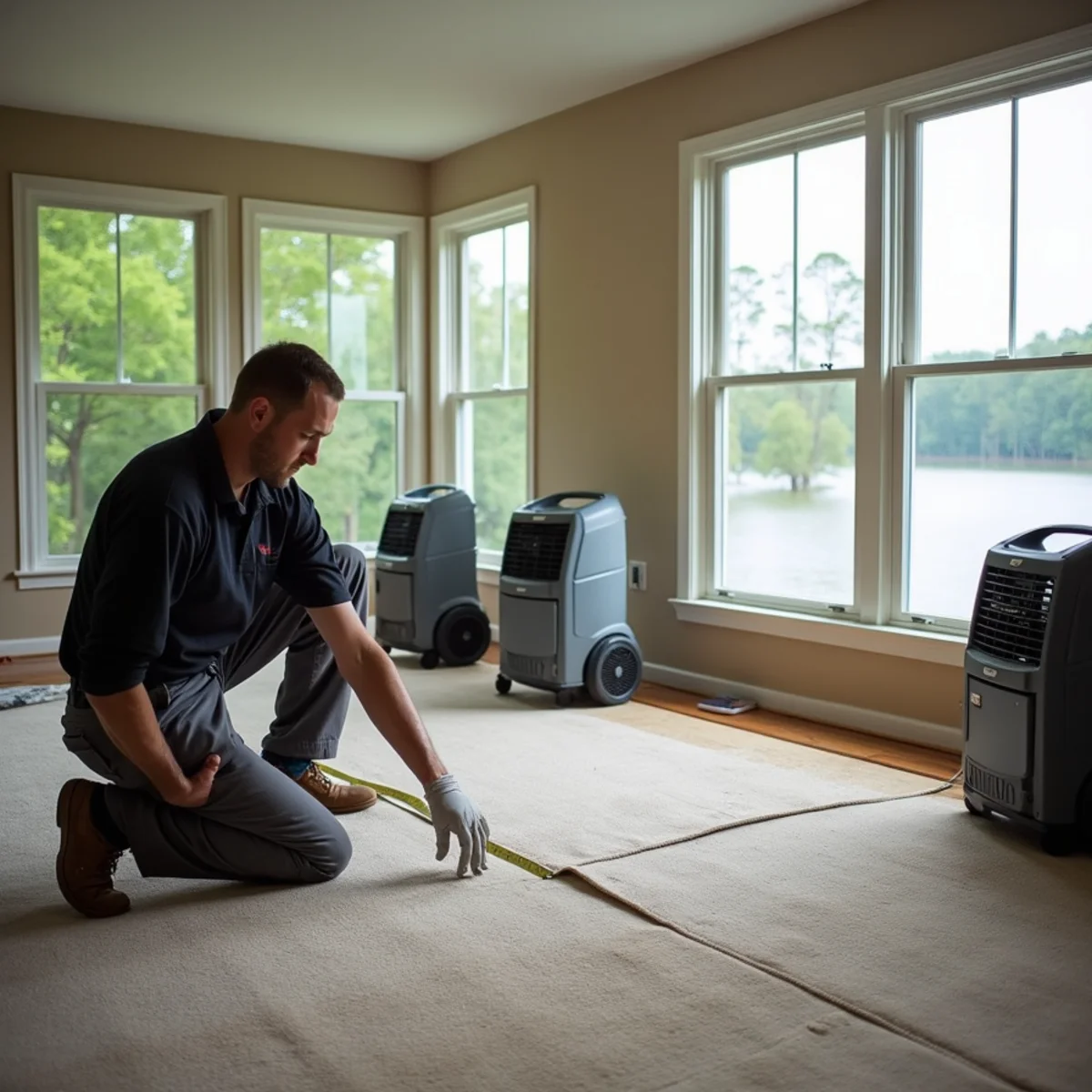
- Run box fans across wet floors and aim them at the base of wet walls.
- Set up a home dehumidifier in the wettest room and empty it often.
The catch is what you cannot see. A wall can feel dry while the drywall and framing behind it stay wet, and hardwood can look fine for two days before it cups. Moisture meters and thermal cameras find that water.
Check under the house
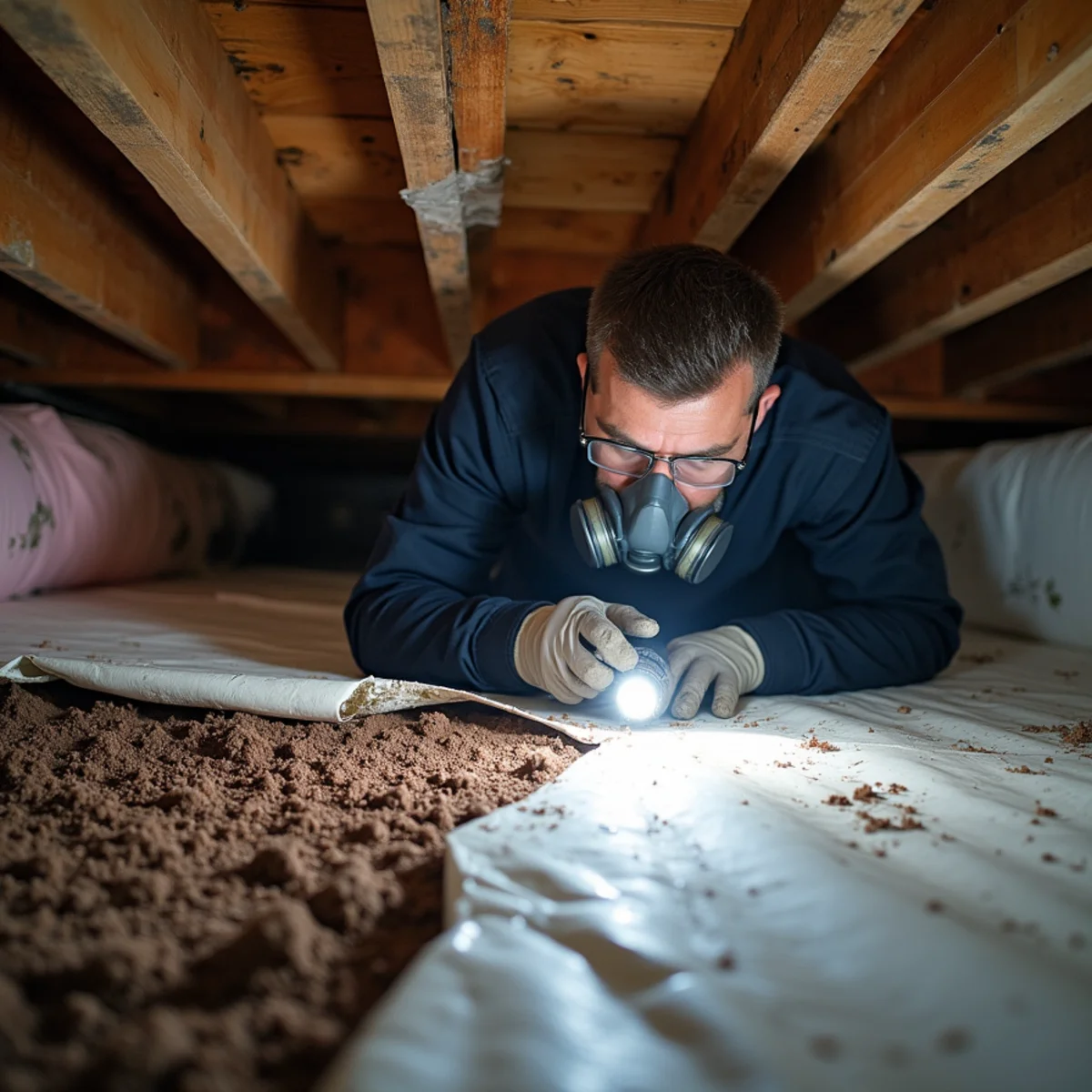
Most homes around Davidson sit on vented crawl spaces. Water from a first-floor leak runs through the subfloor onto the insulation and vapor barrier below, where it can sit for weeks. Shine a flashlight through the crawl space door. Sagging, wet insulation or puddles on the plastic mean the crawl space needs drying and water removal along with the rooms above.
When to call a restoration crew, and what happens next
A small clean-water spill on tile that you caught in minutes is a towel job. Call (831) 303-1192 for a crew when any of these are true:
- Water reached carpet pad, the inside of walls, a ceiling or the crawl space.
- More than one room got wet, or water traveled to the floor below.
- The water is gray or black, or you do not know where it came from.
- Hardwood is already cupping or the house smells musty.
Have these answers ready when you call
The call goes faster if you can say where the water came from and whether it is stopped, how long things have been wet, which floors are involved, and whether water reached outlets, the panel or HVAC equipment. Mention anyone with asthma or another health concern, and any crawl space, hardwood or finished lower level, because those decide what equipment comes on the first visit.
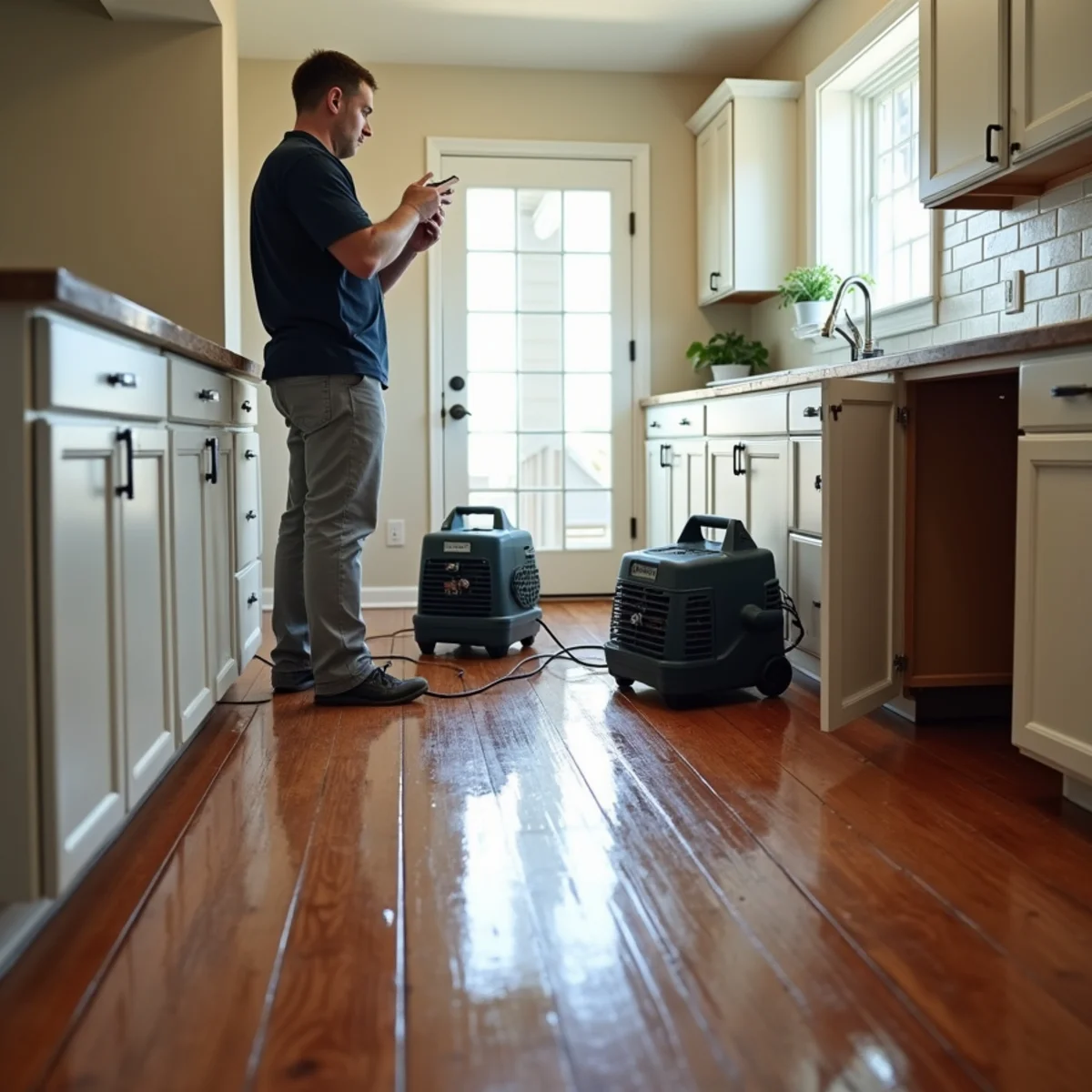
Calls come in at all hours, which is why our 24/7 emergency water damage service answers live and sends the nearest available crew. Technicians check safety, map moisture, then begin water extraction and structural drying with extractors, air movers and dehumidifiers. You get the scope and price in writing before work starts, and photos and daily moisture readings are recorded for your insurer.
Homes in Cornelius, about 5 to 10 minutes from Davidson, and across the east shore of Lake Norman are close by on I-77 and NC-115. Every restoration technician we send is licensed where North Carolina requires it, and insured.
Related questions
Can I dry water damage myself with fans?
For a small clean-water spill on a hard floor, usually yes. Fans alone struggle once water is in carpet pad, wall cavities, hardwood or the crawl space, because Lake Norman air is often too humid to absorb it.
Should I call my insurance company or a restoration crew first?
Stop the water, make the area safe and take photos first. Then report the loss to your insurer and call a crew in whichever order is fastest; your policy expects you to prevent further damage, and drying does not have to wait for an adjuster's visit.
How long does it take to dry a house after a leak?
A typical clean-water loss caught quickly often dries in about three to five days with professional equipment. Hardwood, plaster, a soaked crawl space or water that sat for days can take longer. Daily moisture readings, not the calendar, tell the crew when materials are dry.
Is it safe to stay in the house during drying?
For a clean-water leak, most families stay home while equipment runs. Sewage, heavy mold or a sagging ceiling changes that. People with asthma or other respiratory conditions should talk to their doctor and stay out of the work area.
Can I throw out soaked carpet and drywall before the adjuster sees it?
Photograph it first, wide and close, and note the room and the type of material. Soaked carpet pad usually cannot wait for an inspection because it keeps the floor underneath wet, so cut a small sample to keep and ask the adjuster whether anything else should be held. Anything soaked with sewage should be removed by a crew in protective gear, not by you.