What Drives Water Damage Restoration Cost Around Lake Norman?
By Ultra Mold & Water Pros 6 min read
Quick answer
Water damage restoration cost around Lake Norman is driven mainly by how many square feet got wet, the water category (clean, gray or sewage), how many days the drying equipment runs, how much drywall, flooring and insulation must come out, whether the crawl space is involved, contents handling, rebuild work and after-hours response. Third-party guides give rough planning numbers; Angi's Charlotte cost page, for example, lists an average of $2,328. Your actual price comes from a written scope after a moisture inspection.
What published cost guides say, and how to read them
No two water losses cost the same, but it helps to know the ballpark that national cost guides publish. The figures below are third-party published estimates, quoted from the named sources as of October 2026. They are not our prices or a quote for your home.
- Angi, Charlotte-area cost page: an average of $2,328, with a typical range of $1,014 to $4,081, and $1.81 to $4.54 per square foot. By water type, Angi lists about $2.12 per square foot for clean water, $3.18 for gray water and $4.54 for black water.
- Angi, national cost guide: $3 to $7.50 per square foot on average for water damage repair.
- Forbes Home: a typical range of $1,300 to $5,600, with clean water at about $3 to $4 per square foot, gray water at $4 to $7, and black water at $7 to $7.50.
Sources: Angi's Charlotte water damage repair cost page, Angi's national water damage repair cost guide and Forbes Home's water damage restoration cost guide. They update often, so check the current figures there.
Read these as rough guides. They blend small single-room jobs with large losses, they often leave out rebuild costs, and per-square-foot numbers hide the things that actually move a bill on the east shore of Lake Norman: crawl spaces, humid summers, and the age of the house.
Square footage and water category
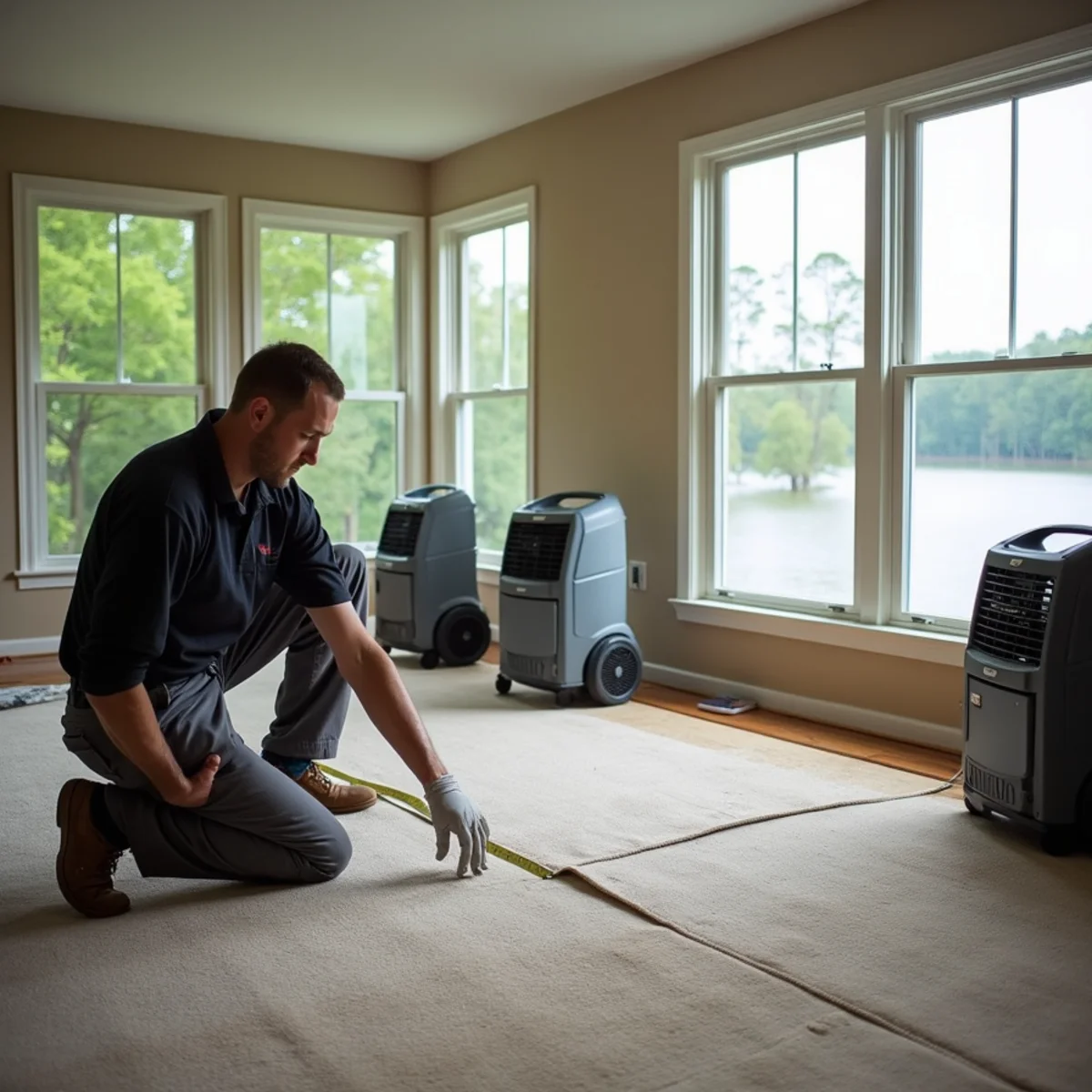
The first two numbers on any estimate are how much area got wet and how dirty the water was. Water spreads further than it looks. A supply line that fails in an upstairs bathroom in a two-story River Run or Bradford home can wet the bathroom, the hall carpet, the kitchen ceiling below and the cabinets under that, and the moisture map from a thermal camera and meter is what sets the real square footage.
Category is the other half. Clean water from a supply line (Category 1) can often be dried in place. Gray water from a washer or dishwasher (Category 2) usually means pulling carpet pad and disinfecting. Black water from a sewer backup or outside floodwater (Category 3) means porous materials come out, crews work in protective gear, and the whole area is cleaned and disinfected. That is why sewage cleanup costs more per square foot than a clean leak of the same size, as the cost guides above also show.
Class of drying and days of equipment
The industry drying standard, ANSI/IICRC S500, sorts losses into drying classes 1 to 4 by how much material is wet and how hard it is to dry. A wet carpet in one room is low class. Soaked hardwood, plaster or a wet subfloor is higher, because dense materials release water slowly.
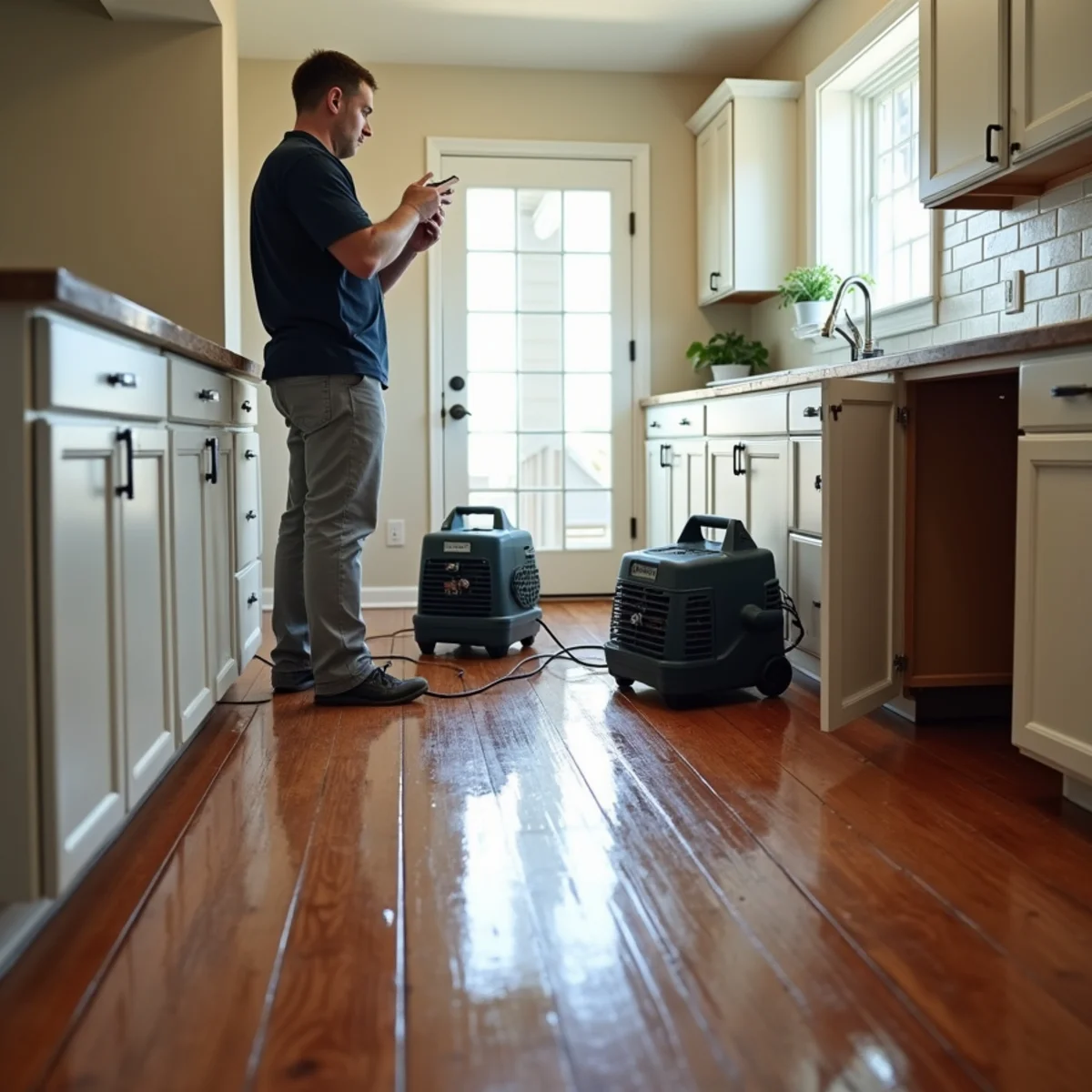
Equipment is usually billed per unit per day: each air mover, dehumidifier and air scrubber, plus the daily visit to take moisture readings and adjust the setup. Around Lake Norman, summer humidity can add days. From May through October the air outside is already damp, so dehumidifiers work harder and windows are kept shut. A good water extraction and drying plan shortens this part of the bill by getting as much water out as possible on day one, because extraction is far cheaper than evaporation.
Material removal, crawl space access and contents
| Cost driver | Why it raises or lowers the price |
|---|---|
| Wet area (square feet) | More area means more extraction, equipment and labor |
| Water category 1, 2 or 3 | Gray and black water add removal, disinfection and protective gear |
| Drying class and days | Dense or deeply wet materials keep equipment running longer |
| Material removal | Drywall, baseboard, pad, insulation and cabinets cut out and hauled away |
| Crawl space involvement | Tight access, wet insulation and vapor barrier removal, added drying |
| Contents | Packing, moving, cleaning or listing furniture and belongings |
| Rebuild | New drywall, paint, flooring and cabinets are often a separate scope |
| After-hours start | Some companies charge more for nights, weekends and holidays |
Tear-out
Drywall that wicked water a foot up, swollen particleboard cabinet bases and soaked pad usually come out. Each item adds labor, disposal and a rebuild cost later. Fast drying saves material: wet drywall dried within a day or two can sometimes stay, while the same wall left for a week usually cannot.
The crawl space
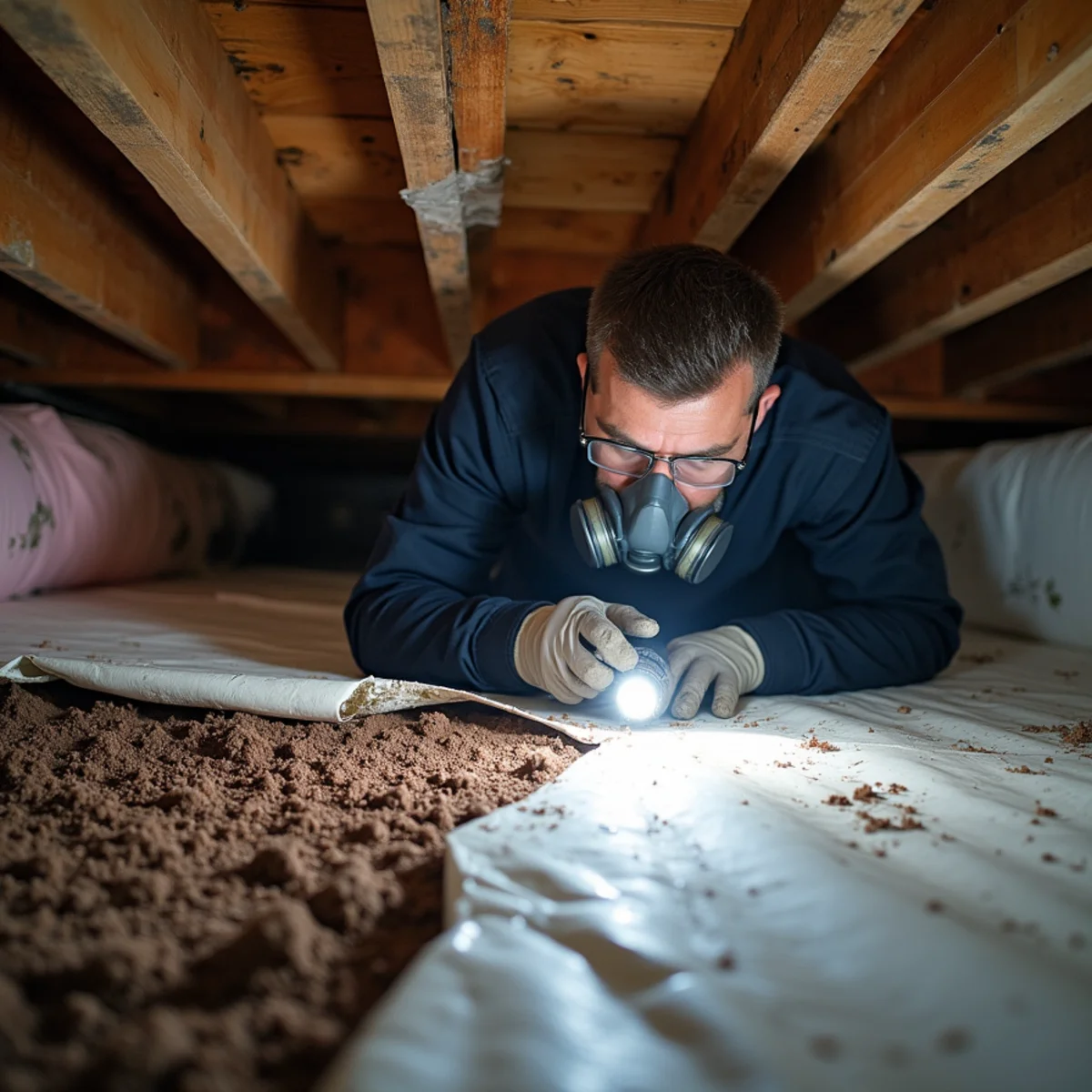
Most homes here sit on vented crawl spaces, and water from a first-floor leak ends up on the insulation and vapor barrier below. Working in a low, tight crawl space is slower than working in a room, and wet fiberglass batts and torn plastic have to be removed and replaced. If the crawl space already had high humidity or mold before the leak, that is usually a separate crawl space water and mold scope.
Contents
Moving a living room of furniture, blocking it up, packing out a finished lower level or photographing and listing damaged items all take hours. Your homeowners policy may treat contents separately from the structure.
Rebuild, after-hours calls and what insurance changes
Mitigation (stopping, removing and drying) and rebuild (putting the house back) are often priced separately, and the rebuild can be larger. Once a North Carolina rebuild reaches $40,000, state law (G.S. 87-1) calls for a general contractor licensed through the North Carolina Licensing Board for General Contractors, which comes into play on big losses.
A crew sent at 2 a.m. on a holiday may cost more than one sent on a Tuesday morning, but waiting until Monday usually costs more in removed materials than any after-hours charge. Ask how night and weekend work is billed when you call.
Insurance changes who pays, not what the work costs. A covered sudden loss may be paid by your insurer minus the deductible, while gradual leaks, flood and sewer backup without an endorsement often are not. Our guide to homeowners insurance and water damage in North Carolina covers the usual rules.
How to get a written price you can compare
The only number that matters for your house comes from an inspection. Before you sign, ask for these in writing:
- A moisture map showing which rooms, walls and floors are wet.
- The water category and drying class, and how they were decided.
- An itemized scope: extraction, equipment by type and day, materials to be removed, disinfection, contents work.
- How the estimate is built, for example line-item software such as Xactimate or time and materials.
- What is mitigation and what is rebuild, priced separately.
- How daily readings, photos and drying logs will be shared with you and your adjuster.
Xactimate or time and materials: what each estimate tells you
Xactimate is line-item estimating software. Each task gets its own line and a unit price from a regional price list: square feet of pad removed, linear feet of drywall cut, each air mover per day. Insurers commonly price claims in the same program, so the contractor's and the adjuster's numbers are easier to reconcile.
Time and materials bills the actual labor hours, materials and equipment days. It suits small jobs, or ones where nobody can see the full damage yet. If you get one, ask for the hourly and daily equipment rates, daily time records, and a not-to-exceed amount that needs your approval to pass.
Payment terms and change orders
- When payment is due. Mitigation is usually billed once drying is finished and the final readings are in. Ask whether a deposit is required and what it covers.
- Separate sign-offs. Approving the drying scope should not commit you to the same company for the rebuild.
- Rebuild milestones. Repairs are often paid in stages tied to finished work, such as drywall hung or flooring installed, not all up front.
- Change orders. Hidden damage turns up, like rot behind a cabinet or a wet subfloor under tile. Added work should come as a written change order with photos or readings and a price, approved before it starts.
Homeowners in Mooresville, 10 to 15 minutes north of Davidson, Davidson and the rest of the Lake Norman area can call (831) 303-1192 at any hour. The crews we send give you the scope and price in writing before work starts, and every restoration technician we send is licensed where North Carolina requires it, and insured.
Related questions
How much does water damage restoration cost near Lake Norman?
It depends on the wet area, water category, drying time and tear-out. As a third-party reference, Angi's Charlotte-area cost page lists an average of $2,328 with a typical range of $1,014 to $4,081. Those are published estimates, not quotes; a written scope after inspection sets your price.
Why does sewage cleanup cost more than a clean water leak?
Category 3 water means porous materials such as carpet, pad and lower drywall are removed rather than dried, crews wear protective gear, and every surface is cleaned and disinfected before drying. More removal also means more rebuild.
Does starting the drying faster really lower the cost?
Usually, yes. Water pulled out on day one cannot wick further into walls and subfloor, fewer materials need to be cut out, and the equipment runs fewer days. Waiting also raises the chance of mold, which adds its own scope.
Why can two estimates for the same leak be far apart?
They are often pricing different jobs. One may plan to dry the drywall in place while the other cuts it out, one may include the crawl space or the rebuild and the other may not, and one may be Xactimate line items while the other is time and materials. Line them up item by item before comparing totals.
Do I pay the deductible to the restoration company?
On an insured loss, the insurer usually subtracts your deductible from what it pays, so that share of the bill comes from you, typically to whoever did the work. Be cautious of anyone who offers to waive or absorb it, and ask your agent how payment will flow on your claim.