Storm Season Around Lake Norman: Keeping Water Out of Your Home
By Ultra Mold & Water Pros 6 min read
Quick answer
Most storm water damage around Lake Norman comes from heavy rain, not the lake. Lake Norman is a dam-controlled Duke Energy reservoir, and during Helene in September 2024 it rose only slightly while flooding hit Mountain Island Lake and the Catawba River downstream. Water gets into homes here through roofs, clogged gutters, short downspouts, poorly graded red clay and wet crawl spaces. Clean gutters, extend downspouts, slope soil away from the foundation, test your sump pump and check your flood coverage before the season.
What storm season looks like around Lake Norman
From late spring through early fall, afternoon thunderstorms roll across the lake and can dump heavy rain in under an hour, with gusts that drive water sideways into siding, windows and roof edges. From late summer into fall, the remnants of tropical systems bring a different problem: a day or two of steady rain that saturates the ground before the next band arrives.
What Helene showed
Helene in late September 2024 is the clearest local lesson. Lake Norman, held by Cowans Ford Dam, rose only slightly. Downstream, Mountain Island Lake climbed nearly eight feet past its maximum level, and Carolina Public Press reported 89 homes flooded along the Catawba River in Mecklenburg County. For most homes around Lake Norman, the takeaway is that storm water damage comes from rain finding a way in, not from the lake.
Huntersville sits between the two. Its west side drains through McDowell Creek toward Mountain Island Lake, and most storm water calls in Huntersville involve wet crawl spaces, ceilings and lower levels in subdivision homes after a heavy rain.
Red clay, grading and where the water goes
Most of the Lake Norman area sits on Piedmont red clay, much of it Cecil series soil. Clay drains slowly. After a long rain it stays saturated, holds water against foundation walls, and sheds the next storm as runoff instead of soaking it up.
- Settled backfill: soil next to the foundation was loosely placed during construction and settles over 15 to 30 years, until the yard tips toward the house.
- Mulch beds and edging piled against siding trap water and let it reach the sill plate.
- Sloped lots near the lake send uphill runoff across the yard and into the uphill foundation wall.
- Patios and driveways that pitch toward the house drop their water at the foundation.
A common building-code guideline is soil that falls about six inches over the first ten feet out from the foundation. A few wheelbarrows of compacted fill in a low spot can stop water from pooling where it should not.
Gutters, downspouts and roof leaks
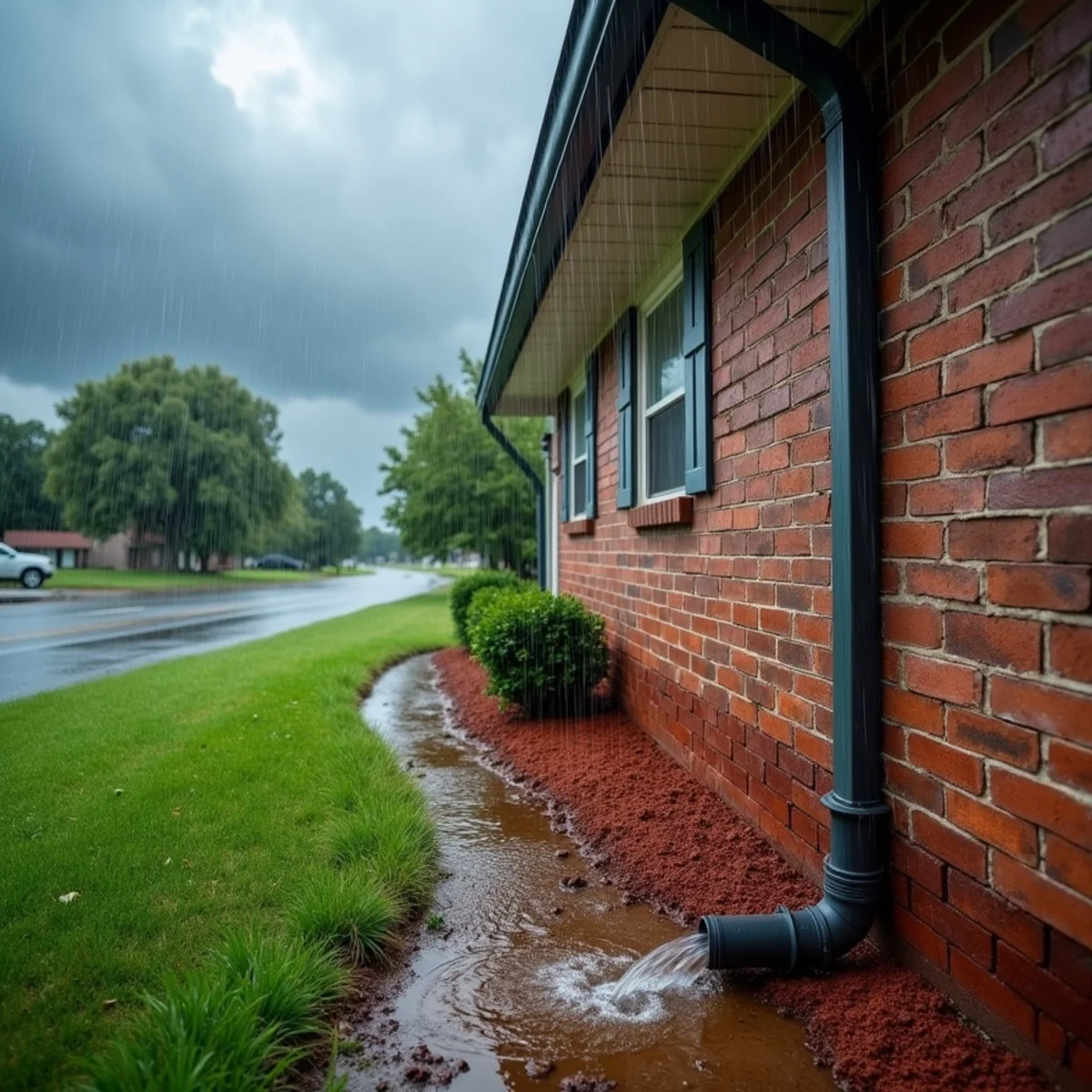
A roof sheds a lot of water in a hard storm, and gutters send all of it to a few downspouts. When gutters clog with oak and pine debris, or downspouts empty right beside the foundation, that water goes straight into the crawl space or against a lower-level wall.
- Clean gutters in late spring and again after the leaves drop.
- Extend downspouts several feet from the foundation, farther on clay, or tie them into a buried drain that empties downhill.
- Check that splash blocks have not tipped back toward the house.
- After a heavy rain, look for overflow streaks on fascia and siding.
Roof leaks in wind-driven rain
Summer storms push rain under shingles, around skylights, at chimney flashing and through roof vents. The first sign is often a brown ring on a ceiling, or damp attic insulation nobody sees. After a big storm, check the attic with a flashlight while the roof is still wet. A ceiling that is holding water can sag and fall, so keep people out from under it.
Crawl spaces, sump pumps and walk-out lower levels
Crawl spaces
Most boom-era homes around the lake sit on vented crawl spaces. After heavy rain, water can seep through block foundation walls, run in through low vents, or rise from saturated soil. Standing water under the house keeps humidity high for weeks and soaks insulation and joists. If you find water down there after a storm, crawl space water removal and drying keeps it from turning into a mold problem.
Sump pumps
If your crawl space or lower level has a sump pump, test it before the season by pouring a bucket of water into the pit. Make sure the float moves freely and the discharge line is clear and points away from the house. A battery backup matters, because storms that knock out power are exactly when the pump is needed. A high-water alarm warns you when the pump falls behind, and a check valve on the discharge line keeps pumped water from running back into the pit.
Walk-out lower levels
Lakefront and sloped-lot homes often have finished walk-out lower levels. The uphill wall is below grade, and the walk-out door sits at the bottom of the slope where runoff collects. Look for a clear drain at the foot of exterior stairs, a working drain along the uphill wall, and a tight door threshold. Many lakefront homes covered by water damage cleanup in Cornelius are built this way, and rain that gets past that door ends up in carpet and drywall.
Flood insurance versus homeowners coverage
Standard homeowners policies usually do not cover flood or rising surface water, and that can include runoff that flows across the yard and in through a lower-level door. Coverage for that needs a separate flood policy through the National Flood Insurance Program or a private flood carrier.
- A new NFIP policy normally takes effect 30 days after purchase, so buying one when a tropical system is already in the forecast is too late for that storm. There are a few exceptions, such as a policy bought at a mortgage closing.
- You do not need to be in a mapped flood zone to buy flood coverage, and flooding happens outside mapped zones too.
- Rain that comes through a damaged roof is often treated differently from water that entered at ground level.
- Coverage below the first floor is limited under many flood policies, so read what is excluded in crawl spaces and basements.
What the flood map tells you, and what it does not
The City of Charlotte's floodplain facts and lookup page counts almost 20,000 acres of regulated floodplain across Mecklenburg County, with about 2,700 homes and businesses inside it, and offers an interactive map where you can enter your address. A map line decides whether a lender requires flood insurance. It does not decide whether runoff from the lot above reaches your walk-out door, so treat it as one input, not a clean bill.
This is general information, not advice. Read your own policy and ask your agent.
A storm-season checklist, and what to do if water gets in
Before the season
- Clean gutters and extend downspouts.
- Walk the foundation and fill low spots that hold water.
- Test the sump pump and its backup.
- Have dead limbs over the roof trimmed.
- Photograph rooms and contents for your insurance records.
- Move valuables off lower-level floors before a named storm arrives.
A storm-season calendar
| When | What to check |
|---|---|
| March to April | Clear pollen and seed debris from gutters, walk the foundation after a spring soaker, test the sump pump and its alarm |
| May to June | Trim limbs over the roof before thunderstorm season, check the attic after the first big storm |
| July to August | Look in the crawl space after heavy rain for standing water, and keep any crawl space dehumidifier draining |
| August to October | Tropical remnants: review or buy flood coverage at least 30 days ahead, update the photo inventory, lift valuables off lower-level floors |
| November to December | Clean gutters after the leaves drop and reattach downspout extensions knocked loose by mowing and leaf cleanup |
When water gets in
- Stay out of standing water near outlets or appliances, and shut power off at the breaker only if you can reach it from a dry spot.
- Slow what you can: towels at the door, a bucket under the drip, a tarp on the roof once the storm has passed.
- Photograph the water and the damage.
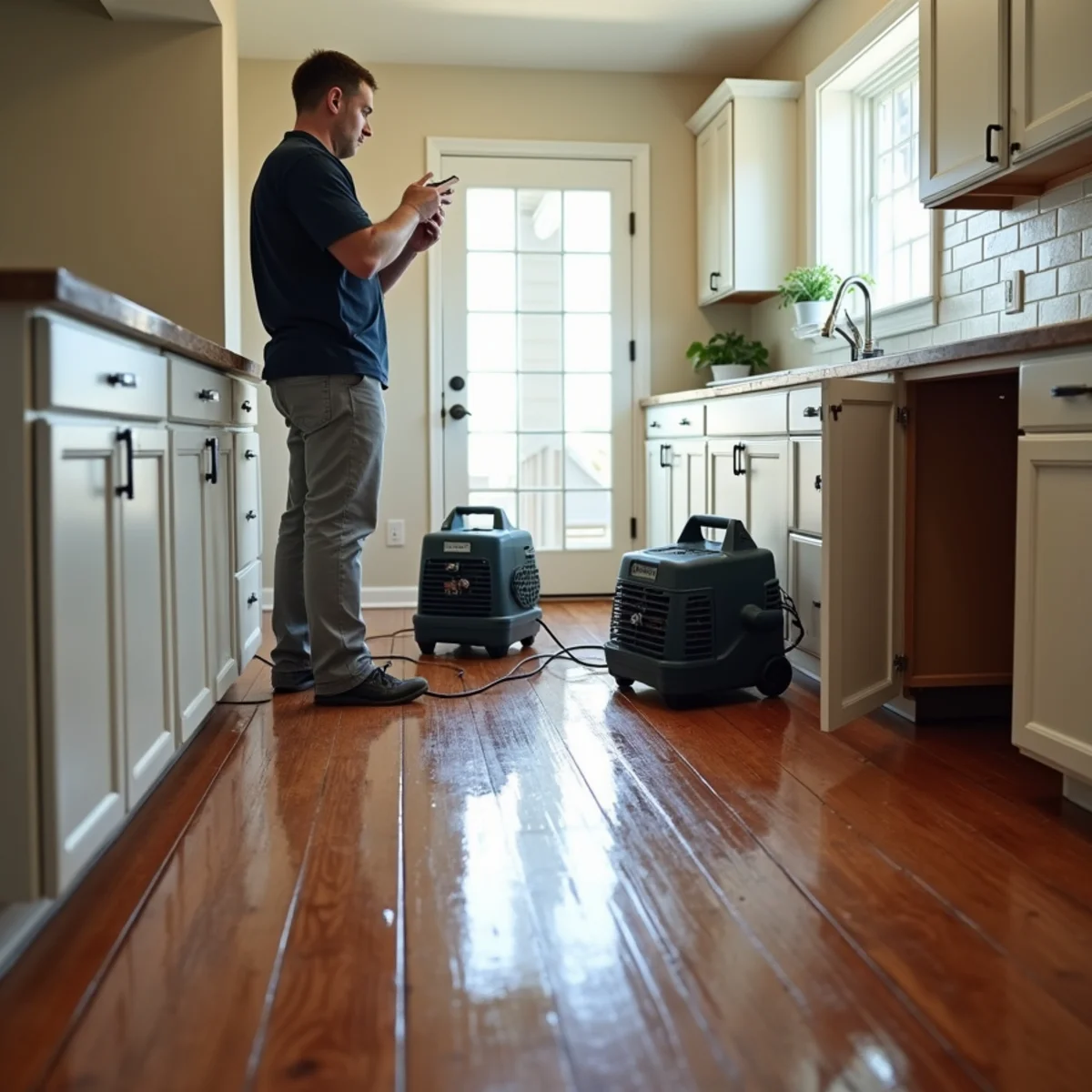
- Get the water out and start drying within 24 to 48 hours, the EPA window for preventing mold.
For water coming in right now, 24/7 emergency water damage service starts with a call to (831) 303-1192. The nearest available crew is dispatched, and you get the scope and price in writing before work starts.
Related questions
Does Lake Norman flood during big storms?
Lake Norman is a reservoir managed by Duke Energy at Cowans Ford Dam, and its level is controlled. During Helene in 2024 it rose only slightly while lakes and the river downstream flooded. For most homes around the lake, storm water problems come from rain, roofs and drainage, not the lake.
Do I need flood insurance if I am not in a flood zone?
That is your decision, but homeowners policies usually exclude flood and surface water, and water that enters at ground level during heavy rain can count as flood. An NFIP policy usually takes 30 days to start. Ask your agent.
Is water in my crawl space after a storm normal?
Some dampness after a hard rain is common on clay soil, but standing water is not. It points to grading, gutter or downspout problems, and it should be pumped out and dried before it raises humidity and soaks insulation.
How soon should drying start after storm water gets in?
As soon as it is safe. EPA guidance is to dry wet materials within 24 to 48 hours to prevent mold, and late-summer humidity around Lake Norman makes that window feel even shorter.
What should I check after a big storm if no water came inside?
Walk the outside first: downspout extensions knocked loose, gutters pulled away from the fascia, soil washed out along the foundation and limbs on the roof. Then check the attic for damp insulation and the crawl space within a day or two, since water under the house takes time to show. If the sump pump ran, make sure it shut off again.