How Fast Does Mold Grow After a Water Leak?
By Ultra Mold & Water Pros 6 min read
Quick answer
Mold can start growing on wet drywall, carpet pad and wood within 24 to 48 hours, which is why the EPA says to dry wet building materials and furnishings within that window. Spots you can see usually take longer, often several days to a few weeks, depending on how wet the material is, what it is made of, and how warm and humid the air is. In a Lake Norman summer, with heavy humidity and temperatures in the 70s and 80s, that clock runs at its fastest.
The 24 to 48 hour window and what it actually means
The figure comes from EPA's brief guide to mold, moisture and your home: dry wet building materials and furnishings within 24 to 48 hours and mold is unlikely to take hold. It is not a promise that mold appears at hour 49. It is the practical deadline for drying before the spores already present in every house start feeding. A leak does not bring mold in; it hands those spores the water they need.
Two things shorten the window. Materials stay wet far longer than their surface suggests, and the clock starts when the leak starts, not when you find it. A supply line that dripped behind a vanity for three days is already past the window on the morning you notice the stain.
What mold needs to grow: moisture, food, time and temperature
Mold growth is not random. Four conditions have to line up, and drying a house after a leak is really about taking away the one you can control.
| Condition | What it looks like in a house | Can you control it? |
|---|---|---|
| Moisture | Wet materials or air humid enough to keep surfaces damp | Yes: extraction, air movers, dehumidifiers |
| Food | Drywall paper, wood, carpet backing, dust | Barely: a house is built from mold food |
| Time | Hours to days of steady dampness | Only by drying early |
| Temperature | The 60s to 80s range people live in | Not in a lived-in home |
Moisture is the only lever that works. Mold grows readily on wood when the air stays above about 70% relative humidity, and wood above roughly 19 to 20% moisture content supports mold and decay. Getting materials and air below those levels stops new growth.
A realistic timeline after a leak
| Time since the leak | What is usually going on |
|---|---|
| First 24 hours | Water wicks into drywall, baseboards, pad and subfloor. Nothing visible yet. |
| 24 to 48 hours | The EPA drying window closes. Spores on damp paper and wood can begin to germinate, out of sight. |
| 3 to 7 days | Spots may appear on the back of drywall and under pad. A musty odor builds. |
| 1 to 3 weeks | Growth often shows on the room side of walls and on subfloor around the leak. |
| Longer | Growth spreads into cavities and framing, and more material has to come out. |
Because visible growth takes days to weeks, a clean-looking wall fools people: the back of the panel can be growing while the room side looks fine. That is why a water extraction and structural drying crew records moisture readings every day instead of judging by touch.
Why a reading beats a hand on the wall
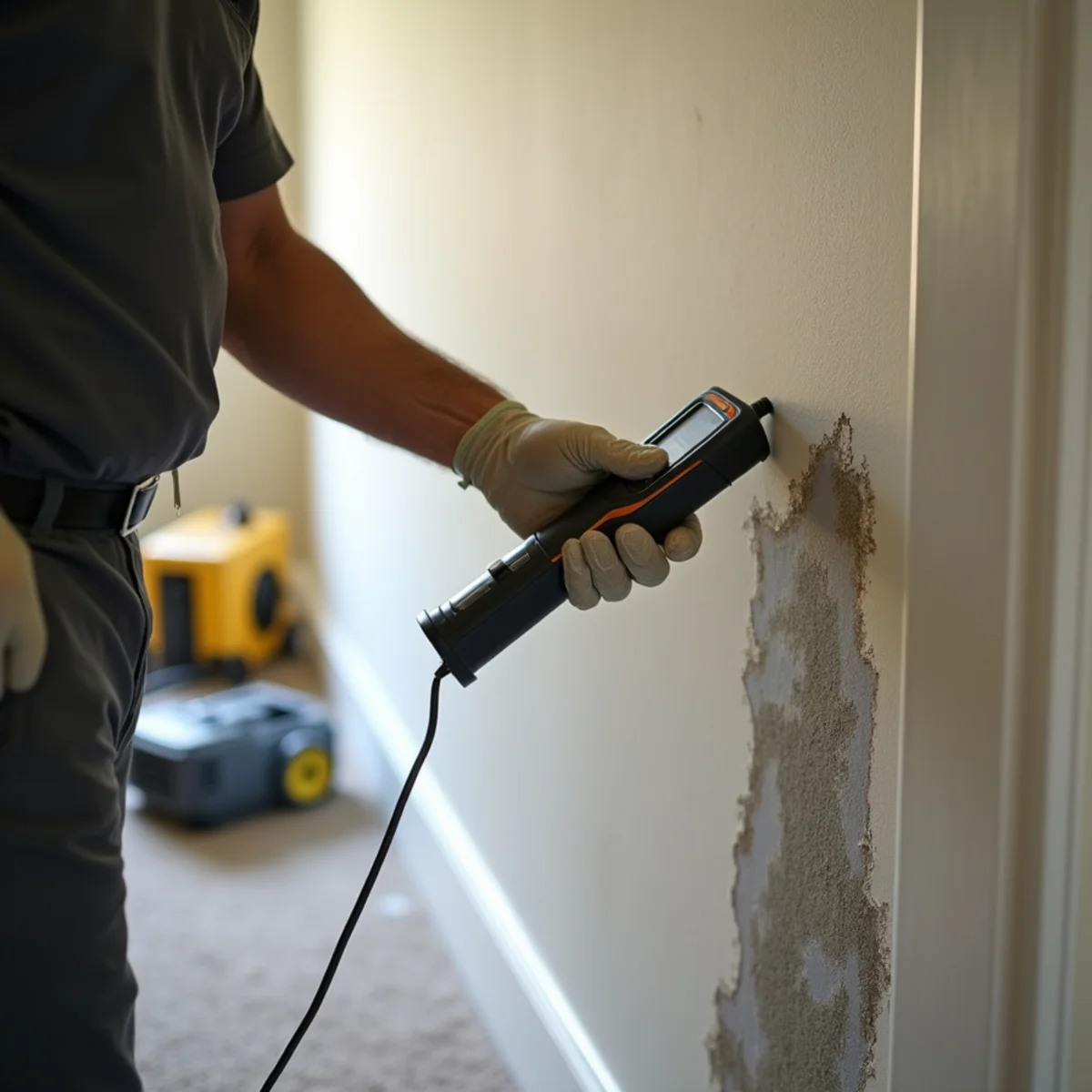
A meter number only means something next to a comparison. Technicians take a reference reading on the same material in a room the water never reached, then read the wet area at the stain, along its edges and a few feet past them. A thermal camera shows cool, damp patches worth measuring, but not whether a wall is dry. The material is dry when it matches the reference, however it feels.
Why Lake Norman summers speed mold up
From May through October the air around Lake Norman is warm and heavy, and vented crawl spaces near the lake commonly sit above 80% relative humidity. Wet materials dry slowly when the surrounding air is already loaded with moisture, and the temperature suits mold around the clock, so the gap between wet and moldy shrinks.
- Opening windows in summer usually lets more moisture in than out. Keep the house closed and the air conditioning running.
- Box fans alone move air but do not pull water out of it. Without a dehumidifier, the water just moves into the air and back into the walls.
- A leak that reaches the crawl space lands in the most humid spot on the property, where it can feed growth on joists for weeks. See crawl space mold removal and water cleanup for that side.
Where mold hides after a leak
The wet spot you can see is rarely the whole story. Water follows gravity and wicks sideways into places nobody looks.
- Wall cavities: drywall wicks water several inches above the waterline, and the back of the paper stays damp long after the room side dries. Insulation in exterior walls holds water like a sponge.
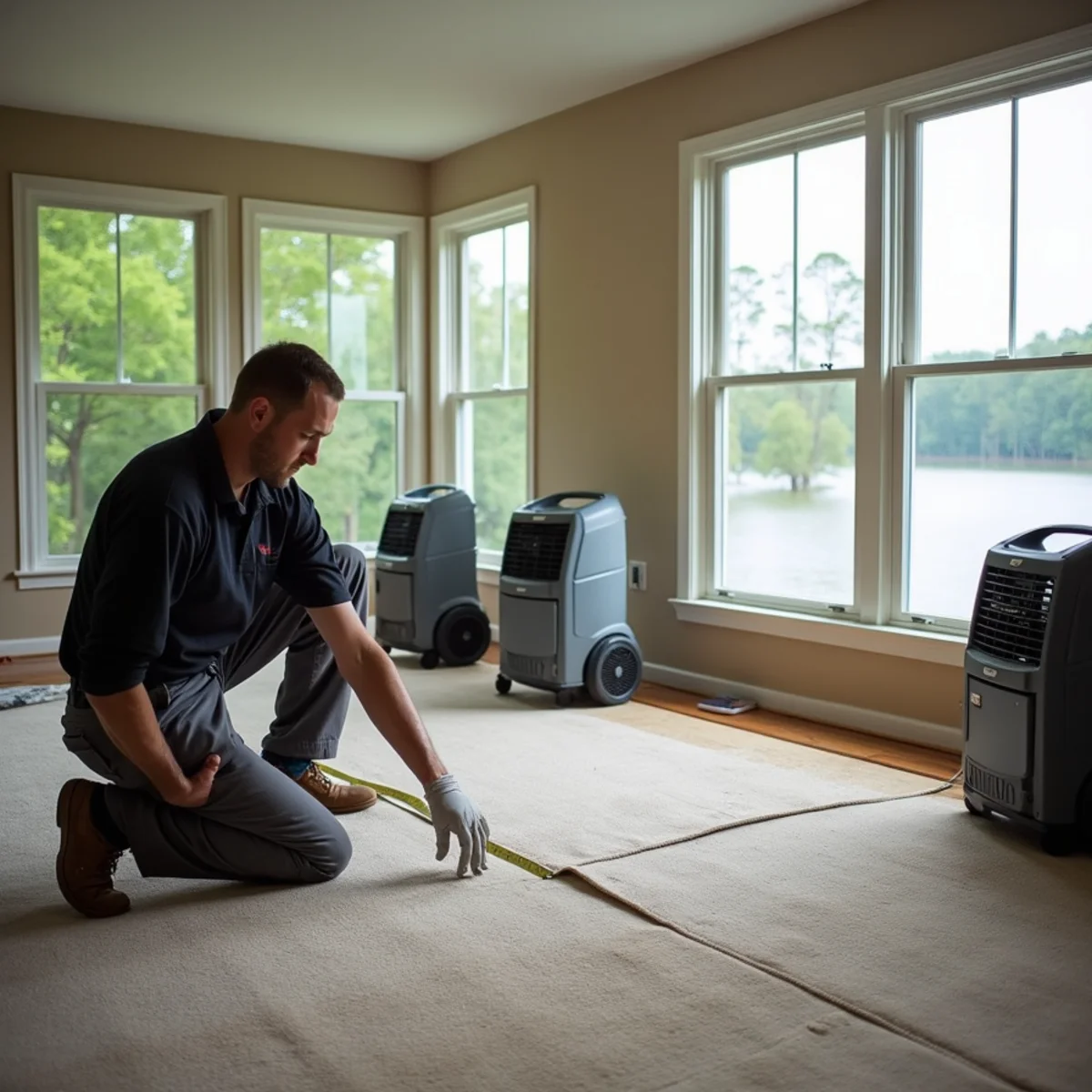
- Under carpet pad: carpet can feel dry underfoot while the pad below is still wet a week later. Pad that stayed wet that long usually comes out.
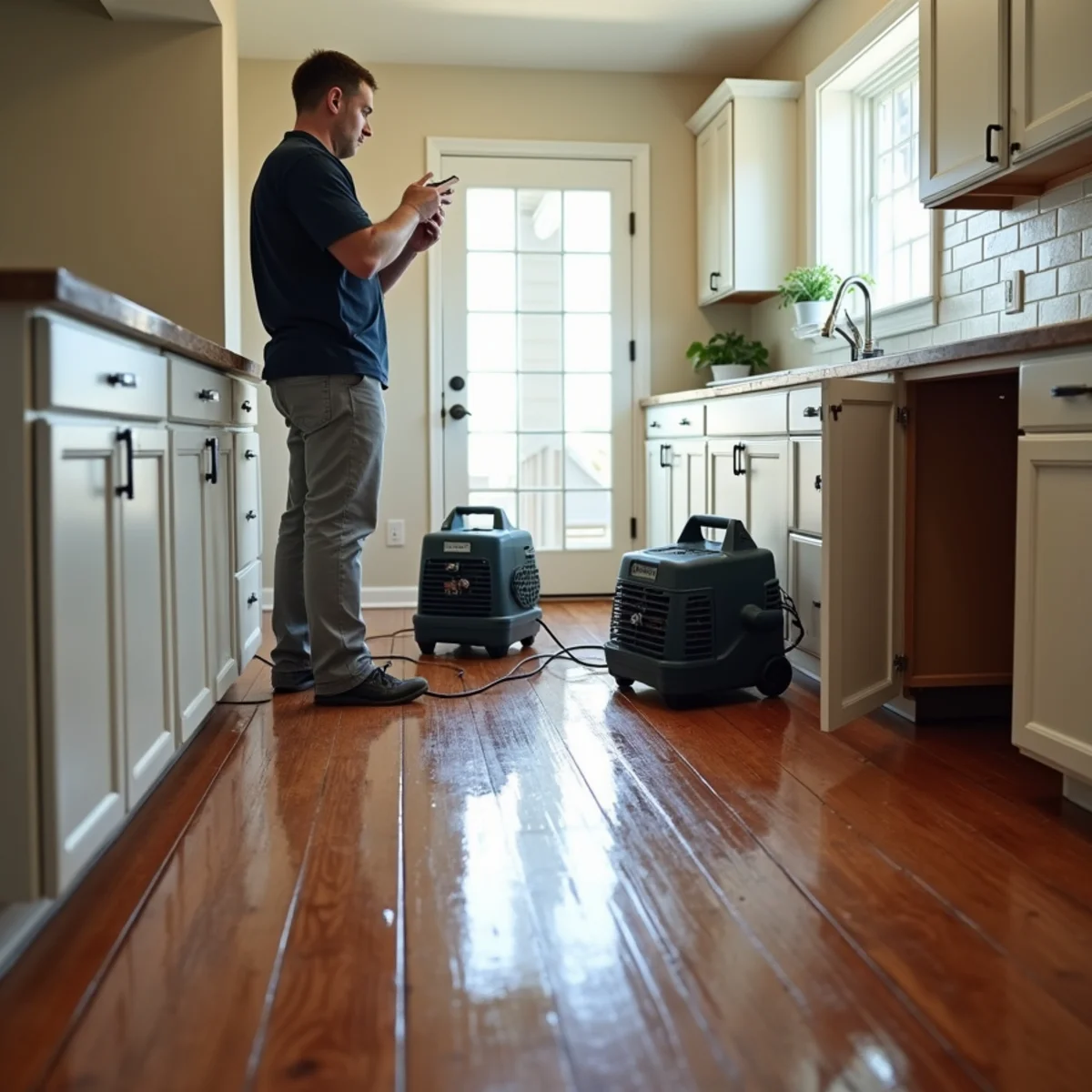
- Subfloors and under cabinets: plywood and OSB drink water at the seams, and the toe-kick hides the space under kitchen and bath cabinets where dishwasher and sink leaks grow unseen.
- Crawl spaces: water draining through the floor wets the bottoms of joists and the insulation between them. Sagging or fallen fiberglass batts are a common sign.
- Finished lower levels: below-grade drywall and carpet laid over a slab sit against cool walls, and that air is the slowest in the house to dry. On sloped lots, water from an upstairs leak can run down to a walk-out lower level and settle behind its baseboards.
Ceilings below an upstairs leak
In two-story subdivision homes, a leak from an upstairs supply line or toilet runs into the floor cavity below. Huntersville grew from 3,014 people in 1990 to 46,773 by 2010, so many of its houses are two-story builds with a laundry room or bath over the kitchen. Crews drying water-damaged homes in Huntersville open those ceiling cavities often.
What to do in the first two days to stay ahead of mold
- Stop the water at the fixture valve or the main shut-off, and call a plumber for the repair.
- Get standing water out fast. Extraction removes far more water than evaporation ever will.
- Move furniture off wet carpet and pull up wet rugs.
- Run the air conditioning and a dehumidifier, windows shut.
- Photograph the damage and note when the leak started and when you found it, for your insurer.
- Call for drying if more than one room is wet, water came through a ceiling, or anything is still damp after a day.
Our guide to the first 24 hours after water damage covers safety in more detail. For anything past a small spill, call (831) 303-1192, answered 24/7, and get the scope and price in writing before work starts.
After the water is out: keeping mold from starting
- Hold indoor humidity below 60%. EPA recommends staying under that line, ideally between 30 and 50%. A small hygrometer tells you whether the dehumidifier is keeping up.
- Do not close anything up early. Baseboards, new pad, flooring and fresh paint go back only after readings show the material underneath is dry. Paint rolled over damp drywall seals the water in.
- Fix the source, not just the stain. EPA is direct about it: clean up mold without fixing the water problem and the mold usually comes back.
- Skip spray and wait. Killing mold is not enough, because dead mold can still set off allergies in sensitive people. Affected material has to be cleaned or removed.
If the window has passed: signs of growth and what comes next
If the leak ran for days, look for growth before the room goes back together: a musty smell stronger near one wall, speckling on baseboards or the bottom of drywall, bubbling paint, dark pad or tack strip, or cupped hardwood.
EPA guidance on mold cleanup in your home suggests professional help when the moldy area is larger than about 10 square feet, and advises against relying on bleach for porous materials. Moldy drywall, pad, ceiling tile and insulation are usually cut out rather than cleaned.
Professional mold remediation after a leak sets up containment, runs HEPA air filtration, removes damaged porous material, cleans and treats the framing, then dries the area so growth does not return. For testing, an independent mold assessor is the right person, separate from the crew doing the work.
Related questions
Can mold grow within 24 hours of a leak?
It can begin on very wet, warm materials in that time, though you will rarely see anything. Visible growth usually takes several days or longer. Treat the EPA's 24 to 48 hour drying guidance as the target, not a guarantee in either direction.
If the wet spot dried on its own, am I in the clear?
Not always. The surface can dry while the back of the drywall, the pad or the subfloor stays wet. A moisture meter reading at the edge of the stain and below it tells you whether the material is really dry. If the leak lasted more than a day or two, check the cavity or the floor below before closing anything up.
Does homeowners insurance cover mold after a leak in North Carolina?
Mold is often excluded or capped unless it results from a covered sudden loss such as a burst pipe, and slow leaks that went on for weeks are usually treated differently. Read your own policy and ask your agent or adjuster. Photos, the date the leak started and drying records all help. The North Carolina Department of Insurance explains homeowners policy basics on its homeowners insurance consumer page.
What are the early signs of hidden moisture after a leak, before mold shows?
Look for cabinet toe-kicks that have swollen, drywall that feels soft near the floor, baseboards pulling away from the wall, bubbling paint, or a faint ring and nail pops on a ceiling under a bathroom. A room that stays muggy with the air conditioning running, or a hygrometer stuck above 60%, means water is still evaporating from somewhere. Any of these is worth a meter reading before mold gets started.